
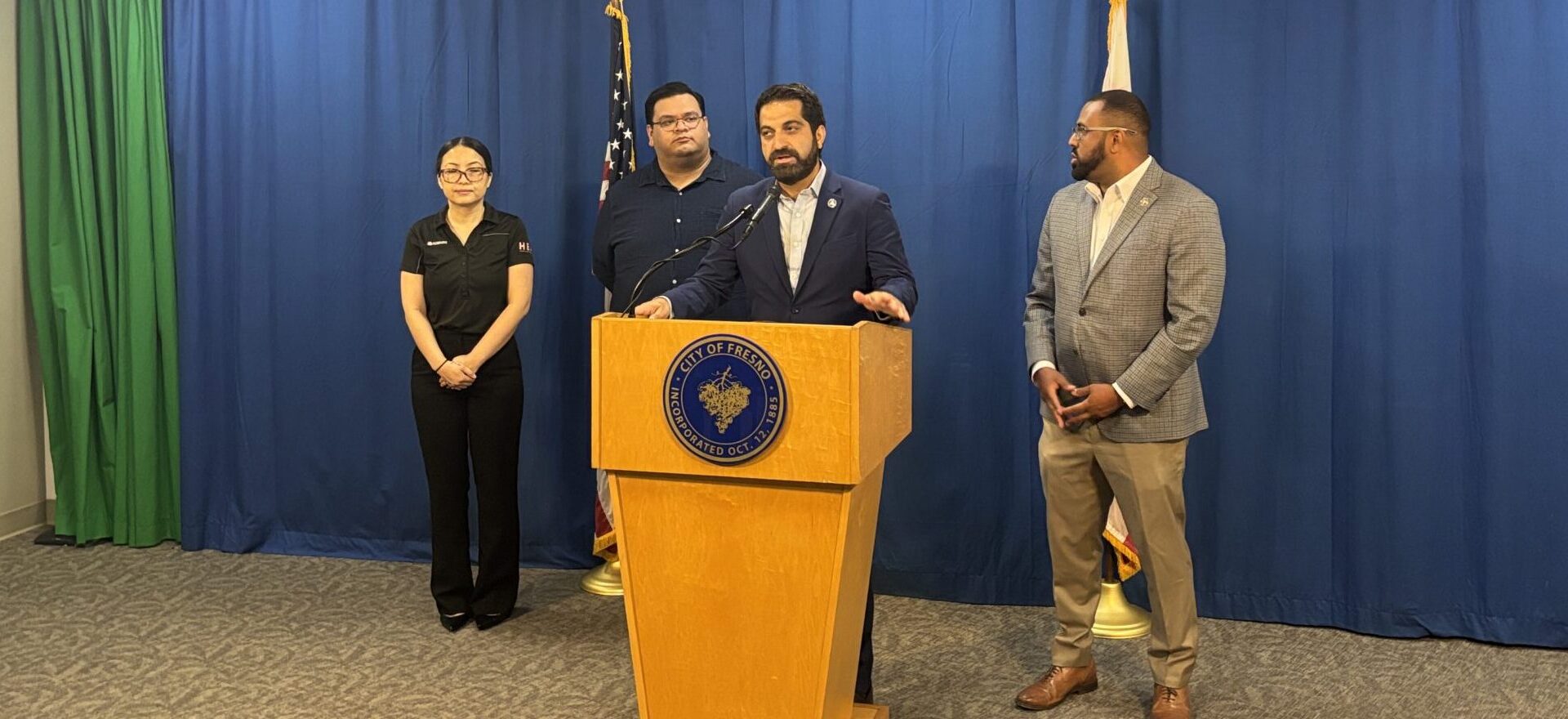
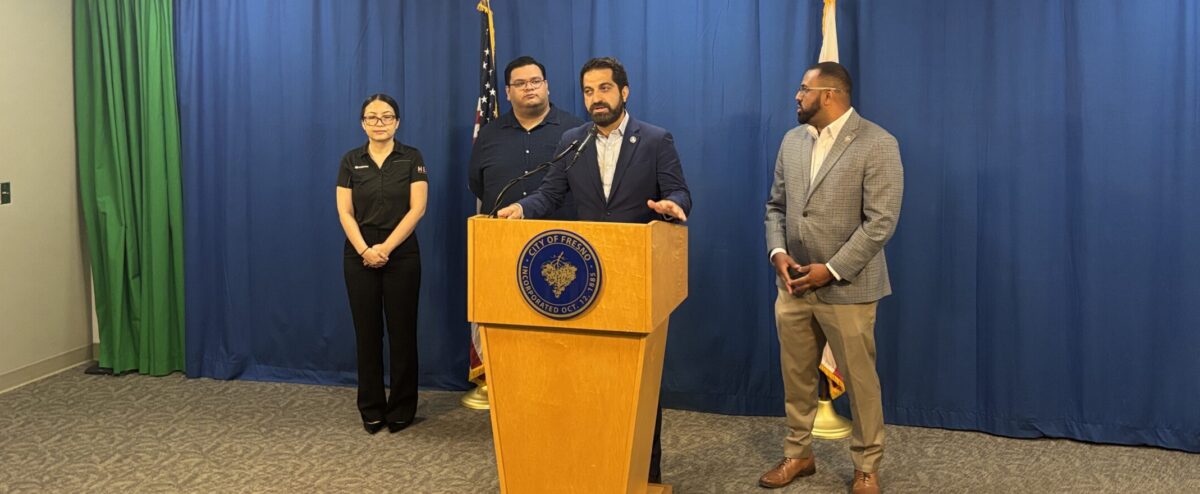
Photo by Ben Hensley | Fresno City Council President Mike Karbassi is joined by fellow councilmember Nelson Esparza (right) and members of the Fresno County Tobacco-Free Coalition Bao Xiong and Daniel Gonzalez during a press conference to introduce a citywide tobacco retailer ordinance.
published on July 28, 2026 – 2:53 PM
Written by Ben Hensley
Fresno City Council leaders are proposing a citywide tobacco retailer licensing program they say will strengthen enforcement against illegal tobacco sales, hold retailers accountable and create a dedicated funding source for inspections.
Council President Nelson Esparza was joined by Vice President Mike Karbassi and members of the Fresno County Tobacco-Free Coalition during a Tuesday press conference at Fresno City Hall to announce the proposal ahead of its expected introduction at Thursday’s Fresno City Council meeting.
Esparza said that Fresno, the largest California city without a tobacco retailer license requirement, currently allows businesses to sell tobacco products, vaping devices and smoking paraphernalia without a city license tied to a specific location.
“Every major city we compare ourselves to has one, but we do not,” Esparza said.
The ordinance would require retailers selling tobacco products, vaping products or related paraphernalia to obtain a city license tied to a fixed business location. Unlike the city’s smoke shop ordinance, which limited enforcement to a narrower group of businesses, the proposed tobacco retailer licensing program would apply to every business selling tobacco products in Fresno.
Should the measure pass, it would establish accountability while giving the city additional enforcement authority over businesses selling illegal products, the councilmembers say.
Retailers would be required to only sell products authorized by the U.S. Food and Drug Administration and included on California’s separate approved unflavored tobacco product list. Illegal products could be seized during inspections, with repeat violations leading to escalating penalties, including license suspension and eventual revocation.
Esparza said the annual licensing fee would fund inspections and enforcement, creating a self-supporting program rather than relying on city resources. Additional staff would be hired to assist in inspections.
The fee amount has not yet been determined and will be established through a future cost analysis that will include factors including products sold and size of business.
Karbassi said that the measure is intended to level the playing field for businesses already following the law.
“For years, the corner stores that check IDs and pay their taxes have been undercut by shops flooding neighborhoods with illegal products,” Karbassi said. “What we are creating is a fair market.”
Officials said the first violation would generally result in a warning notice rather than an immediate closure, with penalties escalating only for repeat violators.
Karbassi said the proposal targets retailers selling illegal products, particularly flavored tobacco marketed towards youth.
“You’ve seen the smoke shops, these illegitimate businesses, act like they’re legitimate and target kids,” Karbassi said. “If you sell illegal products, we’re going to seize them. If you continue selling illegal products that target kids, eventually we’re going to shut you down.”
Leaders added that the licensing program would allow Fresno to conduct more proactive inspections rather than relying on public complaints. They encouraged residents to continue reporting businesses selling unauthorized tobacco products as the city continues enforcement efforts.