
In a three-hour hearing to investigate allegations of neglect, abuse, and squalid living conditions at a San Francisco halfway house, GEO Group, the for-profit prison operator of the site, largely denied and skirted the allegations.
The Board of Supervisors hearing was a response to those allegations and the death of 44-year-old Melvin Bulauan, who died outside the facility at 111 Taylor St. in the middle of what his family called a mental health crisis, as first reported by Mission Local in July. The evening before his death, Bulauan had called his children, who drove to San Francisco to help him and said they tried calling the GEO Group facility repeatedly.
Staff hung up on them, they said, and even told them their father wasn’t a resident there.
The GEO Group, which invests in and operates private prisons, immigration detention and residential treatment facilities, faced a laundry list of allegations about the Taylor Street location today: rodents, maggoty food, residents living 14 crammed to a room, and forced unpaid labor. Residents also alleged that staff confiscated their phones after the site came under scrutiny during a Board of Appeals hearing in July.
Facility director Maria Richard and her colleague Mollyrose Graves denied them all. “I have a very open door policy, so if someone has an issue they can come and talk to me,” said Richard. Residents, she said, only perform “chores” to clean their own areas and bathrooms.
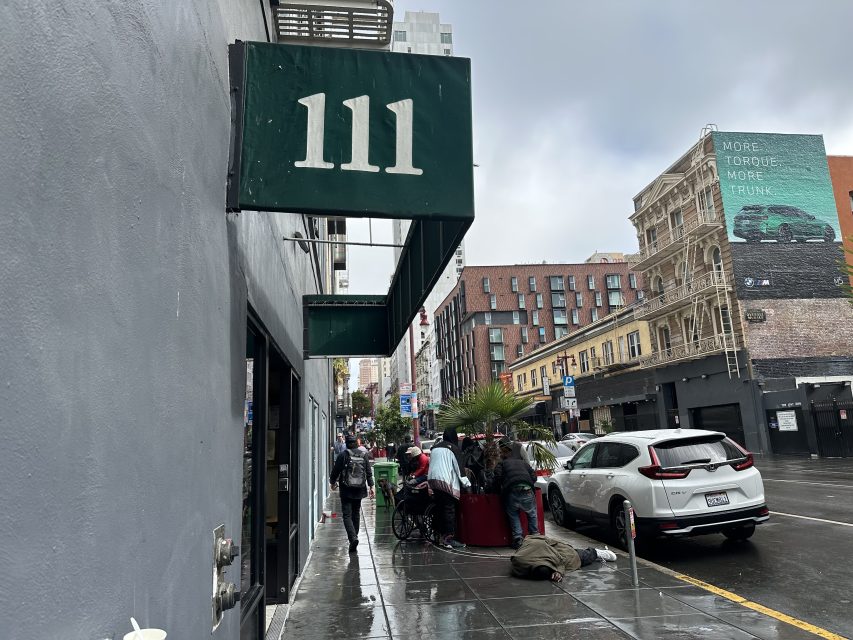 People gather and sleep in the rain outside 111 Taylor St. on July 22, 2025. Photo by Lydia Chavez.
GEO Group owns the Taylor Street Center and has operated the site for more than 30 years, contracting with the California Department of Corrections and Rehabilitation and the Federal Bureau of Prisons. Inside, there are programs varying in restrictiveness for people serving their remaining prison time, those who have paroled and are in transition out of prison, and others who are sent there pretrial in lieu of jail or prison.
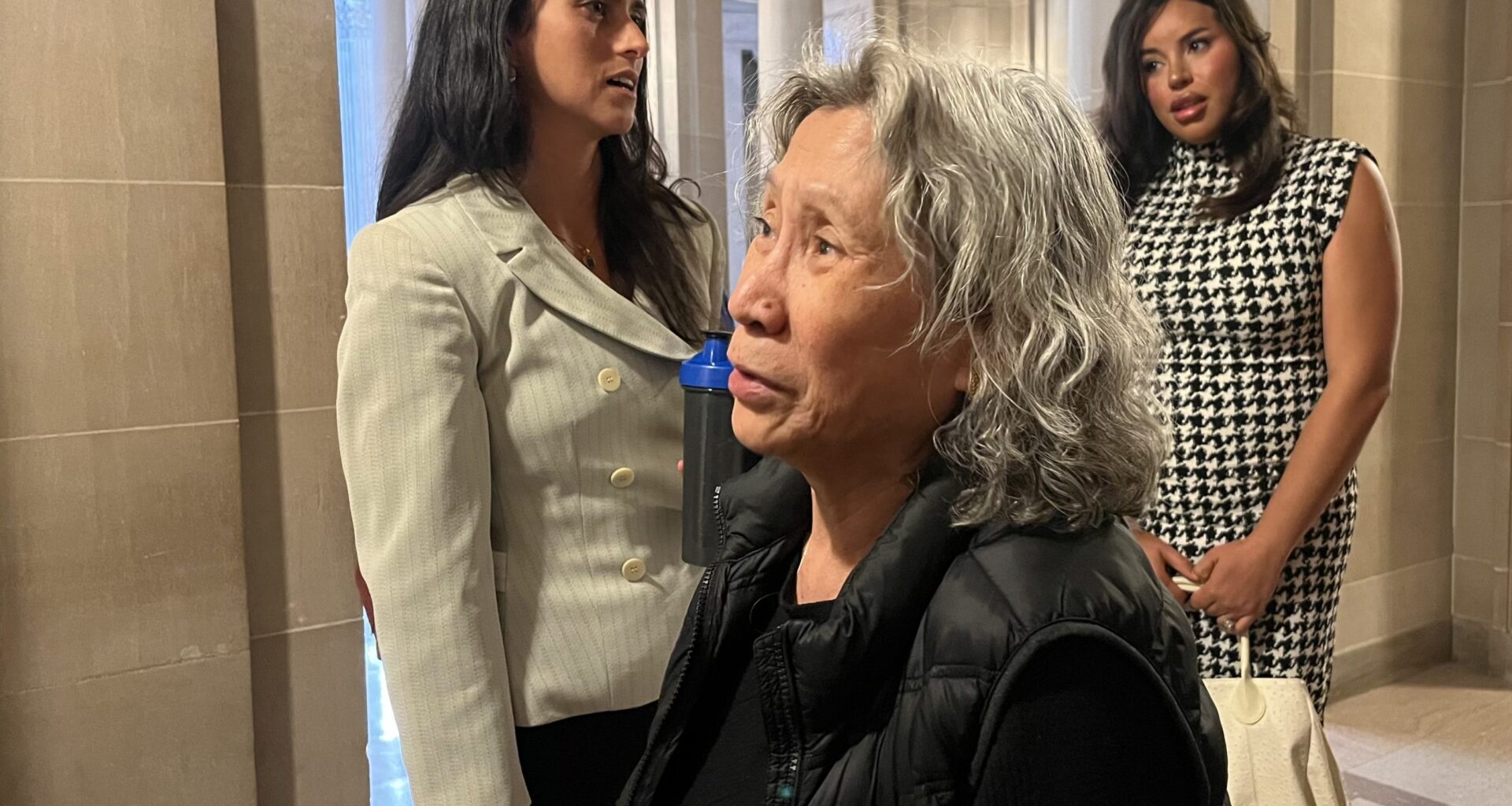
At today’s hearing, Bulauan’s mother herself took the microphone and, sobbing, spoke about the loss of her son before the Government Audits and Oversight committee. She said Bulauan was determined to change his life for the better after leaving prison, but that his transfer to the Taylor Street site contributed to his panicked state and his eventual death.
“I hope all this problem in this 111 Taylor, it will be resolved because of my son,” said Amelia, Bulauan’s mother. Several of those listening, including Supervisor Danny Sauter, wiped away tears.
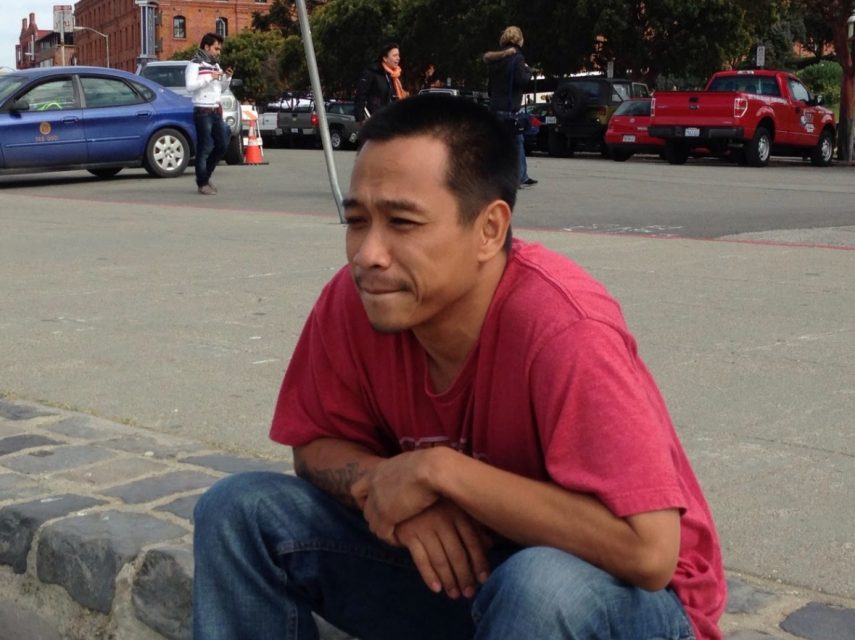 Photo courtesy of Melvin Bulauan’s family.
Supervisor Bilal Mahmood, who called for the hearing today, grilled representatives of GEO Group as well as federal pretrial and probation officials who send individuals to the facility. He raised the various complaints and concerns he has heard from Bulauan’s family and the wider community.
But the answers provided by those officials did not satisfy Bulauan’s son and mother.
“They have an alibi for everything,” Bulauan’s son, Anjru Jaezon de Leon, told Mission Local after the hearing. He said his family is considering a lawsuit against GEO Group. “I didn’t feel like there was any real remorse.”
Mahmood, like Bulauan’s family, seemed unsatisfied by the responses. When Richard said that GEO Group did handle pest complaints, but suggested that the Tenderloin site naturally came with pest issues, he retorted: “I don’t have rodents in my building, so I don’t think people living at 111 Taylor St. should either.” Mahmood also lives in the Tenderloin.
Days before Bulauan’s death, the site was already under scrutiny after a group of transgender activists sought to reclaim it as a monument to trans history — the Compton’s Cafeteria riot, which preceded Stonewall, occurred there in 1966. Their zoning appeal in July at the Board of Appeals failed, but board members encouraged an investigation based on the allegations made against GEO Group.
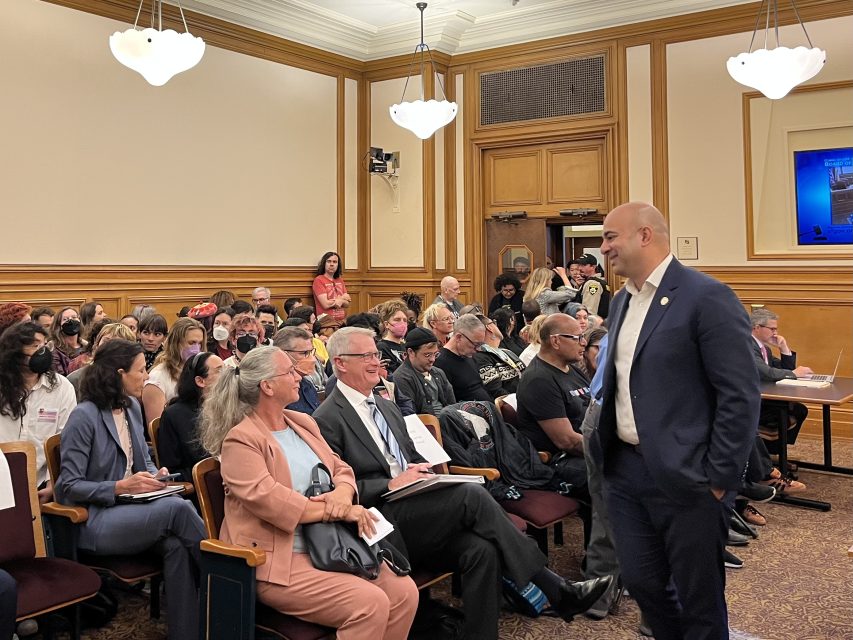 Supervisor Bilal Mahmood speaks with Maria Richard of GEO Group before a Board of Appeals hearing on July 16, 2025. Photo by Eleni Balakrishnan
Mahmood also raised a California law that prohibits prison contracts with private, for-profit prison operators like GEO Group, raising the question as to whether 111 Taylor should be considered a carceral or jail facility.
Former residents and a representative from the Public Defender’s Office today reported headcounts, strict curfews, patdowns, and limited mobility outside the facility. Some are only allowed to leave for approved medical or legal purposes, officials confirmed today. And one public commenter today accused Richard of denying him access to the outdoors despite his doctor’s note urging it for his mental health.
Richard, however, rejected the idea that the site is a carceral or detention facility, and called residents’ stay at the facility “voluntary.”
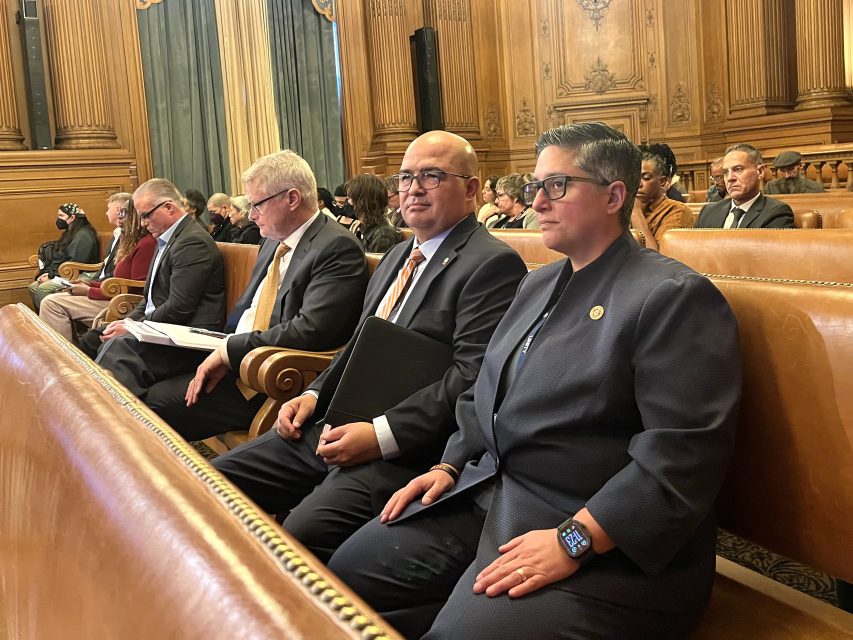 Representatives of US Probation and Pretrial Services for the Northern District of California, Chief Pretrial Services Officer Silvio Lugo and Chief Probation Officer Chris Carrubba-Katz, sit at a hearing about 111 Taylor St. on Nov. 6, 2025. Photo by Eleni Balakrishnan.
As for Bulauan’s specific case, GEO representatives refused to get into specifics, citing their policy against sharing individual case information.
According to his family, Bulauan, who had spent time in both a prison and a psychiatric ward, said he preferred prison to being moved to the Tenderloin. He was found dead on the street in July, within a block of the facility, less than a week after his arrival.
San Francisco itself holds no contracts with GEO Group, and thus has limited power over its presence in the city, said Mahmood’s chief of staff, Jessica Gutierrez Garcia.
Mahmood called today’s hearing the “start of a dialogue.” He said his goal is to ensure rehabilitation centers don’t operate as “de facto detention centers” without proper oversight and accountability.