
Stereotypes about Americans waging wars in countries they can’t even find on a map have become legendary. Drop your American accent in a Toronto or Montreal club, and you’re likely to get an earful.
It has been some kind of punchline in pop culture for literal decades. From Team America: World Police to Apocalypse Now and even low-brainpower popcorn entertainment like the James Bond and Call of Duty franchises.
It is everywhere.
Regretfully, it is a stereotype with some truth behind it. A 2020 Politico poll drifts in and out of virality for claiming that only 23% of Americans could find Iran on a map.
One hopes six years of current events have ticked that number upward.
A 2002 National Geographic survey leaves one cautiously optimistic at best. In an America rooted in tension in the region, only 17% of young Americans could find Afghanistan.
That is alarming. At best.
Sun Tzu wrote many centuries ago that there was a strong relationship between cultural literacy and success in warfare.
Modern history has shown that cultural literacy is perhaps even more important for diplomacy and statecraft.
An ancient kingdom
Truly old. It is one of the oldest contiguous civilizations in human history.
So old that covering it in detail requires the word count of a textbook.
A newspaper does not cut it.
For millennia, invaders have crashed against Persia’s mountain redoubts, outfoxed by guerrilla tactics honed over centuries.
America is far from the first to consider an attack or invasion in pursuit of regional security
Few succeed.
He did not live long enough to rule over it.
Those who replaced him lacked the tact to wear such a heavy crown.
There were many dynasties to rule Iran between the Seleucid Empire left in the ashes of Alexander’s conquest and death and the religious ayatollahs of the modern day.
There is simply too much history to cover in a single section. And far too much complexity and nuance to boil any kind of conflict down to mere religious circumstances.
While Iran’s desired position as the heart of the Shia world causes much of their current turmoil, Shia Islam is a rather recent Iranian development.
In the golden age of Islam, the region was Sunni.
It was not until the 16th-century Safavid dynasty used state power, religious enforcement and political identity to establish Shia Islam that Persia became the heart of the Shia world.
That might seem long compared to a Western nation. But it is novel to an empire with a history spanning more than 5,000 years.
The Greeks, however, thought it was far more ancient. Thousands of years older than the first embers of the Greek civilization.
On either grand time scale, the Persian civilization is much older than even the Prophet Muhammad.
Religion has changed. The emperor changed, left his robes, put on a Western-style suit, donned a thobe, and put a suit back on again.
Generations have been born. Generations die.
What has not been carved away by the winds of time and the sands of the Dasht-e Kavir is the intense relationship between the land and its people.
Stumbling into the same mistake
Colonel Harry G. Summers Jr. and Colonel Nguyễn Đôn Tự once shared one of the most famous verbal exchanges in all of warfare. The former opened his book, On Strategy: A Critical Analysis of the Vietnam War, with the very exchange.
The American remarked that the North Vietnamese never truly won a battle against the United States in the war.
The North Vietnamese Colonel replied that his assessment was correct – but still irrelevant in the face of an American withdrawal.
Summers wrote that he found the remark initially rather perplexing. But in time came to understand its full venomous truth.
The North Vietnamese, following a departure from French colonization with fresh revolutionary fervor, understood the problem slightly differently.
To them, it was a fight for the very life of their people. For the very concept of their nation. As an idea.
Those sides are not even.
One of those parties is simply willing to risk a hard to fathom a lot more.
The modern Iran
That same year, Ayatollah Ruhollah Khomeini returned from exile in France and cemented the nation as one of the strictest theocracies of the modern world.
When Khomeini died in 1989, power passed to his longtime ally and protégé, Ali Khamenei.
Decades later, after Khamenei’s death, power passed to his son, Mojtaba Khamenei.
Marking the first hereditary transfer of Supreme Leadership in the Islamic Republic
It is also one of the most educated countries in the region, while also possessing military resources rivaled only by the region’s heaviest hitters.
Meanwhile many of their rivals also depend on American-made arms.
There is a Western stereotype of Iran as a barely literate backwater. This could not be further from the truth.
The regime has demonstrated remarkable ability to modernize to an extent far greater than one would assume in the face of such tremendous Western sanctions.
In response to the popularity of dating apps through VPNs among young people, the regime developed its own dating app.
They then criminalized the competition for promoting a hedonistic lifestyle that disagrees with the state.
The regime is also leading the charge on the development of drone warfare, and alongside Ukraine, has been pivotal in discovering how these novel weapons will reshape the future of warfare.
No easy solution
It was never easy to conquer Persia. A name change to Iran, and some changes in religious ideology have done little to unseat that truth.
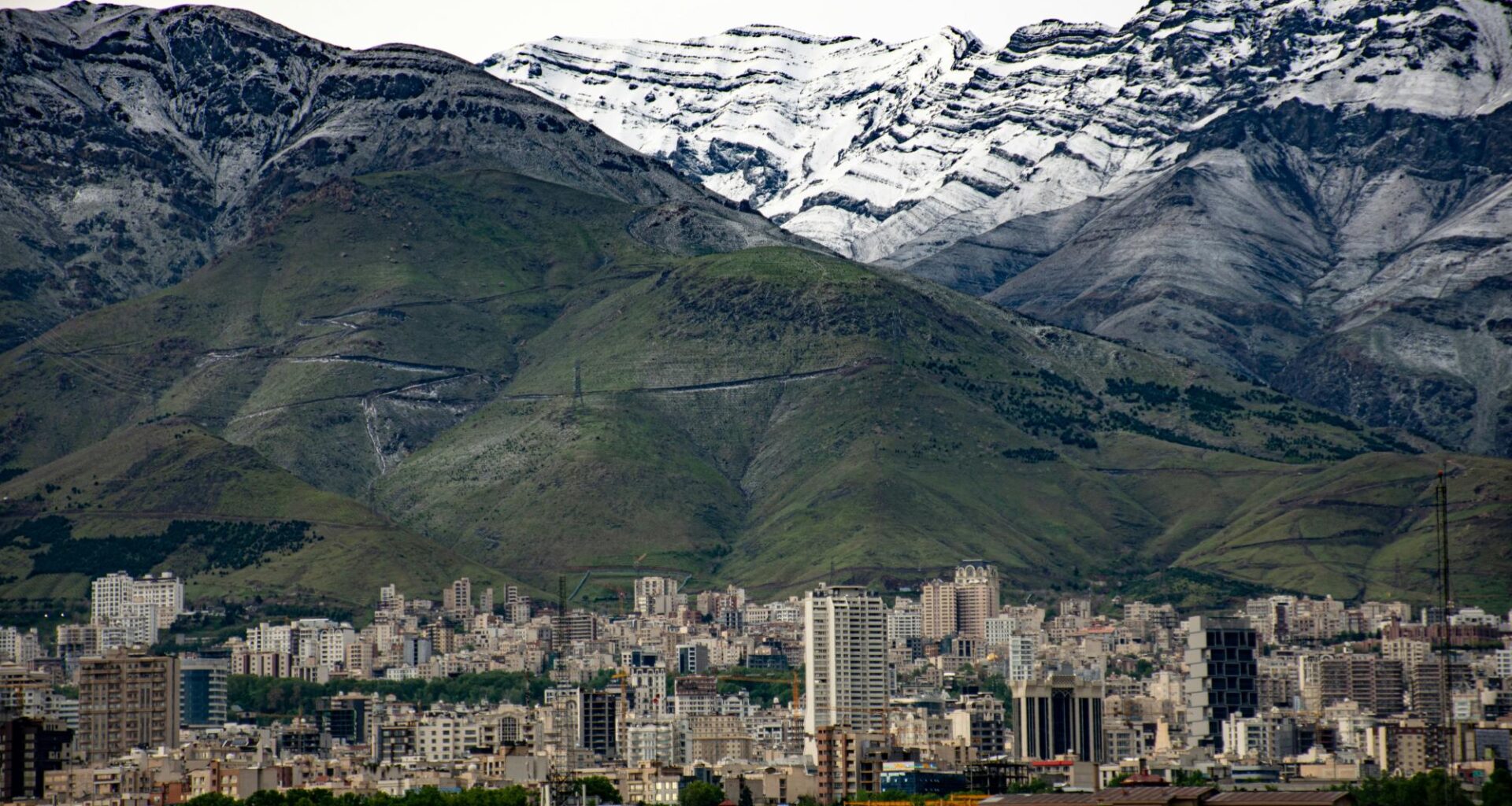
The region has a complex and difficult geography. Harsh mountains. Biting deserts.
It is simply not the sort of land of familiarity to the modern warfighter.
Yet millennia of history have proven one thing. The fastest way for an army to die in Persia is to know neither its people nor their spirit.
Diplomacy also falls apart in the face of ignorance.
A wise man considers cracking open a pocket guide in Farsi, speaking to any of the wide and rich Iranian diaspora about their rich culture, and doing some rather heavy light-reading.
Perhaps then the world may fare better than the great Alexander.
And who knows.
We might even find Iran on a map.