
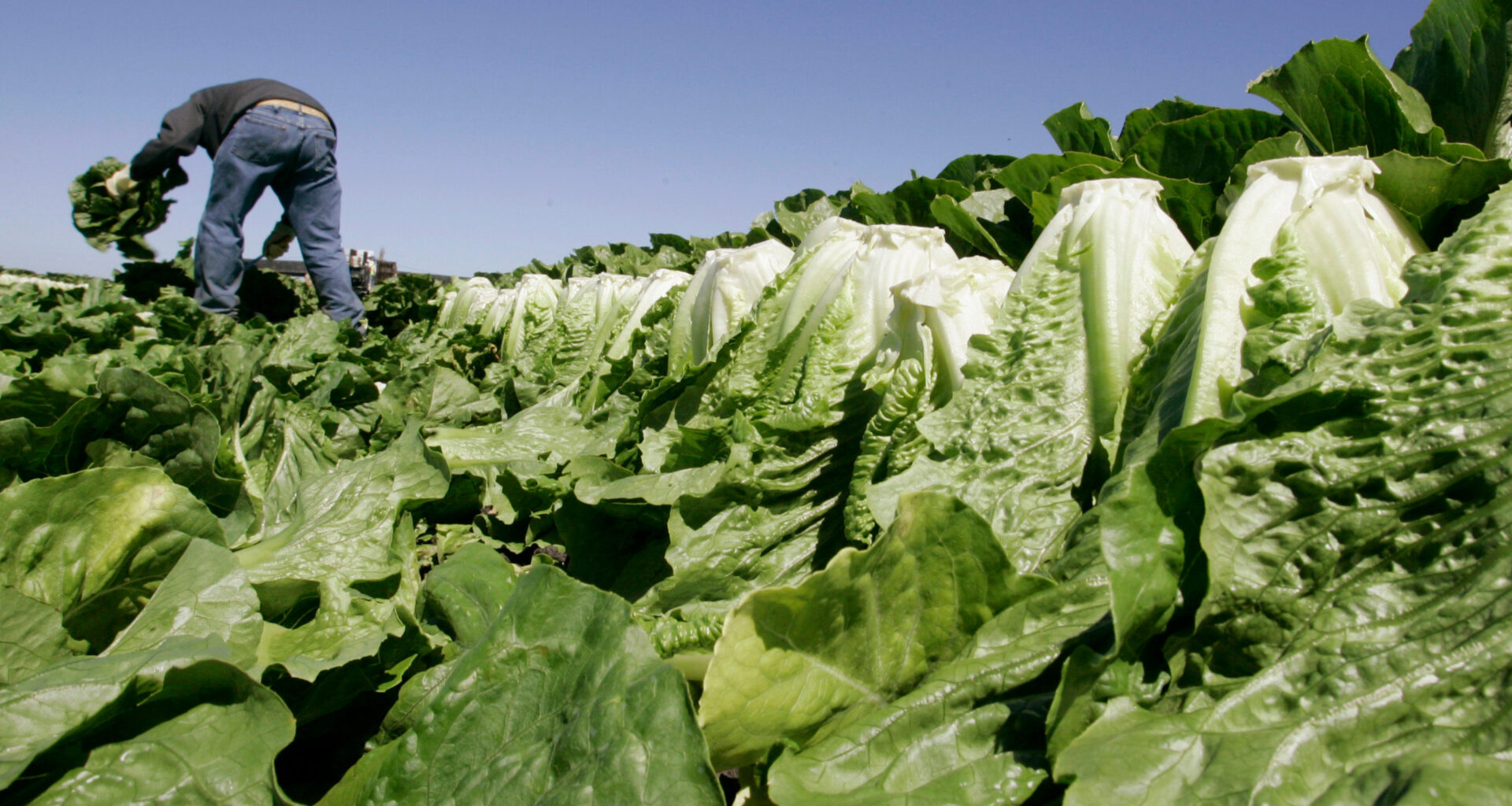
A major outbreak of gastrointestinal illness has been hitting multiple states over the past month.
The culprit is a parasite called cyclospora, which is often tied to fresh produce.
The FDA said nearly 2,000 cases have been reported across nine states, with exposure linked to shredded iceberg lettuce sourced from Central Mexico.
California health officials say they are seeing some cases, but the number is within normal ranges. Earlier this month the state also said those illnesses are not part of the national outbreak.
But over the past couple weeks, the illnesses have created confusion about what’s safe to eat.
Dr. Dean Blumberg is the Chief of Pediatric Infectious Diseases at UC Davis Health, and spoke about cyclospora with Insight Host Vicki Gonzalez.
This interview has been edited for length and clarity.
Interview highlights
How does illness from cyclospora work?
It’s a little bit different from other gastrointestinal pathogens. Some of them cause secretory diarrhea, so they have toxins that actually cause the cells in our gut to secrete fluids. Cyclospora doesn’t work that way. It actually infects the upper intestines, the small intestines, and kills the cells so that they can’t absorb water. That means that large volumes of fluid are delivered to the colon — larger volumes in the colon can absorb. Also, some of the carbohydrates aren’t absorbed and they ferment, and that causes the gasiness. That’s what causes the rapid expulsion of the fluid as well as gasiness. That’s why it’s been described as explosive diarrhea.
Is this a common culprit of food poisoning?
We see this infection every year in many states, California has reported cases all the time. But usually it’s only a handful of cases, and most of those cases are acquired abroad. What’s different is that we’re having this really large-scale reporting of disease now in the U.S. Normally in the US, we’ll see about 4,000 or 5,000 cases, but it’s estimated that there’s at least 14,000 cases currently.
Is fresh produce typically linked to cyclospora?
It’s commonly lettuce, fresh produce, snow peas have been implicated, parsley, cilantro. When it’s cooked, then that usually kills the parasite.
It can take up to two weeks for symptoms to show up, so tracing a source must be pretty difficult.
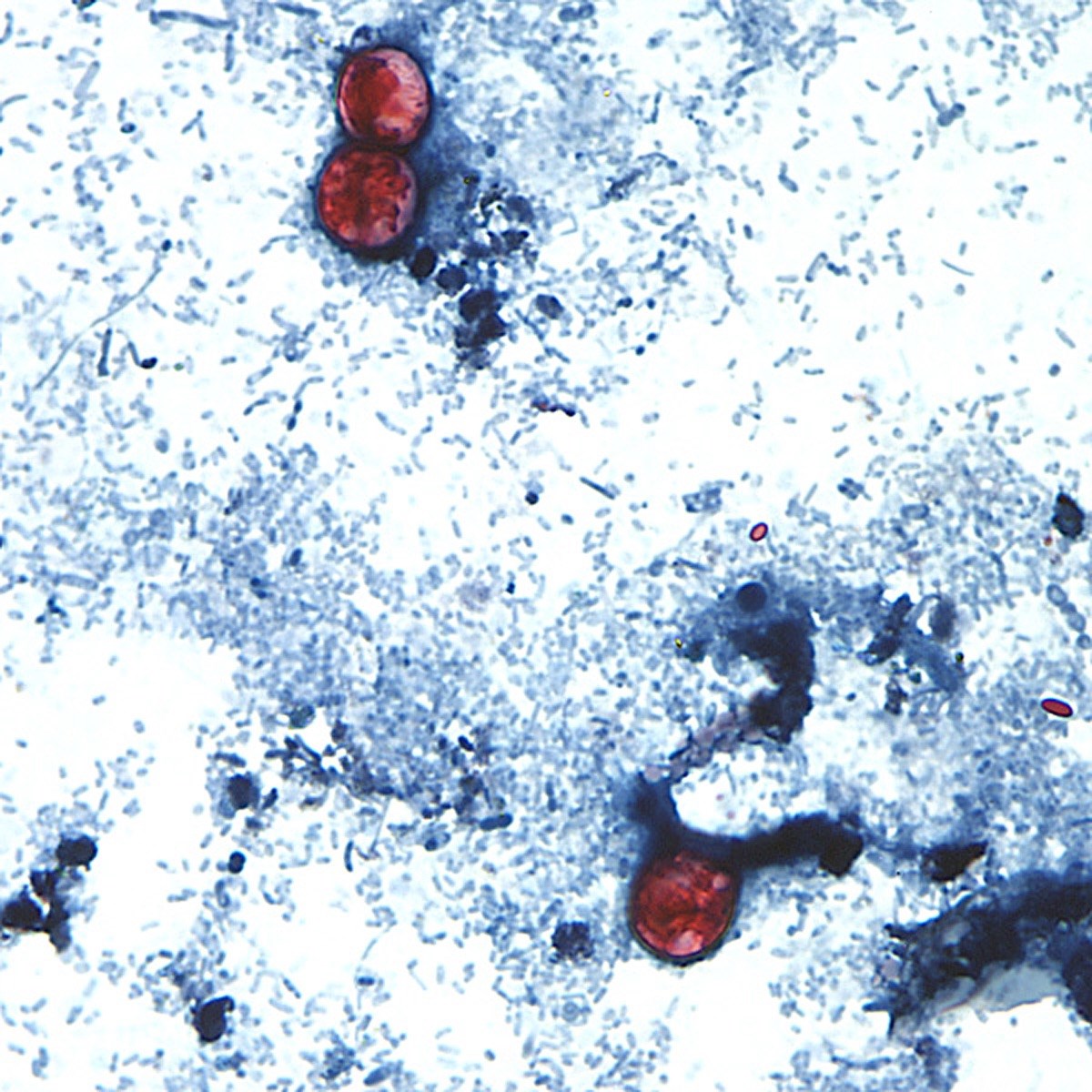 This undated photo taken through a microscope provided by the CDC shows Cyclospora cayetanensis oocysts found in a fresh sample.CDC via AP
That’s exactly right. When these outbreaks occur, the investigators will interview people and say, “when did you get sick? What did you eat in the incubation period at the time before [you] became symptomatic?” In this case, I can’t remember what I ate two weeks ago; you’re trying to develop a food diary in retrospect, and that can be very difficult and inaccurate. Then it can be hard to really pinpoint what commonalities there are for sources.
The FDA lists nearly 2,000 cases as of July 24, but you’re saying it’s likely higher?
The FDA takes a while to aggregate the numbers from the states. Those reports come in at different times because some states are updating daily, [while] other states are updating weekly.
How long does this illness typically last?
It can last for several weeks, and people can get better and then have a relapse. Treatment is relatively straightforward. First, we need to make a diagnosis and that can be done from a stool lab test — that’s a PCR test. And then the treatment is a commonly used antibiotic, which people may know by the brand name of Septra or Bactrim.
How dangerous can it be to someone’s health?
People don’t generally die from this. It’s most dangerous to people at the extremes of age, young children less than five and the elderly, because they’re more prone to getting dehydrated when something like this happens. For most patients, they won’t end up in the hospital. It’ll just be very uncomfortable for them. And if you’re pregnant; any perturbation during pregnancy is going to be uncomfortable.
There’s been evolving information on the situation. Two weeks ago the FDA said a Taylor Farms lettuce supplier in Central Mexico was linked to some illnesses, but later said it was a false positive. Is it common for the FDA to announce and then retract a statement like this?
I think what we’re seeing is that federal officials are acting simultaneously too slow and too fast. They’re too slow to investigate; there’s been so many cuts to the CDC, to the FDA that there just aren’t enough people to send out there to have boots on the ground, do the interviews [and] the investigation that we know they’re capable of doing.
And then leadership, there’s really been the lack of leadership from both FDA and CDC because of all the politics that have been involved. The long-time career professionals are great at those agencies, but the leaders are inexperienced. They’re not the best people, and so they tend to be reactive.
False positive tests do occur but something of this magnitude, you’d like to double-check, triple-check before you make an announcement. The secretary of HHS has already said that it’s over. It’s not over. I know they want it to be over; I want it to be over too, but there needs to be clear, consistent messaging and it has to have science behind it, and that’s what’s lacking with this administration.
Are you seeing cyclospora cases?
I’m not aware of any local cases. California has been reporting cases this year, but the cases are what we’d expect in a normal year. In California, due to regional produce distribution networks, the salads are great. People should eat them. The value of having fresh produce definitely outweighs any risks. We’re not one of the states that’s been involved with this cyclospora outbreak.
CDPH said on July 14 that California is not seeing an increased number of cases. But if someone has food poisoning, they don’t always go to the hospital. How concrete are the state’s numbers if a lot of cases might fly under the radar?
I think if people are being tested in a routine manner compared to previous years, then if there was an increase we would see the numbers. We just haven’t seen that. I’m confident that what we’re seeing right now is the background rate that we normally see, and so we’re safe in terms of fresh produce, salads, lettuce, etc.
It turns out there’s probably about six different cyclospora outbreaks that are occurring across the U.S. The biggest one is the one that we’ve talked about the lettuce related to the Taylor Farms, but there’s another outbreak involving parsley and cilantro in North Carolina, and there’s other outbreaks that are being investigated.
So just to confirm one more time: you’re saying it’s fine to eat salads and produce here in Northern California?
It’s fine to proceed locally. Go to a restaurant, have salad, make it yourself. The lettuce you buy at the grocery store, at the farmers’ market, it’s fine. We haven’t seen any of the implicated brands distributed in California.