
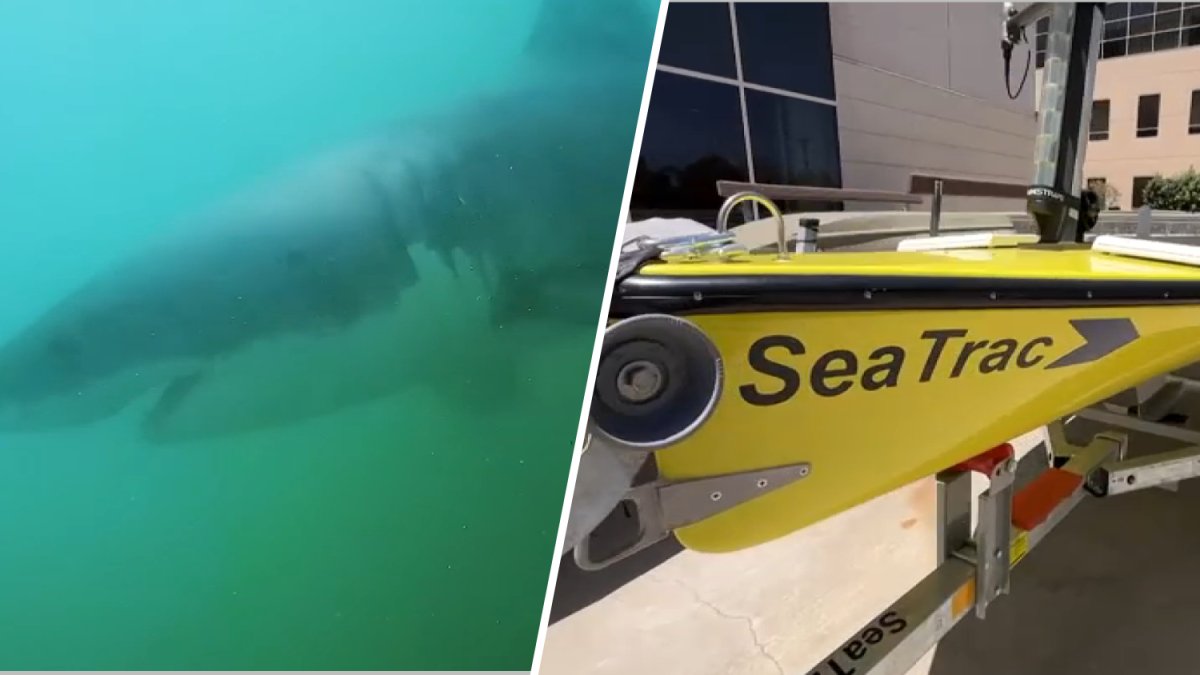
As Southern California prepares to host the 2028 Los Angeles Olympics, scientists at California State University, Long Beach are developing technology that aims to keep athletes and beachgoers safe from sharks, one of the ocean’s top predators.
The Shark Lab at Cal State Long Beach is testing a new autonomous surveillance drone that could patrol Southern California waters and send real-time shark alerts to lifeguards.
The autonomous vessel, about 10 feet long with the width of a paddle board, is designed to go out into the ocean and surveil for sharks, according to Shark Lab Director Chris Lowe.
The robotic craft can patrol the water on its own, powered by solar, to scan for tagged sharks below the surface while transmitting real-time updates to lifeguard on the beach.
“It will have a drone on it (to) fly around and find sharks,” Lowe said. “It will be listening for acoustically tagged sharks. It will take water samples to look for white shark DNA.”
The Shark Lab, which has tagged hundreds of juvenile white sharks, is using aerial drones to spot sharks from above while monitoring underwater listening stations along the California coast. By 2028, the data it has collected could help officials monitor Olympic competition venues — from open-water swimming in Long Beach to surfing events in Orange County.
“We are going to have athletes swimming in Long Beach harbor, where we know there has been white sharks before, so having this device patrolling for lifeguards will help them better protect athletes,” Lowe said, adding lifeguards can make informed decisions decisions without unnecessarily clearing the water.
The challenge for the Shark Lab, though, isn’t the technology. Its state funding that allowed the scientists to build the vessel is set to expire in fall, potentially forcing the lab to scale back on some of the technology under development.
“It won’t work if we don’t have tagged sharks out there, so we got to keep tagging sharks,” the Shark Lab director said.
The goal is to build on the shark-monitoring technology, not just developing it through the Olympics, Lowe explained.