
San Francisco recently declared the Vaillancourt Fountain a safety hazard that interferes with plans for a revamped waterfront park.Justin Sullivan/Getty Images
The Vaillancourt Fountain in San Francisco, a provocative tangle of concrete limbs considered the masterwork of 96-year-old Quebec sculptor Armand Vaillancourt, is on track to be dismantled after a vote by the city’s Arts Commission temporarily ended a months-long debate about the sculpture’s fate.
The 700-ton Brutalist landmark has been a source of controversy since its unveiling in 1971. The city recently declared it a safety hazard that interferes with plans for a revamped waterfront park, while American cultural organizations and Mr. Vaillancourt’s family describe it as a thought-provoking work of political art that has stood the test of time.
The Commission voted eight to five on Monday to proceed with a $4.4-million plan to disassemble the structure and store it for up to three years. The artist has been given 90 days to pay for its removal from the famed Embarcadero Plaza or else the city will start dismantling it, said spokesperson Coma Te in a statement.
Mr. Vaillancourt said he is consulting his lawyers, who sent the city a cease-and-desist letter earlier this year, and will continue to fight for his most recognizable work.
“We’ll do everything to defend it and preserve it,” he said on Thursday in Montreal. “It’s not over, it’s not lost – but it isn’t won yet either.”
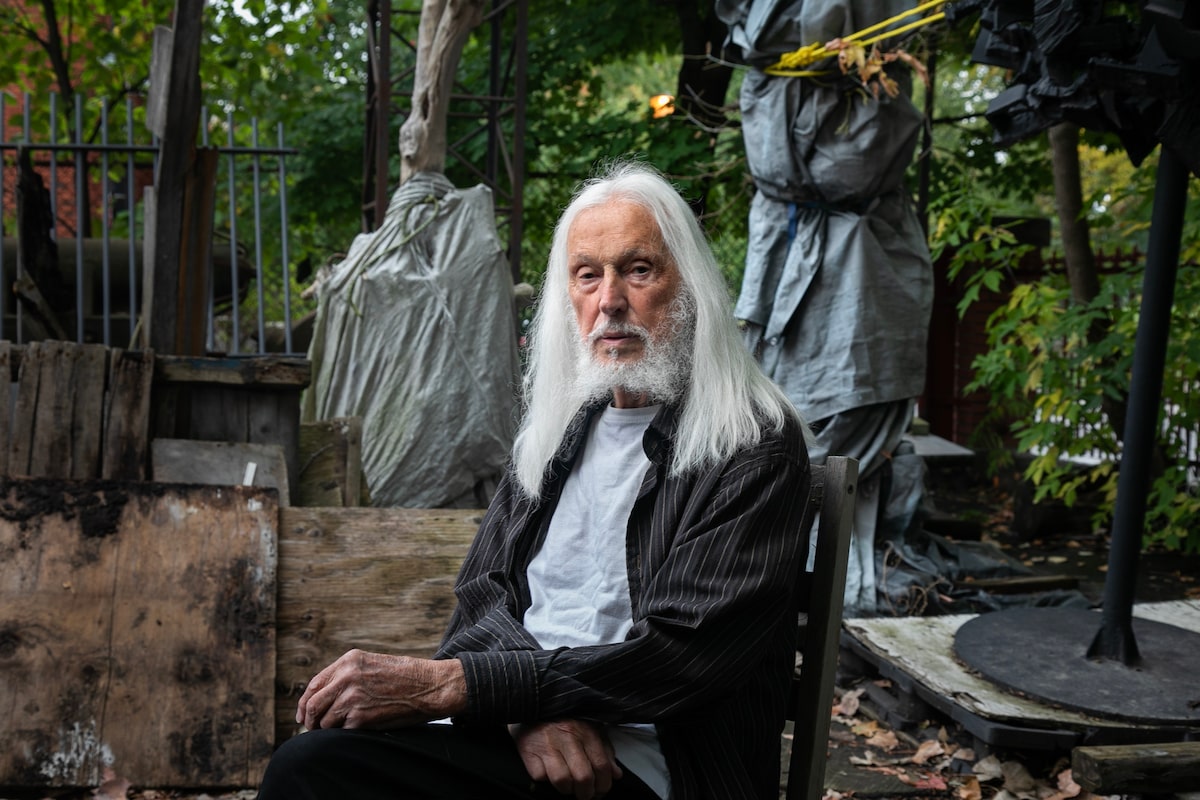
Vaillancourt spent four years in San Francisco erecting the fountain, but was disinvited from the unveiling, he said, because of political conflicts with the city administration.ROGER LEMOYNE/The Globe and Mail
In the late 1960s, Mr. Vaillancourt spent four years in San Francisco erecting the fountain, only to be disinvited from the unveiling, he said, because of political conflicts with the city administration. He came anyway and jumped into the water before painting “Québéc Libre” on the concrete while photographers swarmed.
It was the beginning of a controversial life for the sculpture, which critics decried as a “howling obscenity” and “pestiferous eyesore,” just as others fell in love with its idiosyncrasies. Notably, Mr. Vaillancourt’s masterpiece became a hallowed place in the history of skateboarding because of its angular shape and dramatic appearance. When Bono graffitied its rough-hewn surface during a U2 concert in the late 1980s, its status as an emblem of a quirky and off-beat city was further confirmed.
The city has struggled to maintain the fountain in recent years, with electrical problems forcing the water to stop flowing, and a third-party report this summer raising concerns about asbestos, lead and seismic safety issues. The sculpture was then deemed a public hazard and fenced off.
The Vaillancourt family disputed the report, arguing the chemicals are present in trivial amounts and noting that the fountain has survived serious earthquakes in the past.
Charles Birnbaum, president of the Washington, D.C.-based Cultural Landscape Foundation, said the Art Commission’s vote was the result of an opaque process that appeared slanted in favour of removal.
The Vaillancourt Fountain has a “silhouette as iconic as the Golden Gate Bridge,” he said. “It’s a startling decision in terms of ignoring a city’s cultural and artistic patrimony.”