
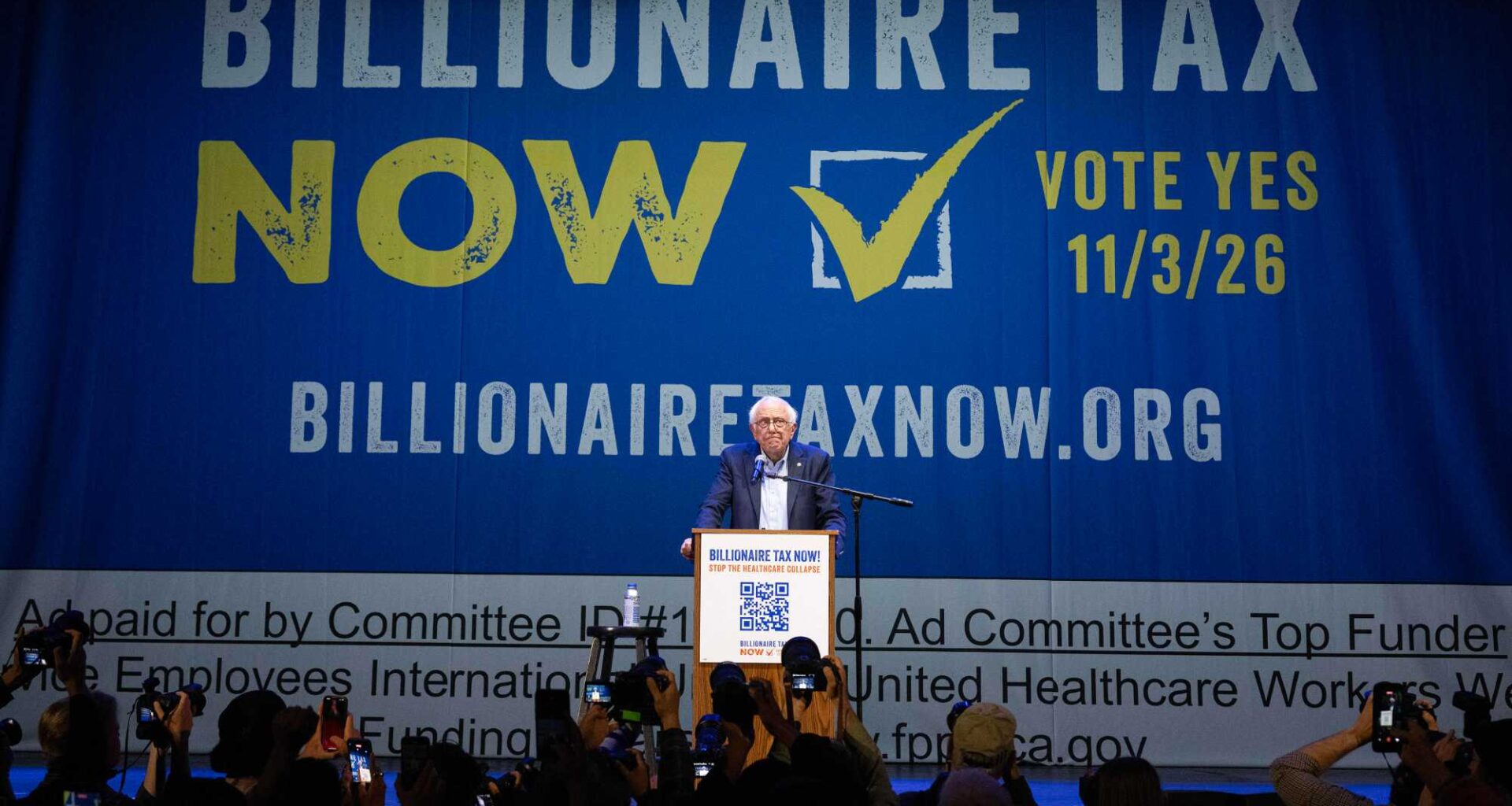
When Mark Zuckerberg purchased a Florida mansion in February, many believed he had waited too long. California’s proposed billionaire wealth tax, if approved by voters in November, purports to tax anyone who was a resident as of Jan. 1.
But Zuckerberg might know something the measure’s proponents do not — or won’t admit.
The California Billionaire Tax Act’s residency provisions are exceptionally vulnerable to legal challenge. Even if the tax passes and survives challenges to its broader constitutionality, billionaires who leave California sometime in 2026 have good reason to believe they can escape some or all of the tax.
The measure would impose a one-time 5% tax on the net worth of billionaires who resided in California as of Jan. 1, 2026, based on wealth measured on Dec. 31, 2026. Because the measure can’t be enacted until early November, its residency snapshot predates the tax by ten months.
Retroactivity isn’t always a legal impediment, but it is here, and the drafters seem to know it. The initiative’s language asks courts to substitute later residency and valuation dates if the ones they selected are unconstitutional.
The Supreme Court has upheld retroactive tax changes, most notably in 1994, in U.S. v. Carlton.
But Carlton emphasizes that the change in question was a modest fix to a defect in an existing tax, with the court distinguishing this small and timely fix from the retroactive creation of a “wholly new tax.”
On two occasions, in Blodgett v. Holden and Untermyer v. Anderson, the court struck down the retroactive creation of a wholly new tax. The Supreme Court further held that such a tax was unconstitutional even if only retroactive to a period where the taxpayer would have realized the tax was possible or even likely. As the court put it, taxpayers “cannot foresee and ought not to be required to guess the outcome of pending measures.”
The second problem involves mid-year movers. A Jan. 1 snapshot residency date, paired with a Dec. 31 valuation date, taxes 100% of a departed resident’s wealth, including wealth acquired or accrued after leaving California. That violates the Due Process Clause, which has been held to require “some definite link, some minimum connection” between a state and what it taxes.
It also implicates the Commerce Clause-derived fair apportionment rule from Complete Auto Transit v. Brady, since the measure defaults to the unapportioned taxation of all a taxpayer’s wealth even if some of it accrued out-of-state.
The drafters’ backup plan is to ask the courts to rewrite any portions of the measure that are unconstitutional, and especially the dates they chose to lock in taxpayers before they had time to react (which was the express stated purpose of the selected dates). This request for what is known as “judicial reformation” may not be enough.
California courts have repeatedly refused to rewrite unconstitutional tax statutes on the grounds that this usurps the role of the Legislature or, in the case of an initiative, the people. Embedding a direct request for such judicial assistance helps, but the more discretion a court is required to exercise to save the measure from its constitutional defects, the more likely it is to strike down the entire initiative rather than attempt to guess whether voters would have still supported it in a vastly different form.
Even if the tax itself survives, that survival may well hinge on a court’s willingness to revise the residency and valuation rules and dates, giving billionaires good reason to believe that midyear departures are worth the effort.
Ultimately, the provisions meant to lock taxpayers in could be the wealth tax’s undoing. And the more viable the initiative appears at the ballot box, the more likely billionaires are to depart before it can take effect. The wealth the measure intends to tax will increasingly slip away.
No legal outcome is ever certain, but it doesn’t have to be for billionaires to conclude that moving could pay off. The bad news for California is that once those taxpayers leave, they’re unlikely to return.
The longer this measure appears viable, the greater the likelihood that California will lose a substantial share of its billionaires and all the ongoing tax revenue associated with them under the state’s existing tax code, without ever seeing a penny from a constitutionally dubious wealth tax that will be costly to litigate and could — and by all rights, should — be struck down.
Walczak is a senior fellow at the Tax Foundation.