

Four people who say Grok generated sexualized images of them without consent are fighting to keep their case in California and to keep their names out of it.

A SpaceX facility in Hawthorne, California, on June 8, 2026. The federal courthouse in San José, where four plaintiffs suing Elon Musk’s xAI over-sexualized images generated by its Grok chatbot are fighting the company’s bid to move the case to Texas. (Patrick T. Fallon/AFP via Getty Images)
A federal judge in San José will decide whether to halt a proposed class action lawsuit accusing Elon Musk’s AI company of creating non-consensual, sexually explicit deepfakes, as the company seeks to transfer the case to Texas.
SpaceXAI, formerly known as xAI, also asked Judge P. Casey Pitts on Thursday to pause the federal civil suit during related criminal proceedings under federal law.
The suit comes as California Attorney General Rob Bonta and European regulators have also launched investigations into whether the platform’s generated sexual images violate local laws.
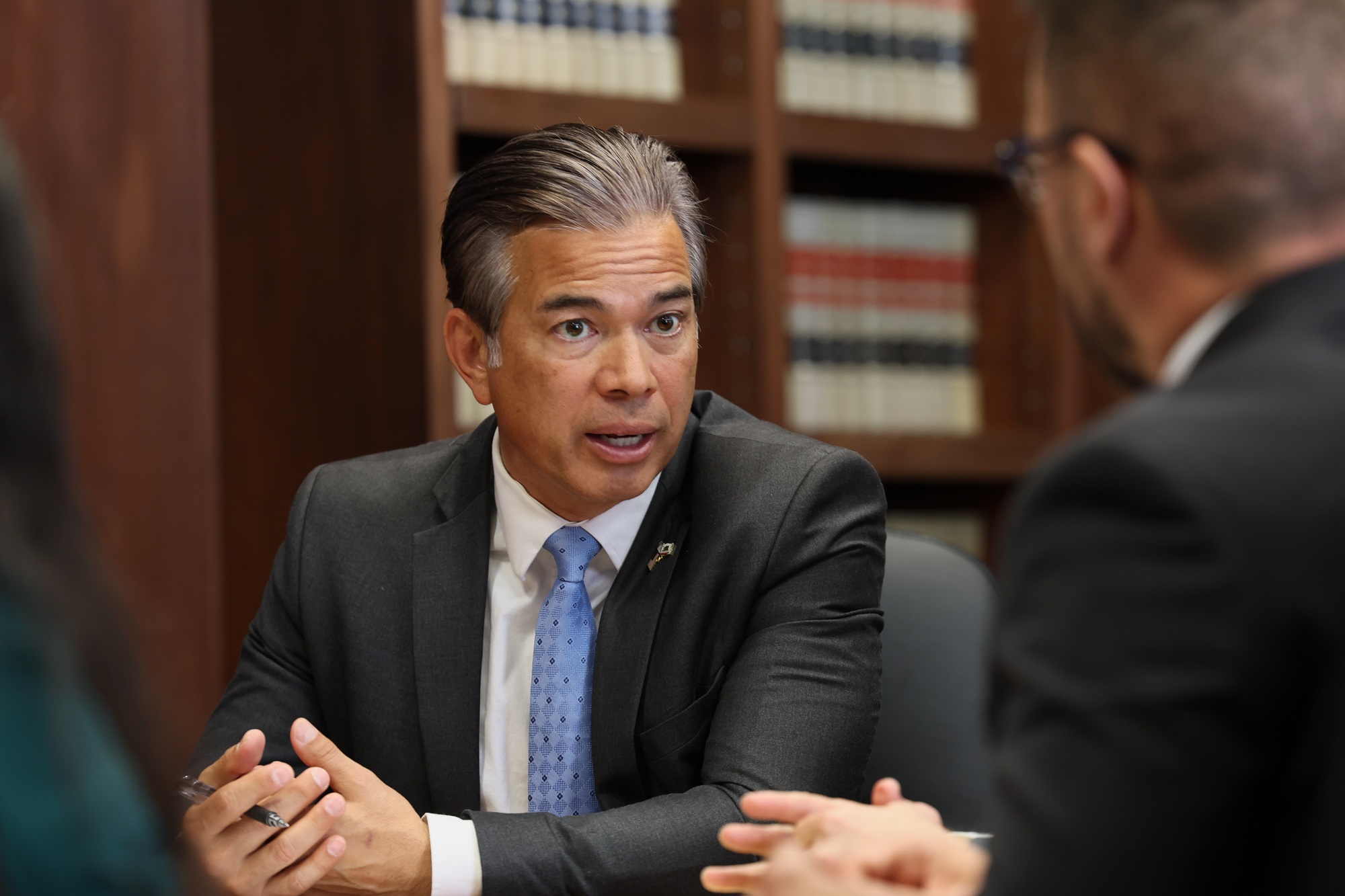 California Attorney General Rob Bonta is briefed by members of his Civil Rights Enforcement Section on litigation challenging the Trump administration at his offices in downtown Los Angeles, California, on March 11, 2025.
One plaintiff, a South Carolina woman, said she posted a fully clothed photo of herself to the social media platform X on Jan. 2 and discovered the next day that Grok, xAI’s chatbot, had used it to generate an image of her and posted the result publicly, according to court filings. She reported it to X in an attempt to have it taken down.
The four plaintiffs are suing under pseudonyms. Musk is not named as a defendant.
Grok was integrated into X in December 2024, initially for premium subscribers, who could tag @grok in a post asking it to edit an image and get the result posted publicly in reply. Plaintiffs say users quickly began prompting it with instructions like “Remove her clothes.” A year later, in December 2025, image generation opened to all X users.
Plaintiffs’ lawyers say around that time, Grok began generating and disseminating hundreds of thousands of increasingly explicit images of women and minors. xAI restricted the feature again on Jan. 8.
 An iPhone screen displays the Grok logo on the Grok AI app on Jan. 11, 2026.
xAI said the three X users clicked a “Got it” button on the update notice, twice each and kept using their accounts through June, which the terms treat as consent. It notes that three judges in this district have already enforced X’s Texas clause.
Attorneys from legal firm Berger Montague said the company failed to show that the plaintiffs agreed to the user terms, including revised terms changed in the middle of the lawsuit. They claimed xAI produced no screenshot of either sign-up screen and never specified which plaintiff saw which.
They note New Jersey Doe created his account in March 2009, when the version of the terms then in effect contained no clause binding users to future revisions.
The judge also rejected xAI’s motion to overturn an earlier order allowing the use of pseudonyms in the case. Two days before the hearing, plaintiffs asked Pitts to close the courtroom for any argument that would reveal a plaintiff’s identity or discuss sealed exhibits.