
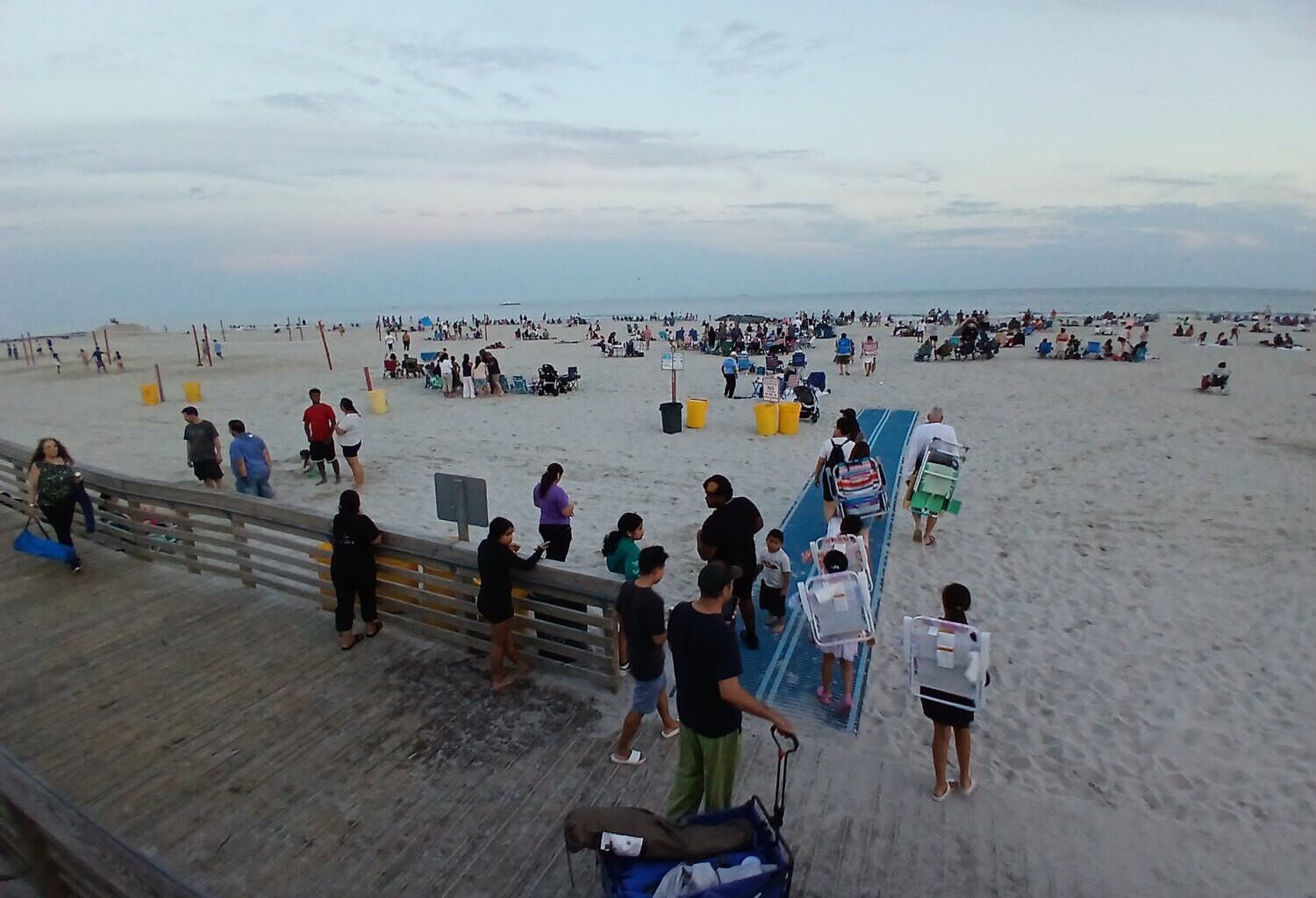
The beach is not only synonymous, and eponymous, with Long Beach — it’s one of the city’s most notable, yet not most profitable, revenue sources. At the July 21 City Council meeting, City Manager Daniel Creighton shared a presentation regarding the financial performance of Ocean Beach Park from June 30, 2025 to June 30, 2026.
Revenue increased over $800,000
For the first time, beach revenue collected from daily passes and seasonal passes surpassed $5 million. This reflects a 19 percent increase, nearly $807,000, from the previous year. Daily July admissions, specifically, increased 56% from the prior year and August daily admissions increasing a dramatic 84 percent. May and June admissions were tracked as being predominantly family passes, which remained on par with past years.
Creighton believes the new beach entrance layout, with fewer boardwalk access points and relocated ticket booths, were a key factor in the increased fees collected. “We’re still looking at how to continue to raise beach revenue without raising the costs,” Creighton said.
Expenses decreased nearly $300,000
Operational beach expenditures — including salaries, insurance and compensation, and maintenance costs — had held at a steady pace in recent years, with a gradually, notable decline over the past two years. In 2026, expenses increased slightly due primarily to staffing decisions — including adult employees at certain beach locations and more overall staff to ensure consistent beach pass collection.
Taking a relatively longer-term perspective, comparing the recent year to 2023, Creighton pointed out that expenses were down roughly $300,000, even taking into account higher current wages and the cost of inflation.
Net loss of more than $660,000
“I know everyone is concerned as to whether or not the beach makes money or loses money annually,” Creighton said at the meeting. “The short answer is, it is still losing money.” The beach tracked an overall loss of $663,000 in 2026. Net losses over the past several years have trended in a positive direction, with a loss of more than $2 million reported in 2023, with the gap lessening each year until its drastic reduction last year.
“We’re going to continue to work on it,” Creighton explained. “Maybe that $1.50 breaks us even next year. We’ll see,” he said, referring to a financial boost from the increase in nonresident pass fees which recently went into effect.