
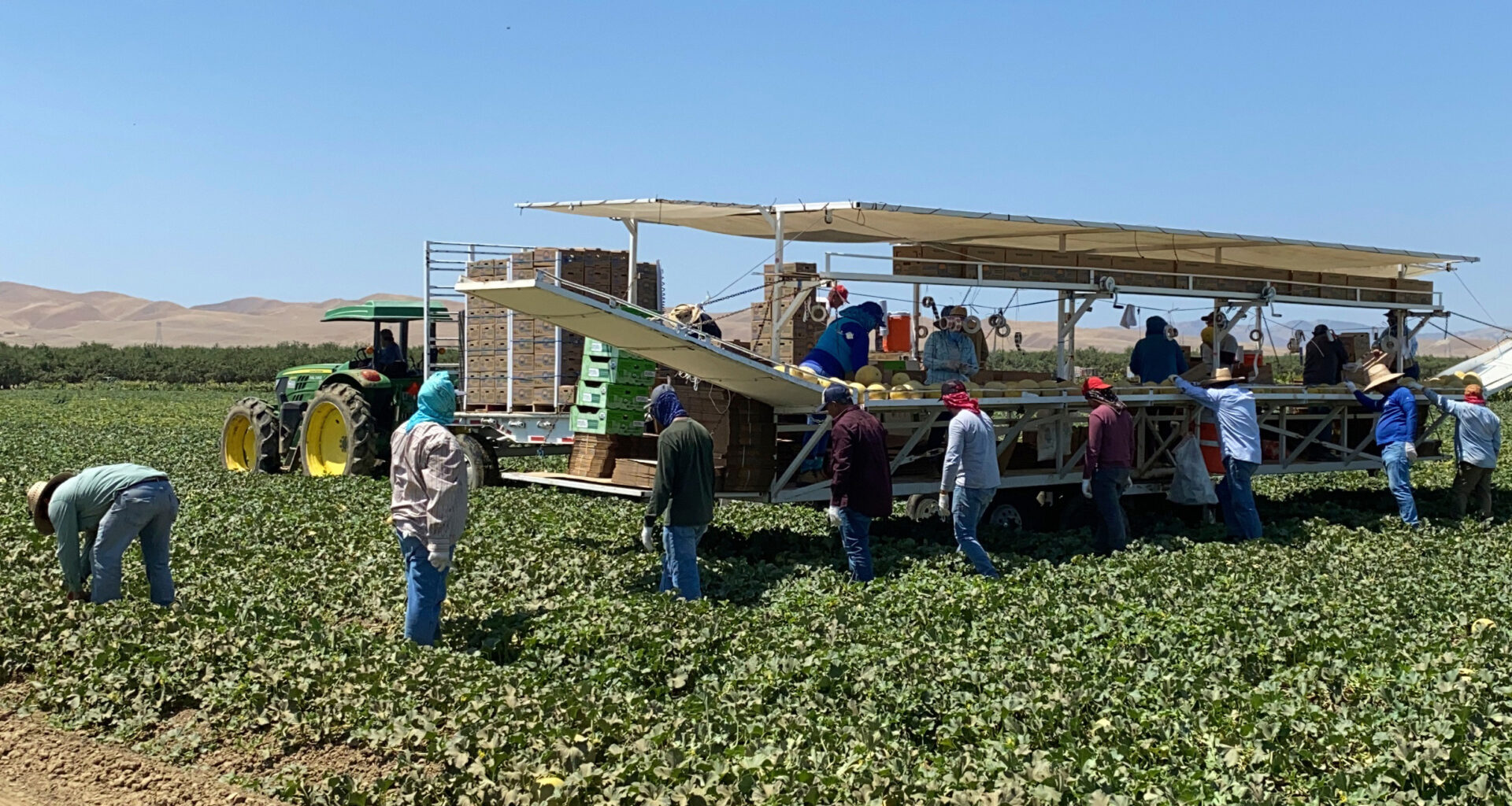
California is an agricultural powerhouse, with its farmland bringing in tens of billions of dollars to the Golden State’s economy.
But a national outbreak of intestinal illnesses caused by the cyclospora parasite is having rippling effects across the farming industry, with investigators linking cases to certain produce like iceberg lettuce.
Public health and agricultural experts have maintained the state’s fresh fruit and vegetables remain safe to eat, and are urging people to do so as part of a healthy diet.
Industry sources have also pointed to a variety of steps California has taken to maintain the quality and safety of its produce, born out of lessons learned from past outbreaks.
But consumers remain wary, and growers are feeling those concerns.
Unharvested fields in ag country
Ryan Jacobsen is the CEO of the Fresno County Farm Bureau. He says Fresno is the biggest agricultural county in the U.S., growing everything from tomatoes to wine grapes, to garlic.
“Just about every day, every single American eats something that originates right here in our backyard,” Jacobsen said.
One of those crops is leafy greens, for which Fresno County is a particular powerhouse. “This area historically produced 95% of the nation’s head lettuce for six weeks in the spring and six weeks in the fall,” he explained.
Jacobsen said news of the cyclospora outbreak triggered a “cumulative” response within the agricultural sector that lasted for weeks. “I think when that news broke, there’s a lot of concern in the ag community because sometimes the fiction spreads a whole lot quicker than the fact,” he said.
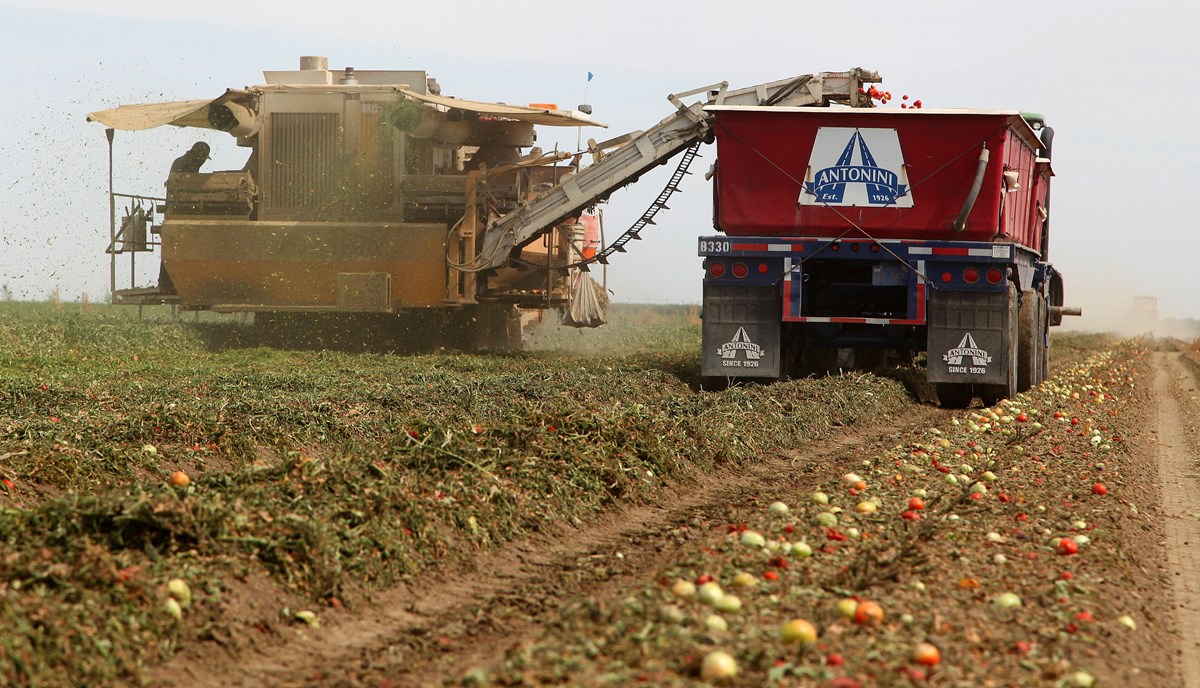 In this June 25, 2013, file photo, a mechanical harvester picks tomatoes in the Westlands Water District near Five Points, Calif.AP Photo/Gosia Wozniacka, File
Jacobsen believes social media played a major role in spreading “non-truths” about the outbreak. “You do expect the initial reaction to be this, but the number of people just stating that they’re no longer eating those greens — any kind of greens across the board,” he said.
“It’s a very unfortunate decision now that we know pretty positively that California-grown products are not associated with this outbreak altogether,” he added.
Jacobsen said the farm bureau is trusting “the data and science,” and pointed to stringent standards that have been in place for nearly two decades to keep produce safe — the Leafy Greens Marketing Agreement (LGMA).
The agreement was established following a 2007 e.coli outbreak linked to fresh spinach that sickened more than 200 people in California, three of whom died. Jacobsen says the program sets extensive food safety protocols for growing, processing and selling greens.
“That’s where the industry stepped up and was arguably more proactive than any federal or state regulation… they basically came in and said we’re going to regulate ourselves,” Jacobsen explained.
But Fresno County growers are still hurting.
“I can tell you there are fields that are going unharvested simply because of the markets not being there right now,” Jacobsen said. “I’m hopeful that our industry, not just leafy greens but almost vegetables as a whole, will recover to the point where not a lot of crop is lost.”
Addressing an outbreak
While the current rash of cyclospora has captured national attention, food safety experts say these incidents have decreased over time as safety measures have been developed and implemented.
“The response is instantaneous, doing the best to provide information, trace back, look all the way backwards through the system to the farm… even looking to the farm crew, any farm equipment used in harvesting,” Trevor Suslow, a UC Davis Professor Emeritus and fresh produce safety expert, told Insight Host Vicki Gonzalez.
Suslow said investigations and testing to find a potential root cause for the cyclospora contamination were “already going on” when the FDA announced two weeks ago that a Taylor Farms lettuce supplier from Central Mexico was linked to some illnesses.
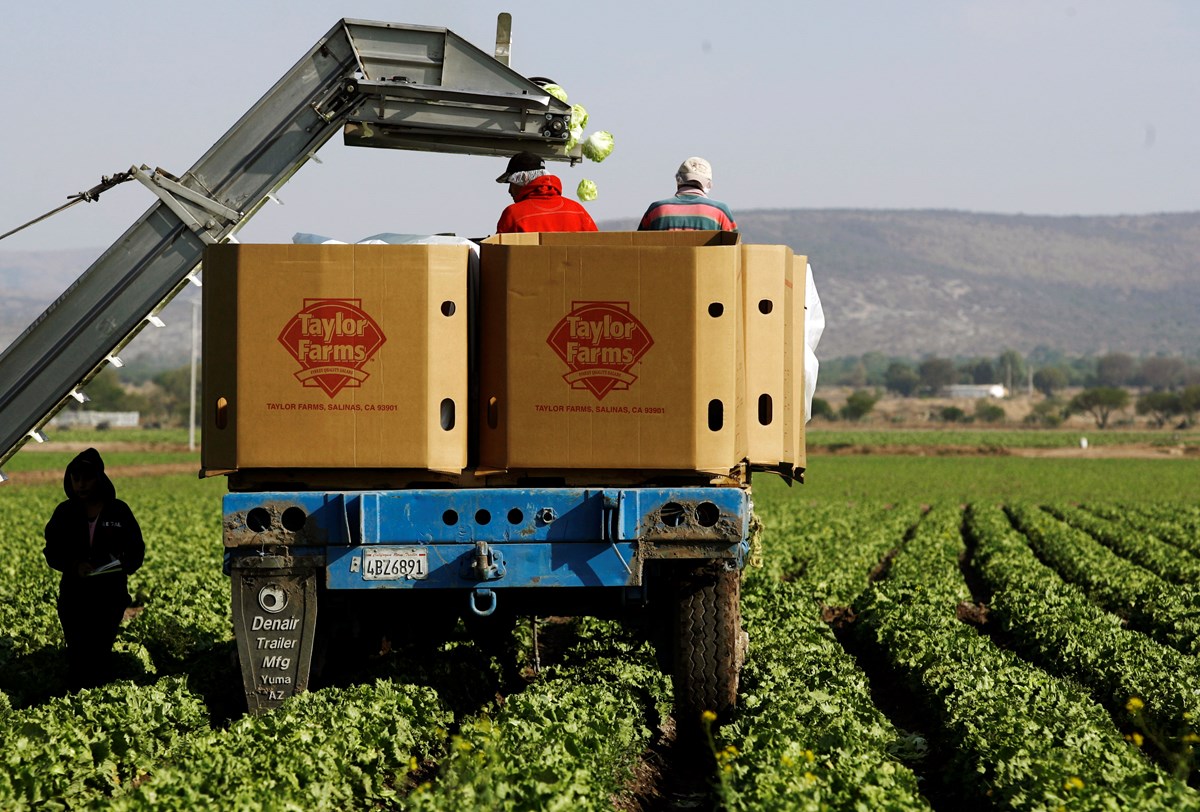 Workers pack lettuces at a Taylor Farms field in the town of Doctor Mora, on the central state of Guanajuato, Mexico, Wednesday, March 26, 2008.Photo/Guillermo Arias
Federal officials later said the test was a false positive, but Suslow said that correction “didn’t change anything” regarding tracing efforts — except to greatly expand the search.
“None of that product could have been associated with the initial outbreak, but was it somehow related to the farm [or] facility?” he said, though Suslow added that it did provoke “a lot of activity that maybe wasn’t relevant.”
Suslow said it is difficult for the public to navigate an outbreak, and even more so to reassure them of the safety of agricultural goods.
He noted that information tends to come out “in dribs and drabs,” and much of it is based on “historical association” with a particular illness, despite multiple potential ways for someone to fall ill. There’s also a lag time in providing updates and reporting cases, which also doesn’t help.
“It’s unfortunate that the reaction is, ‘I don’t know what to do, so I’m going to avoid everything,’” Suslow said. “That’s really counter to having a diverse, healthy diet.”
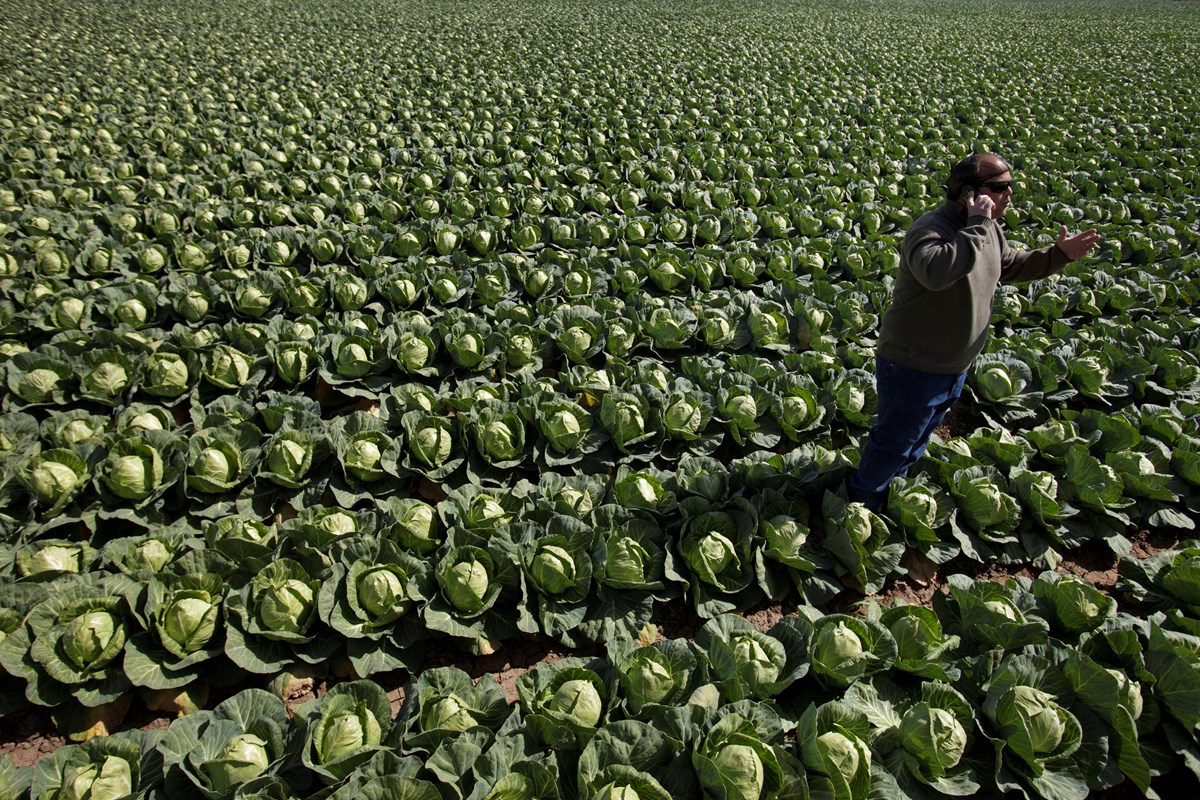 In this March 7, 2012 photo, farmer Jack Vessey talks on his cellphone in the middle of his lettuce field near Holtville, Calif.AP Photo/Gregory Bull
Suslow also pointed to the LGMA, which he helped develop, as a sign of California’s food safety. He noted that it is “a government-audited program rather than a paid third-party industry audit.”
Suslow said the LGMA’s science-based evidence, practical knowledge, and use of subject matter experts “has really been held up as the gold standard,” and even been integrated into the FDA’s produce safety rules — which cover both domestic and international standards.
“Me personally, I wish it would be a little stronger, but we’re getting there,” Suslow said.
What needs to change?
Dave Puglia is the President and CEO of the Western Growers Association, which represents fresh produce growers, packers and shippers across the Western U.S. — includes hundreds of farmers in the Golden State.
Puglia said Western Growers immediately began providing information to the FDA and CDC after learning about cyclospora cases, to help narrow the scope of the investigation. He said the goal was to ensure communication was clear “and doesn’t end up creating confusion and panic in the consumer marketplace.”
“Unfortunately that happened here to some degree,” Puglia said, pointing to early media reports he said linked cyclospora with fresh produce in general. That caused “a lot of economic damage that could have been avoided” to crops like fresh berries, which Puglia said have since been cleared.
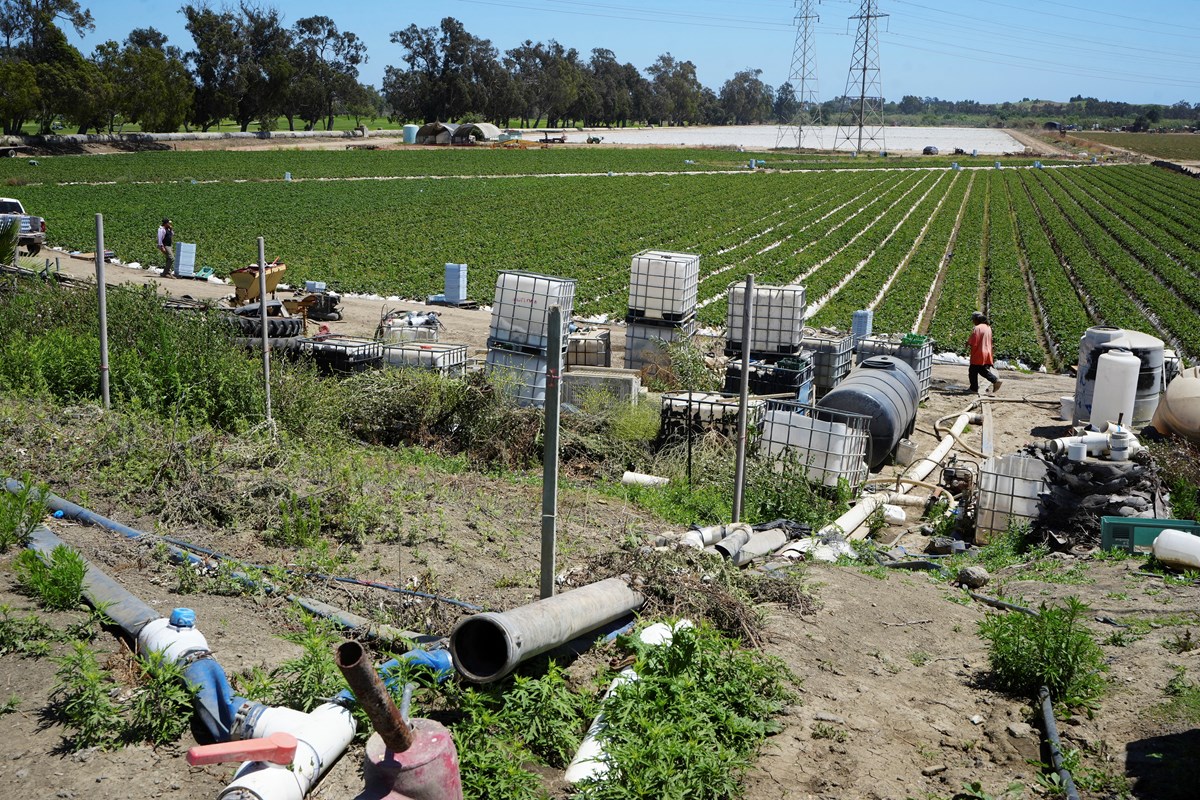 Farm workers work at a strawberry field in Oxnard, Calif., on Wednesday, June 18, 2025.AP Photo/Damian Dovarganes
The FDA’s website says past cases of cyclosporiasis have been linked to raspberries, among other fresh produce. However, the agency’s investigation into the July outbreak is centered on iceberg lettuce.
Puglia said Western Growers’ members suffered a “severe drop-off” across the board as illnesses started being reported, even with no links to crops grown in California. “Products that have no connection at all to this outbreak, no cyclospora history at all, just saw the market demand tank,” he explained, adding that there has been no sign of demand recovering.
And that economic impact goes beyond one farm, hitting supply chains for larger growers and affecting related industries.
“Most of our members are operating on extremely thin margins these days” Puglia said, citing additional hardships like high input costs and lost exports. “It’s a really tough time to absorb another blow like this.”
Looking ahead, Puglia said this outbreak needs to be a wake-up call.
Communication needs to be sharper, getting verified information out quickly to maintain public trust and confidence in their produce supply. Puglia also recommended that the FDA improve monitoring of imported produce, saying that it doesn’t receive the same level of attention as domestically-grown crops.
Another change has been a longtime industry request — a coordinated surveillance network between states and the federal government to identify cyclospora and its potential sources.
“How that happens, that’s a matter for the federal government and Congress, but we’ve identified the lack of an adequate surveillance system for many years,” Puglia explained.
As investigators continue to chase down leads, Puglia said the agricultural industry is also searching for ways to learn and improve. “This is a terrible outbreak, thousands of people have gotten sick,” Puglia said.
But he says the U.S. food supply remains “the envy of the world” despite this moment of concern. “I just hope people don’t lose sight of that in the midst of what is, very understandably, a serious event.”