
the Exploratorium on San Francisco’s Pier 15
On Pier 15 in San Francisco is the Exploratorium, looking out onto the Bay that characterizes a city equally defined by art and culture as it is by technological prowess. This is a museum, but not one with pieces that hang on the walls only to be observed with the eyes. It’s a didactic playground that takes the lessons that once made you fall asleep at your desk and turns them into engaging, playful experiences that spark curiosity. To bring these exhibitions to inquisitive kids and child-at-heart adults, the Exploratorium has enlisted a troupe of exhibition developers, artists, scientists, and volunteers to transform some of STEM’s toughest topics into a sandbox for discovery.
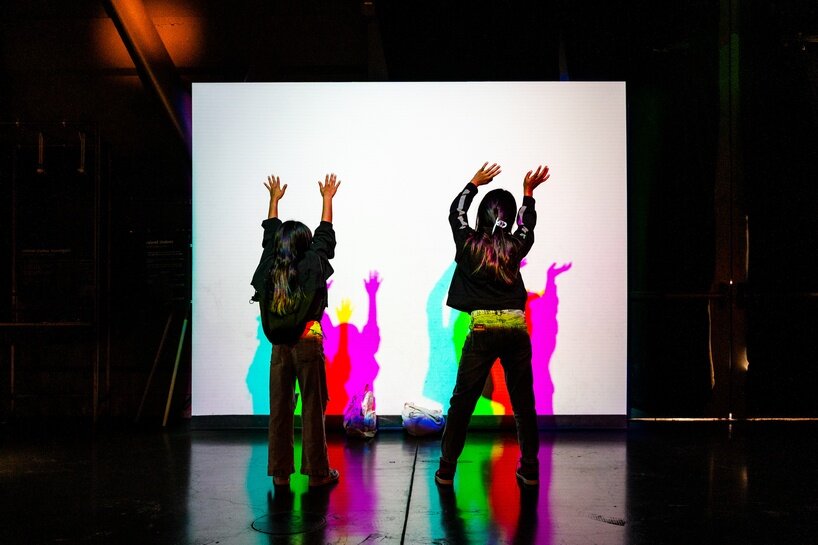
view of Colored Shadows at the Exploratorium, the San Francisco museum for hands-on learning | all images © The Exploratorium
A Foggy Bridge by Fujiko Nakaya
Many auteurs have commented on the peculiar weather that passes through the Bay Area. Many also like to bring up the misattributed Mark Twain quote, ‘The coldest winter I ever spent was a summer in San Francisco.’ Inhabitants of the region have affectionately named the fog Karl, with the Instagram account @karlthefog dutifully following its ebbs and flows. Drawing from the region’s enthusiasm for its hazy weather, artist Fujiko Nakaya created Fog Bridge #72494 in 2013, where fog intermittently shrouds a bridge that connects the two piers on which the museum sits.
To achieve this, the water is ‘pumped at high pressure through more than 800 nozzles lining the bridge.’ In 2014, when the state was experiencing a multi-year drought, the installation was deactivated as a water conservation measure. In a testament to the ever-changing nature of its displays, the Exploratorium improvised, adapted, and ‘reconfigured to run on desalinated water from the Bay,’ in order to keep it alive.
Probably Chelsea and twenty faces from only DNA
In 2014, Heather Dewey-Hagborg, who was an artist-in-residence at the Exploratorium, was contacted by PAPER Magazine to create a portrait of whistleblower Chelsea Manning who, at the time, was incarcerated and could only conduct interviews with the press by post. The work was motivated by Dewey-Hagborg’s development of Stranger Visions (2012–2013), in which she created profiles of strangers based solely on their DNA sequences. Speaking to the Exploratorium about her project, she walks through precisely how she creates these images, starting with how she learned to sequence DNA at Genspace, a community laboratory in Brooklyn, and ending with 3D printing human-scale masks of the images she generates through a custom-built algorithm.
After receiving saliva and hair samples from Manning, she created 20 possible portraits for the work Probably Chelsea, an iteration of which was presented in the museum’s Cells to Self collection, which ‘considers the incredible diversity of cell form and function, from the environmental awareness of bacteria to human heart cells beating in response to electricity.’
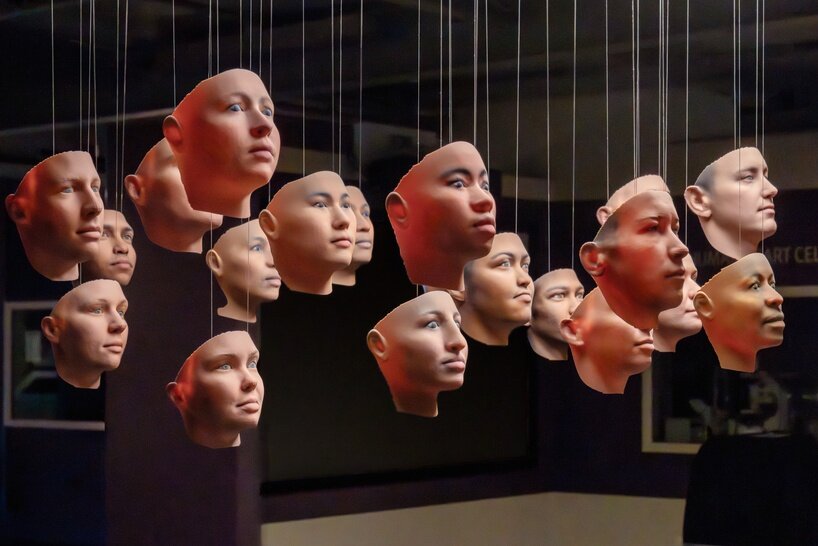
Probably Chelsea by Heather Dewey-Hagborg was presented in the museum’s Cells to Self collection
The Exhibit Development Shop
Since 1969, the Exploratorium museum has been creating its hands-on exhibitions. To create them, it needs a space: The Exhibit Development Shop, a workshop whose machines, gadgets, and gizmos are on display to passersby in the museum. Between discovering the tricks of perception and the truths of gravity, visitors can see the exhibition developers at work on displays that are constantly in progress. As each exhibition is designed for interaction, the developers build them with a system of interchangeable parts that encourage use.
With their hair tied back and safety goggles on, the developers reveal how the magic is made with table saws, drill presses, slinkies, and a mandala of silver spoons. In an interview with the museum, Jessica Strick, who has been with the museum for over two decades, remarks about her role that, ‘visitors may be surprised to know that Exhibit Developers not only just come up with the ideas but build them and also maintain them.’ She also mentions that the laser cutter is one of her favorite tools in the shop.
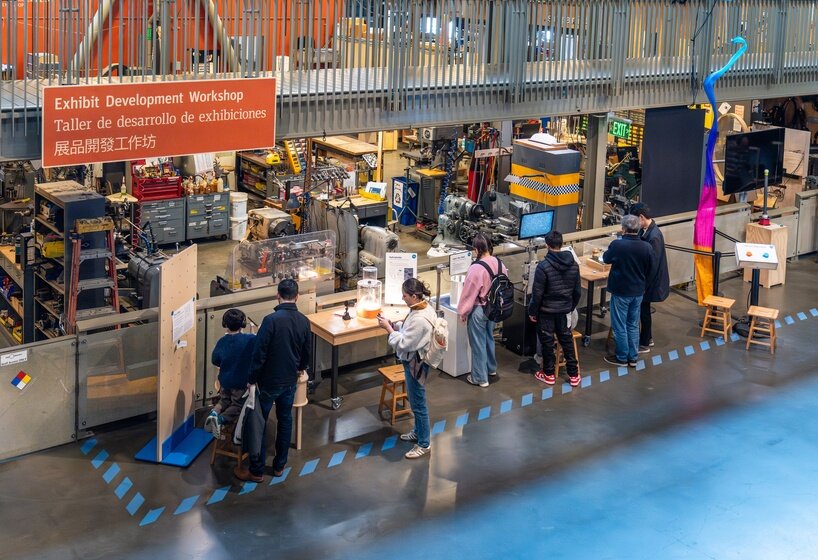
the Exhibit Development Shop is their fully-equipped workshop that’s on display to passersby in the museum
Three Days and $300
In a hackathon-style event, the Exploratorium holds the Hindes Prototyping Event, where ten to twelve participants working at the museum receive $300 and three days to prototype and develop their wildest and wackiest exhibition ideas. In a video documenting the results, they invoke a quote from Brian Eno that captures the spirit of the event: ‘If you want to get unusual results, work fast and work cheap… there’s more of a chance you’ll get somewhere that nobody else did.” During these fervent days of bringing new ideas to life, the museum creates even more displays that demystify the complex world around us.