

Legislation from two Bay Area lawmakers seeks to label content generated by artificial intelligence.

Signange of AI is displayed during the MWC (Mobile World Congress), the world’s biggest mobile fair, in Barcelona on March 3, 2025. Peninsula state Sen. Josh Becker, D-San Mateo and East Bay Assemblymember Buffy Wicks are co-authors on the law, which takes effect Saturday.
(Manaure Quintero/AFP via Getty Images)
A landmark state law written by Bay Area lawmakers aimed at helping people identify content that’s been generated by artificial intelligence will go into effect Saturday.
The law requires AI companies to ensure that their images and videos contain embedded, difficult-to-remove data about how the image was made — often referred to as “provenance.”
Starting Aug. 2, anyone will be able to put an image, video or audio file into a content verifier, like one from the Coalition for Content Provenance and Authenticity, and determine whether or not it is AI-generated, state Sen. Josh Becker, D-Menlo Park, told KQED.
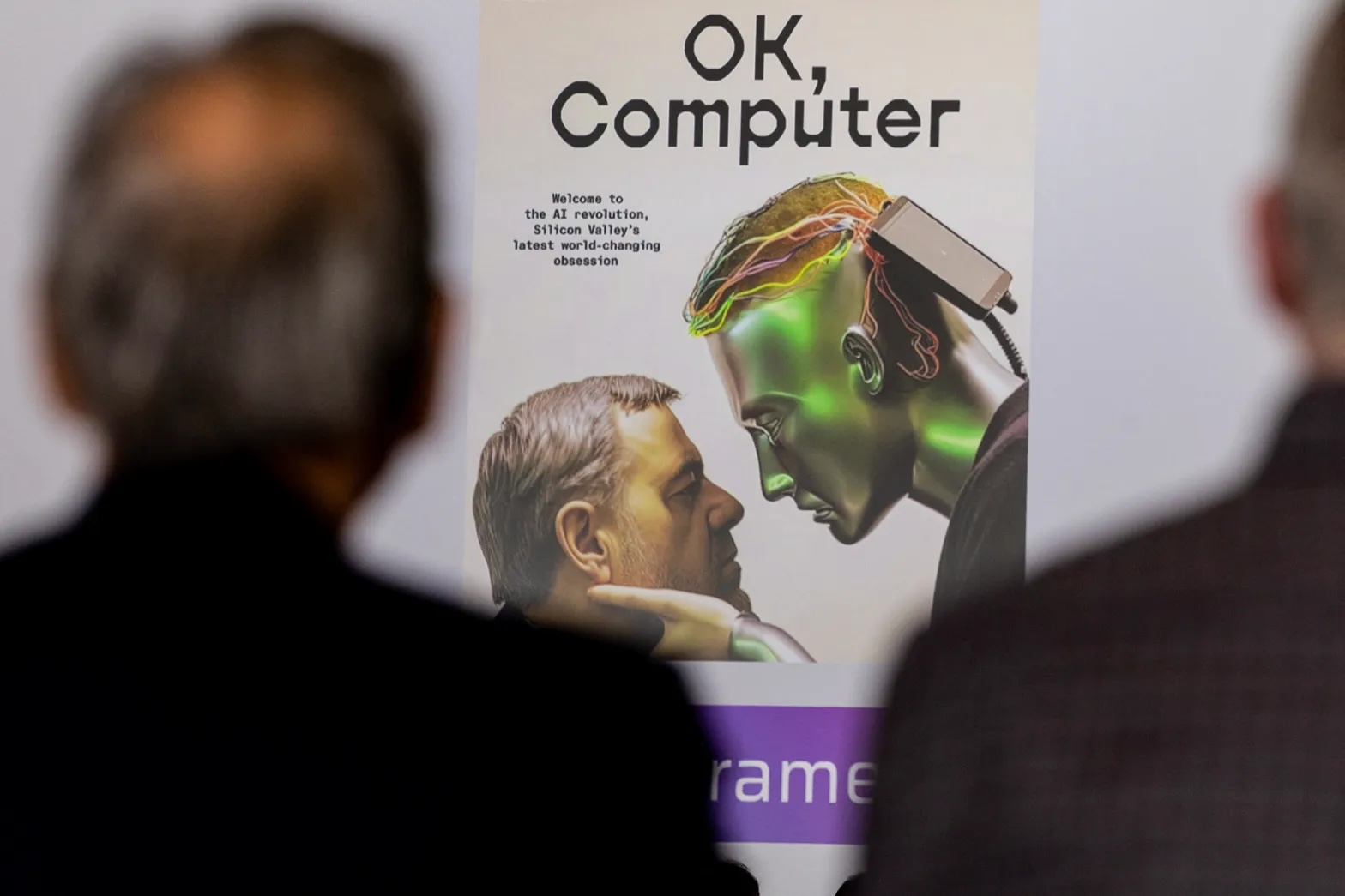 Technology leaders attend a generative artificial intelligence meeting in San Francisco on June 29, 2023.
“While AI has some benefits, we’ve seen AI content used for election misinformation for scams and abusive deepfakes,” Becker said.
The new law Becker co-authored along with Assemblymember Buffy Wicks, D-Oakland, and Rick Chavez Zbur, D-Los Angeles, will make it easier for everyday people to see what’s real and what’s fabricated.
The next phase kicks in on Jan. 1, 2027, and will require large online platforms to give users a way to view that previously stored information and figure out whether or not the content that they’re seeing is AI-generated.