
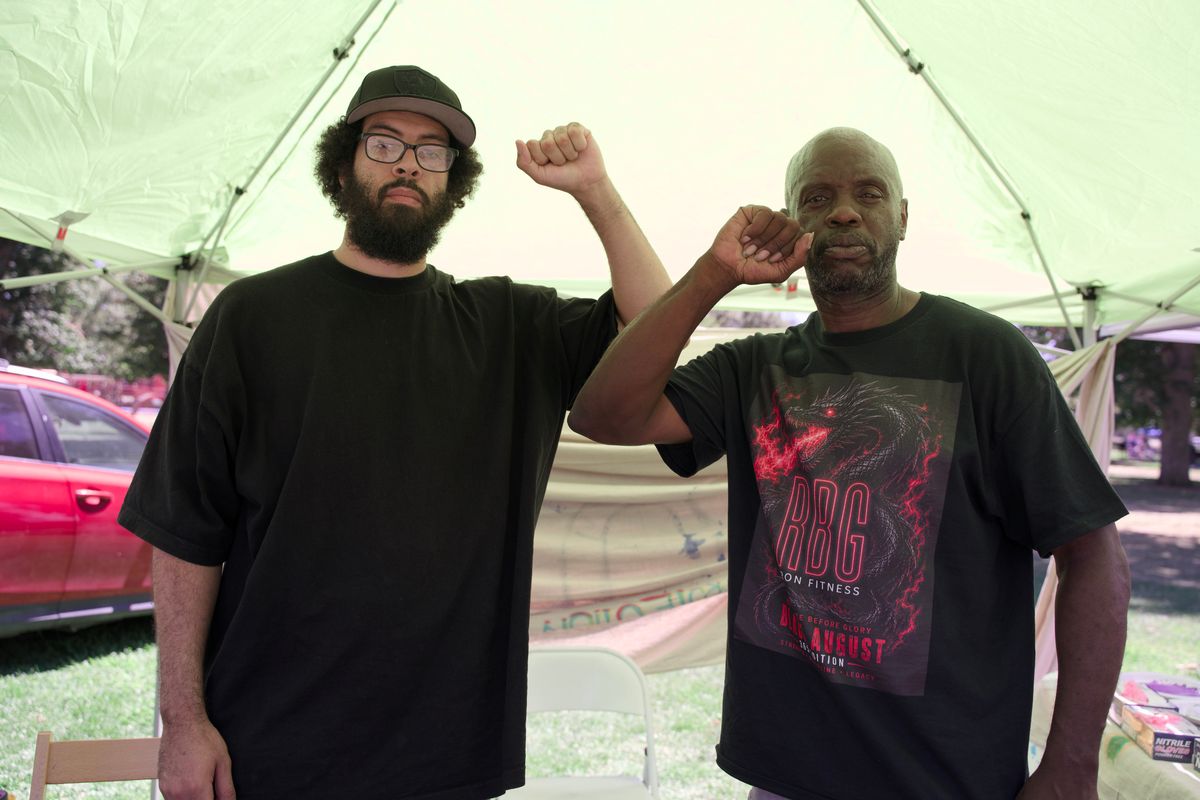
“We call on the community to think about things in their life that are toxic,” Sale said. “It’s about reflecting on what is holding us back.”
While fasting is one of Black August’s most recognizable traditions, mental health professionals say its deeper value may lie in the intentional introspection and community it creates.
“When we are talking about incarceration, I truly believe it’s the incarceration of an entire family system,” said Chioko Juliette Grevious, founder and CEO of Grounded Roots Therapy Collective.
Grevious said incarceration often leaves families dealing with chronic separation, financial instability, stigma, and grief long after a loved one enters prison.
“I think there’s this ambiguous loss when loved ones are physically absent from the family system but psychologically present,” she said.
She cautioned that Black August rituals should not replace therapy. Still, many of its traditions coincide with practices research shows can support psychological well-being.
“Healing in our communities doesn’t happen in isolation,” Grevious said. “Communities create rituals that help people remember, grieve, make meaning and reconnect with one another. Those are psychologically protective practices.”
Grevious also noted fasting is not appropriate for everyone, especially people with chronic illnesses or eating disorders. Instead, she encourages symbolic acts of discipline and reflection, such as taking a break from social media, journaling, reading about Black history, or participating in community service.
“Remembering and healing can exist together,” she said.
For Sacramento activist Faye Wilson Kennedy, Black August is both a remembrance and a call for action.
“Black August is a belief and tool for liberation and love,” she said. “Many folks don’t know Black August honors the freedom fighters, especially those inside the walls of our sprawling prison industrial complex.”
For her, observing Black August also means centering Black history and culture while building coalitions with other communities seeking justice.
“My husband and I try to center Black folks’ needs in our activism for social justice,” Kennedy said. “But we also understand that we must struggle alongside other allies for collective liberation and freedom.”