
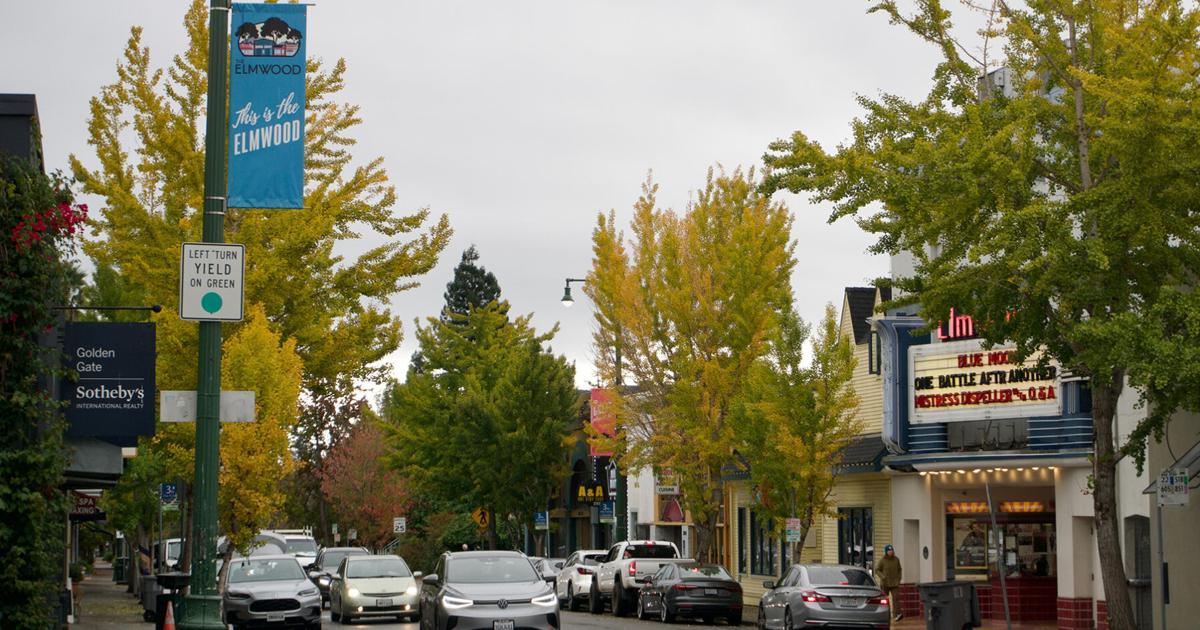
Berkeley residents and business owners have been strongly opposed to plans by the City Council to move forward with upzoning proposals in key commercial areas of the city, including the Elmwood District and along North Shattuck and Solano Avenue.
Opponents of the upzoning plan have adamantly denied claims that their arguments are a matter of “NIMBYism,” which is a term that refers to resistance to housing development by community members, often to prevent poorer and marginalized groups from living in their neighborhood. The acronym stands for “not in my backyard.”
“The process of the way in which the upzoning plans have been developed has not been as transparent or inclusive as it should have been,” said David Salk, owner of Focal Point Opticians, a business in the Elmwood District, and president of the Elmwood Theatre Foundation.
Salk said the community’s issues with the upzoning plans are due to the potential negative consequences on small businesses in Berkeley. They urge the council to pause plans to approve the proposal and to engage in more detailed conversations with affected residents.
According to Salk, the upzoning plans may result in the dislocation or closure of small businesses in the Elmwood District that have existed for decades. In order for developers to build above preexisting buildings, they will likely need to dislocate the business on the ground floor before going through a prolonged period of construction. Salk queried, “In the meantime, what does that business do?”
“We all understand housing,” Salk said. “Everybody wants housing to be affordable. We want it to be safe. We want it to be clean … There’s not a single person who doesn’t want that … But there’s no mandate that says that they need to disrupt the College Avenue commercial district.”
According to Salk and John Gage, another Berkeley resident and UC Berkeley alumnus opposed to the current upzoning plans, many community members fear a repeat of the mass closure of businesses in Downtown Berkeley along Center Street happening on College Avenue in the Elmwood District.
Developers purchased buildings along Center Street to convert into housing, which eventually led to the dislocation of small businesses that occupied those buildings, according to Gage. However, once the price of construction increased, developers abandoned the project, leading to commercial storefront vacancies along the street.
“The example people point to is the Center and Oxford (streets) development,” Gage said. “And so the ghost town image is what’s gotten into the minds of every retailer in Elmwood, in North Berkeley and Solano.”
The Berkeley City Council held a special meeting Thursday to discuss the upzoning plans. According to Gage, more than 100 people signed up to make comments at the meeting.
Salk is concerned about the well-being of the Rialto Cinemas Elmwood and does not believe it will be able to stay in business should substantial construction begin taking place around the theater. Rialto Cinemas Elmwood is the last movie theater in Berkeley other than the Berkeley Art Museum and Pacific Film Archive.
“If there’s a lot of construction on College Avenue in this little two block area, I seriously doubt whether the Elmwood Theatre can survive that,” Salk said. “Now that would be a travesty. You’re talking about the last motion picture show in Berkeley — the last one!”