
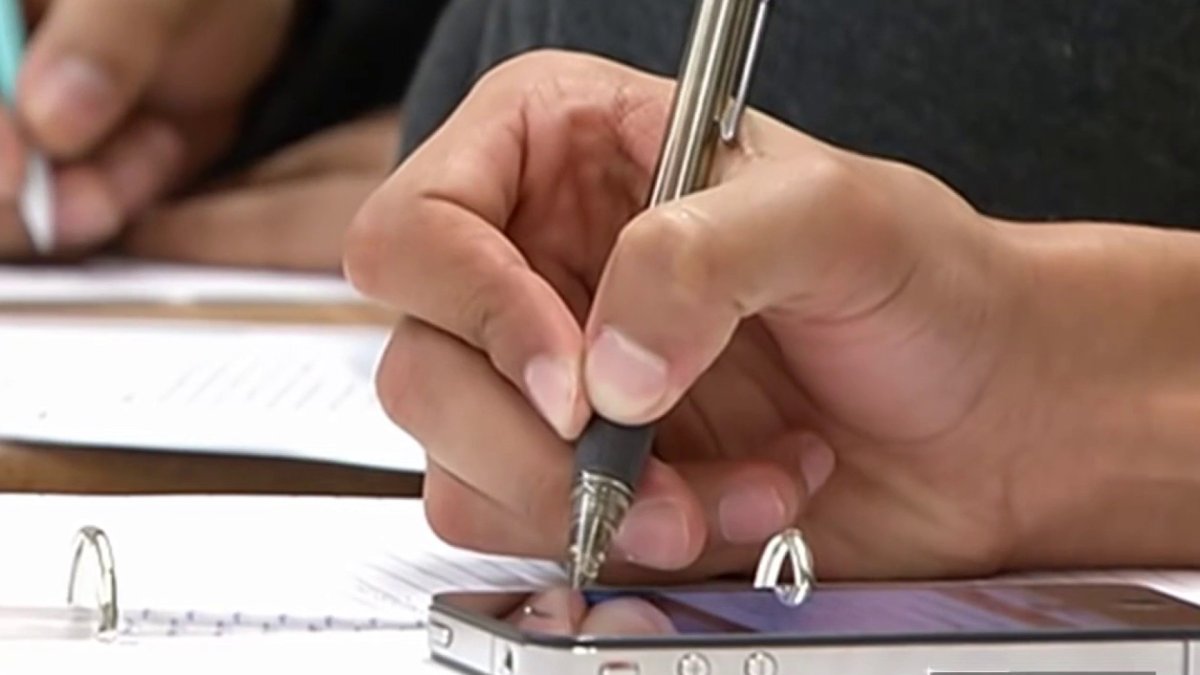
The new “bell-to-bell” cell phone policy at Oakland Unified will go into effect Monday for all the schools in the district.
Oakland Unified is one of the last big school districts in the state to adapt a district-wide “bell-to-bell” cell phone policy, an important issue on the minds of current and future Montclair Elementary School parents.
The new policy, which takes effect Monday morning, prohibits texting, scrolling and calling during the school day.
“The bottom line, this is about limiting distractions. We want our kids focused on their job, which is being students, which is learning. It’s about making sure everyone in the classroom is focused on the same thing. It’s about making sure there isn’t online bullying going on,” OUSD Director of Communications John Sasaki said.
Elementary school kids will keep phones in classroom locked boxes, and middle and high school students will store them in pouches, which they carry, but can only access for approved education plans and emergencies.
“If there’s an actual emergency, which will be determined by the administration and by the teachers, then they’ll unlock them for use in those emergencies,” Sasaki said.
The policy will bring the district into compliance with a state mandate aimed at increasing face-to-face interactions, preventing cyberbullying and limiting distractions in the classroom.
Dr. Michael Stanton, a licensed clinical psychologist at CSU East Bay’s Department of Public Health, says 33% of California middle school teachers say that cell phones cause problems in their classrooms.
And he adds the issues increase as the kids get older, with 72% of high school teachers reporting distractions and other problems with phones.
“Bullying online, people being incredibly distracted during school time, so I think there are some really big pluses from this,” he said.
He notes, however, that some of the greatest benefits may be for the younger students.
“Focusing on the ‘in person’ can be incredibly helpful for students, especially in the developing ages, where students are learning social relationships, learning how to interact with others,” Stanton said.
Mario Oliveros agrees there are benefits, but he says “the jury is still out” for him because he says smartphones are also helpful in the classroom.
“For kids, for example, with disabilities, it would be really good for them to have access to their devices. A lot of apps and assisted reading features would be good for them. I think there’s also a case to be made for some useful ed-tech apps, for kids to learn,” he said.
Under the new policy, phones will be allowed for documented medical needs, individual education plans and will be unlocked for serious safety or emergency situations.