
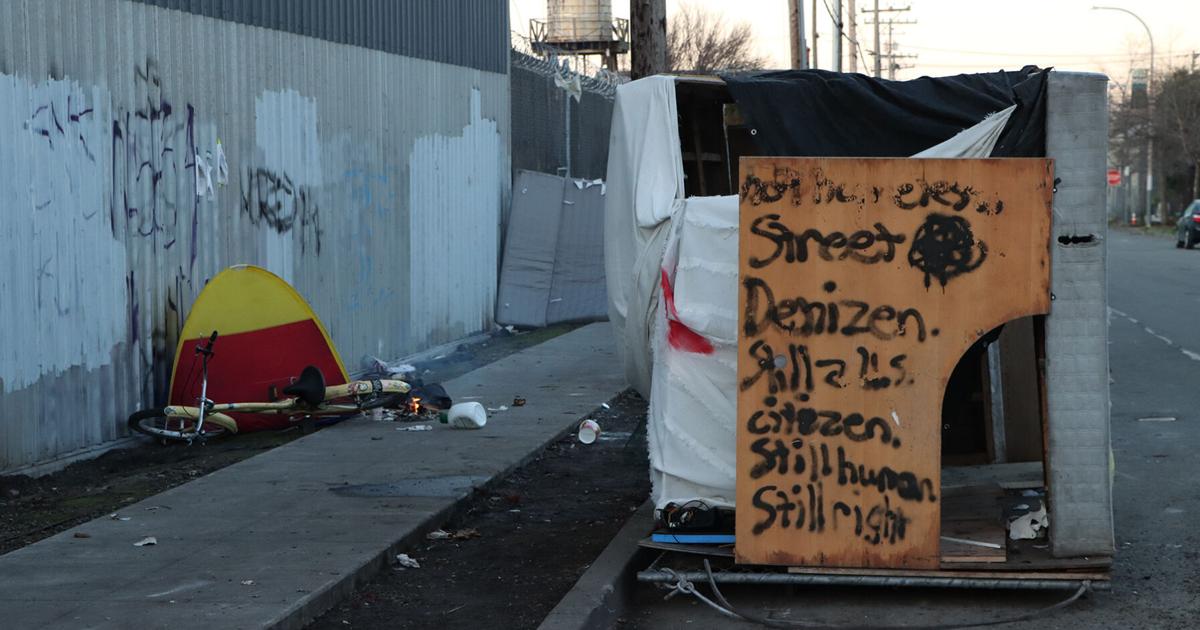
Disabled residents of the Eighth and Harrison streets encampment allege that they have been repeatedly denied Americans with Disabilities Act accommodations during their yearslong litigation with the city of Berkeley. Residents are left in fear for their safety as the city seeks to sweep the encampment.
Robbie Peddycoart, one of many disabled residents at the encampment on Eighth and Harrison streets, stated in a written testimony provided by Berkeley Homeless Union president Yesica Prado that he requested 12 ADA accommodations in February due to his disabilities that could make relocation life-threatening.
His requests included placement in a shelter with private rooms, a map of places where the city would allow him to place his tent, physical assistance with relocation and more.
He alleged in his testimony that the city denied virtually all of his accommodations, with the exception of staying with his service animal and receiving a designated point of contact with the city of Berkeley. After this, he said he felt he was “left with nothing.”
“My heart condition — aortic valve regurgitation — makes stress a matter of life and death,” Peddycoart said in the testimony. “If the City forces me to leave on its timeline, the stress alone could trigger a cascade of physical reactions that puts me in the hospital or could kill me. I don’t know if I will survive it.”
The BHU, which represents disabled residents of the encampment, was granted a temporary restraining order against the city last Thursday due to multiple alleged issues with how the city handled accommodations. Issues included offering residents $100 gift cards instead of replacement tents or clothing, declining to store certain items such as “loose papers” or “bike carcasses,” as well as requiring unhoused people to predesignate their relocation spot with the city.
In a written argument submitted to the court Wednesday, the city of Berkeley said the BHU’s complaints regarding gift cards and storage are “baseless,” and even if true, they would “by no means justify the extraordinary relief it requests” in light of public health hazards at the encampment.
The city disputed that providing gift cards would violate the court’s order but said it had decided to provide in-kind replacements for tents, clothing and sleeping bags as of July 28 following feedback from the BHU after originally offering replacement tents and clothing and a $100 Target gift card for all other items.
The city also said the BHU’s claim that declining to store certain items would violate the court’s order is “highly speculative” given the documented public health risks at the encampment. They said they would “accept non-hazardous, non-soiled or wet items that are safely contained” or can be “effectively disinfected” if loose.
The temporary restraining order is set to expire Monday. That same day, a hearing will be held on the BHU’s motion for a preliminary injunction, which would stop the city from sweeping the encampment throughout the active lawsuit.
In April, U.S. District Judge Edward M. Chen ruled that the city could legally sweep the encampment so long as the city provides appropriate accommodations to residents with disabilities and those who live in vehicles.
The ruling also ordered the city to help with relocation, provide replacements of lost items and allow for an exception to the 3×3 rule – which forbids unhoused individuals from maintaining a tent or living space larger than 9 square feet – on a case-by-case basis.
On June 30, Peddycoart was visited by a city worker, and alleged even after the hearing, the city’s accommodations remained “conditional and unworkable” for someone with his level of disability.
Anthony Prince, an attorney for the BHU, argued the city’s gift card offer goes against what Chen ordered and that a gift card’s limited value poses problems in itself.
“We don’t like the whole concept of gift cards,” Prince said. “The point is that a gift card is not what the city ordered. The city was ordered to provide actual material things, not put the burden on our people to have to go somewhere and get these things themselves.”
Emily Roznowski, a senior staff attorney at Disability Rights Advocates, who is representing a class action lawsuit against Berkeley addressing similar concerns, said that the loose papers someone might have could include important documents like a Social Security card, and that what qualifies as a “bike carcass” is difficult to interpret.
“Just because the city views that as garbage, that doesn’t mean that it has no value and that it’s not protected by the Fourth Amendment,” Roznowski said. “There’s a lot of problems with the city’s property storage policy.”
Patrick Ford, another encampment resident with physical and mental disabilities, requested ADA accommodations from the city if they sweep the encampment. The city offered to provide a standard two-person tent and a gift card if they remove his property during a sweep.
Ford said the tent size is not large enough to accommodate himself, his emotional support animal, mobility aids and medical supplies.
“A gift card is not a replacement for destroyed property,” Ford said in his testimony. “I cannot shop for a tent and sleeping gear if I am unsheltered and under stress. Many stores discriminate against unhoused individuals and animals, so I may not be able to readily walk into a store if I am not clean and presentable, and if someone doesn’t watch my dog.”
Ford added that a $100 gift card would not be enough to purchase the survival gear he needs if the city removed it in a sweep.He said a sleeping bag alone from Target would cost more than that amount.
Prince called the city’s actions a “blatant disregard” for the Americans with Disabilities Act.
Robbie Powelson, an attorney for the BHU, said the organization wants disabled residents to have equal access to accommodations and alleged the city is not working with the BHU or engaging in an interactive process.
“The city is making a lot of unnecessary miscommunication, confusion, and these are people’s lives that we’re talking about,” Powelson said. “The chaos that they’re creating by trying to rush this process and not work with us is putting people in jeopardy.”