
California just can’t seem to do anything right when it comes to homelessness policy. This is evident both in what it does — and what it does not do.
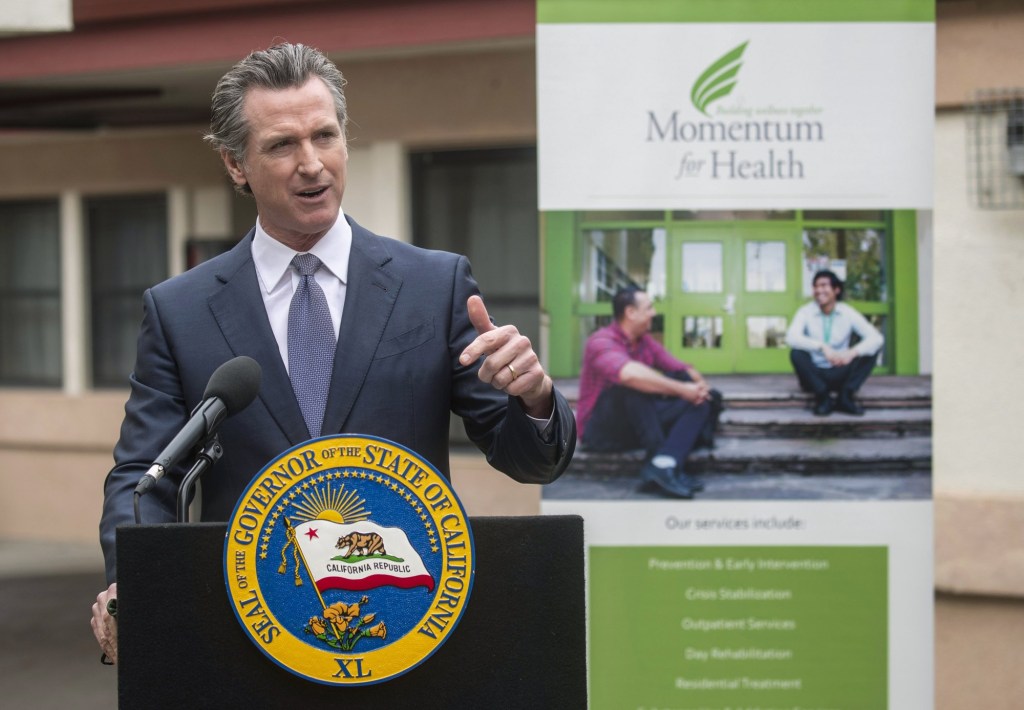
In 2022, Gov. Gavin Newsom proposed, and the Legislature enacted, a new way to address one portion of the problem. He sought to establish separate court procedures to address the issues of people experiencing homelessness who also suffer from severe mental illness, and to make it easier for family members, health care professionals and first responders to petition the court to compel such individuals to enter into treatment programs and develop housing plans.
The result was the Community Assistance, Recovery and Empowerment (CARE) Court program, which was up and running in every county by the end of 2024. It was an interesting idea, but, unfortunately, it has failed to deliver on its promises and few have participated in, much less benefited from, the program.
“Up and down California, the data show low numbers, a slow rollout and predictions that wildly outpaced reality,” CalMatters reported in September after conducting in-depth research into the program.
The Newsom administration claimed that between 7,000 and 12,000 people would be eligible for the program, and some counties feared that they would be overrun by petitions. San Diego County hired nearly two dozen clinicians, psychologists and support staff to handle the anticipated flood—but that rush never materialized. As CalMatters reported, only 2,421 petitions had been filed as of July 2025, resulting in just 528 treatment agreements or plans and 19 graduations (10 of which were in San Diego County alone).
One reason for the disappointing results is the high percentage of petitions that are dismissed. Statewide, about 45 percent of petitions are dismissed, oftentimes because the courts find that the individual is already receiving “adequate mental health services.” Some people may already be enrolled in other treatment programs, but that does not necessarily mean that they are “clinically stabilized,” critics note. This should be evident by the fact that someone close to the person felt compelled to pursue the arduous process of petitioning the court to get their loved one or patient the additional help that they felt was needed.
The high portion of dismissals has also discouraged first responders such as police officers and firefighters from participating.
“We quickly found out that it wasn’t a useful tool for the people that we see,” Crystal Robbins, who manages a treatment program for San Diego Fire-Rescue, told CalMatters.
The CARE Court’s success is also limited by its narrow eligibility requirements, serving only those diagnosed with schizophrenia and certain other severe psychotic disorders. But if the idea is to find a way to get people who are unable to take care of themselves into treatment, why would the program not be open to those suffering from other mental illnesses, or drug and alcohol abuse?
Finally, the program has proven to lack the teeth it was supposed to have in order to compel results. Voluntary treatment plans devised under the program are too easy for people to ignore, and CARE Courts have ordered only 14 mandatory treatment plans so far. Most counties only offer voluntary treatment agreements, CalMatters notes.
To add to the failure of the CARE Courts, Gov. Newsom missed an opportunity to enact positive reform when he vetoed Assembly Bill 255, which would have allowed cities and counties to spend 10% of their state funding on recovery programs that require participants to abstain from drug or alcohol use. The bill had passed unanimously in the Legislature.
“This bill was about giving people in recovery a real choice to have safe, sober housing when they need it,” Assemblyman Matt Haney, D-San Francisco, author of AB 255, said in a statement. “Californians who are working hard to stay sober are often forced into housing where drug use is allowed, and that puts their recovery and their lives at risk.”
In his veto message, Gov. Newsom described the bill as “duplicative,” and claimed that “recent guidance” already allowed for state funding to be used for such purposes, a claim that Haney strongly disputed.
The bill’s real supposed sin was that it would contradict California’s sacred “Housing First” policy, enshrined into law in 2016. Under the Housing First model, as the name implies, the goal is to first place someone experiencing homelessness in “permanent” housing to provide some stability, and then offer support services. Since the services are voluntary, participants — many of whom are struggling with drug and alcohol addiction or mental illness — often fail to take advantage of them. In practice, sometimes such services are not offered at all.
If nearly a decade of experience has taught us anything, it is that merely warehousing people while failing to address the underlying causes of their homelessness is neither a successful or cost-effective strategy. People become homeless for a variety of reasons and respond to incentives and offers of help in various ways. One would think that the state would want to adopt an all-of-the-above approach to addressing the various causes of homelessness and motivations of those who suffer it, rather than putting all its eggs in the Housing First basket.
It is telling that, due to either ideological rigidity or the grip of a homeless-industrial complex that has enforced the will (and funding requests) of certain special interests, Gov. Newsom was unwilling to display the wisdom or the flexibility to make even a modest modification to California’s failed approach. It is said that doing the same thing and expecting a different result is madness, and that is something that only voters — not any CARE Court — can fix.
Summers is a columnist and contributing editor for The San Diego Union-Tribune. He is also editor and co-author of “Beyond Homeless: Good Intentions, Bad Outcomes, Transformative Solutions.”