
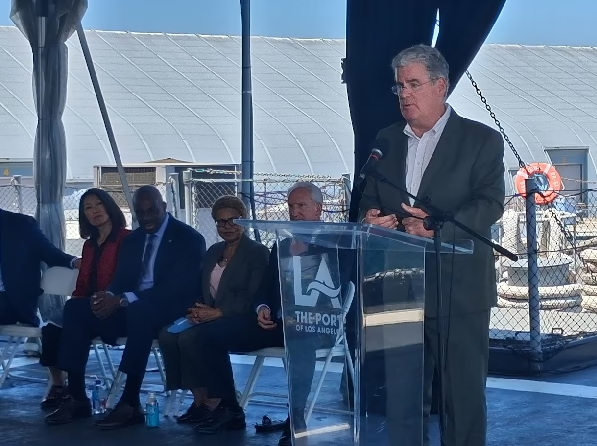
 On July 30, the Port of Los Angeles, CalSTA, and Caltrans signed an agreement to begin evaluating long-term options for replacing or modifying the Vincent Thomas Bridge. Transportation Secretary Toks Omishakin, Mayor Karen Bass, Councilmember Tim McOsker, and Port Executive Director Gene Seroka attended the signing. Photo by Terelle Jerricks
Port Launches Plans to Replace Vincent Thomas Bridge
The Port of Los Angeles’ announcement last week of a memorandum of understanding to begin planning for the replacement of the Vincent Thomas Bridge surprised many Harbor Area residents who believed they had already endured their last major disruption from the landmark span.
The announcement came as the region prepares for the Vincent Thomas Bridge Deck Replacement Project, a 16-month closure scheduled to begin Nov. 1, 2026, bringing traffic detours, road closures and construction impacts to San Pedro, Wilmington, Harbor City and surrounding communities.
Councilman Tim McOsker, who previously pressed Caltrans to address resident concerns during the earlier planning for what he called “Harborgeddon,” acknowledged that the immediate priority for residents is managing those impacts. But he argued that officials must address both the bridge’s current needs and its long-term future.
McOsker praised Caltrans, particularly District 7 Director Gloria Roberts, for responding to community concerns during the environmental review process and committing to mitigation measures. Those commitments include resurfacing detour routes, enforcing truck routes, providing advance notice of closures, and making additional roadway improvements after the bridge reopens.
He emphasized that Wilmington and Harbor City will experience a disproportionate share of construction impacts and said those communities must receive equitable treatment throughout the project.
The deck replacement project has been in development for several years. In April 2024, Caltrans released its draft environmental impact report/environmental assessment and began a public comment period. By October 2024, Caltrans selected a full bridge closure as the preferred construction approach. Preparatory work began in late 2025, with pre-closure activities underway in 2026. The bridge is expected to reopen in March 2028, before the Los Angeles Olympic Games.
But the question remains: Why replace the bridge now?
Port officials said the answer lies in the changing demands of global shipping. Initially, the environmental review process focused on repairing and rehabilitating the existing bridge — not replacing it. According to Port Executive Director Gene Seroka, officials later explored whether the existing bridge could be modified to accommodate larger vessels but determined that option was not feasible.
“The iconic Vincent Thomas Bridge needed to be fixed,” Seroka said. “We had a plan as a state to make that bridge safe through a re-decking or resurfacing project.”
At the same time, he said officials examined whether the bridge could be raised to accommodate larger ships.
“We thought, ‘I wonder if we could lift this bridge because the ships are bigger,’ and we looked at this back and forth, and it just didn’t work out,” Seroka said.
The port is committing $5 million to begin engineering studies, environmental analysis, financial planning and community outreach for a potential replacement.
Seroka said a new bridge would address a major limitation: the current bridge’s 185-foot clearance prevents some of the world’s largest cargo vessels from reaching terminals north of the span, restricting access to nearly 40% of the port’s container capacity.
He said removing that bottleneck could increase cargo movement by more than 1 million 20-foot equivalent units annually and support an estimated 144,000 to 150,000 jobs. A new bridge could also include additional lanes, emergency shoulders and modern safety features while allowing newer, cleaner vessels to access more of the port’s facilities.
McOsker compared the strategy to repairing an aging air-conditioning system while preparing to replace it.
“We are making repairs to make sure that we can safely move our goods, and more importantly, ourselves and our families across this bridge,” he said. “But we are also preparing for that next air conditioner.”
He acknowledged the deep emotional connection Harbor Area residents have with the Vincent Thomas Bridge, which has been a regional landmark since opening in 1963. Any future replacement, he said, must include a transparent public process that respects the bridge’s history while preparing for future needs.
The memorandum of understanding does not approve construction of a new bridge. Instead, it begins a multiyear process of study, environmental review, financing and public engagement.
Officials said the goal is to balance the needs of residents, workers, businesses, and the port itself — repairing the bridge that serves the community today while planning for the infrastructure the region will need for generations to come.
Related