
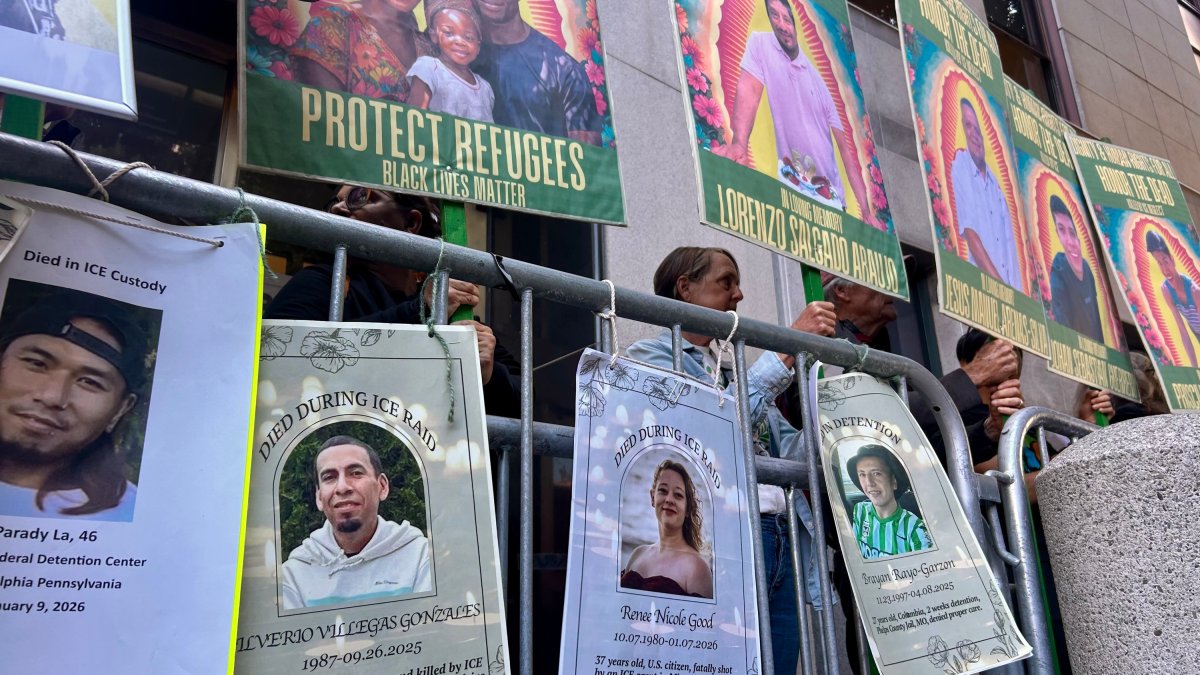
About 100 people gathered outside the U.S. Immigration and Customs Enforcement field office in San Francisco on Wednesday for a vigil to honor the people who have died in immigration raids and detention.
“Together today we will cultivate a sacred space to grieve and mourn the horrendous violence of the U.S. detention and immigration enforcement systems,” said organizer and Buddhist practitioner Sophie Dipti Sarkar at the event.
A group of local leaders from a range of faiths led songs, prayers, and offerings to recognize the people who have been fatally shot during ICE raids or died in immigration detention since the beginning of President Donald Trump’s second term, which has seen a rise in immigration enforcement and deportations.
So far this year, at least 24 people have died in ICE custody, according to the National Immigration Project, an organization that advocates and litigates for immigrants.
“We are here today because we refuse to stand by and watch as our neighbors, community members, and family members are kidnapped from their schools, workplaces, homes, airports, or while driving their children to daycare or school,” said Rabbi Cat Zavis from the Beyt Tikkun synagogue in Oakland during a speech.
Photos of people who died during ICE raids or in detention were strung together along the fencing in front of the field office. A table covered in fake candles and butterflies stood as a centerpiece of the vigil.
One by one, the group collectively spoke the names of each of the deceased while tying paper flowers to the fencing.
“We are here today because every person is more than a number,” Zavis said.
The vigil was followed by a march through downtown to the office of U.S. Sen. Alex Padilla, D-California, a couple of blocks away. The group held another rally outside the office with speakers urging for Padilla to fight for contact visitation between family and friends of those in ICE custody at the California City Detention Facility, located in Kern County.
Family and friends are allowed to visit loved ones at the facility, but all visits are non-contact, meaning that visitors can only see detainees through glass.
Samantha Sanchez Tayson, a pregnant mother whose husband is in custody at the California City Detention Facility, talked about the impacts of her husband not being able to physically be with his family.
“He’s in a depressed place, and he doesn’t see us, and he can’t hug us,” she said. “That’s why my children and I are here to ask for help from the senator to see if he can find a way to get the glass out between us for the visits.”
Members of California Collaborative for Immigrant Justice, an organization that provides legal services for those in immigration detention, presented a petition to some of Padilla’s staff. The public petition demanding to allow contact visitation at California City Detention Facility included about 1,100 signatures.
The crowd chanted “Hugs beyond bars now” as it handed over the signatures to Padilla’s staff.