
(SACRAMENTO)
A new review article published in the Journal of Perinatology delivers a strong warning: Neonatal critical care is facing a significant workforce and professional identity crisis, despite the specialty’s essential role in caring for the sickest newborns and generating substantial revenue for children’s hospitals.
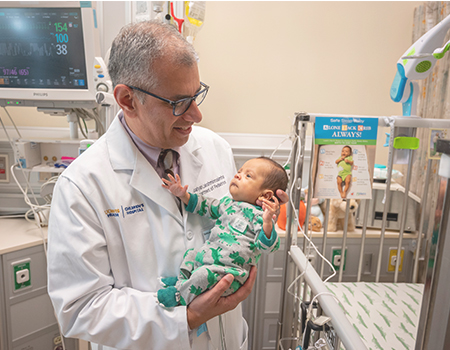
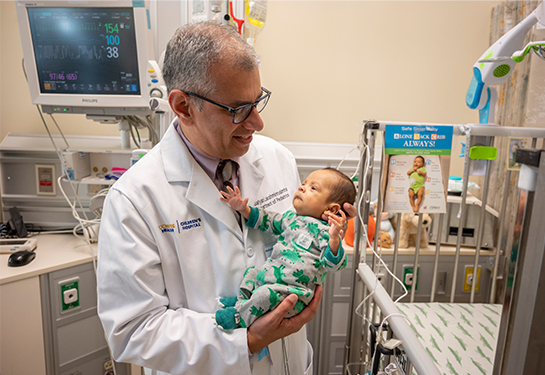
Satyan Lakshminrusimha working in the NICU.
In the article, three neonatologists — Satyan Lakshminrusimha, Clara Song and Robin Steinhorn — examine what they describe as the “neonatology paradox.” The field remains one of the most productive pediatric subspecialties in terms of work relative value units (wRVUs) and hospital revenue generation. Yet many neonatologists experience long hours, increasing clinical complexity, documentation burdens, workforce shortages and compensation disparities.
“Neonatologists provide highly specialized critical care for the most vulnerable patients, yet the current system often fails to recognize the true scope and complexity of this work,” said Lakshminrusimha, chief of pediatrics, physician-in-chief at UC Davis Children’s Hospital and the article’s lead author. “Without meaningful reforms, we risk worsening workplace challenges and jeopardizing the long-term sustainability of neonatal intensive care.”
The evolution of neonatal care
The authors note that advances in medicine have dramatically improved survival among premature infants and newborns with complex congenital conditions. These accomplishments represent a major success for modern medicine and have transformed the day-to-day practice of neonatology. Today’s practitioners care for infants with increasingly complex and chronic conditions, often requiring prolonged hospitalizations and intensive coordination of care.
The review identifies six major challenges shaping modern neonatal practice:
Increased clinical acuity
Complexity
Chronicity
Consultive responsibilities
Charting requirements
Reduced continuity of care
Together, these pressures contribute to declining professional satisfaction and increasing concerns about burnout.
 Without meaningful reforms, we risk worsening workplace challenges and jeopardizing the long-term sustainability of neonatal intensive care.” —Satyan Lakshminrusimha, chair of pediatrics Recommendations for reform
The article outlines several proposals aimed at strengthening the neonatal workforce and improving physician well-being:
Establish staffing models that better account for clinical workload, overnight coverage, administrative responsibilities and educational duties.
Align productivity expectations with actual clinical effort and reduce reliance on metrics that may not adequately capture the complexity of neonatal care.
Advance gender equity through policies that support parental leave, lactation accommodations and access to childcare.
Enhance physician education in medical coding and advocate for reimbursement systems that more accurately reflect pediatric subspecialty care.
Strengthen the professional identity of the specialty by recognizing neonatology as neonatal critical care medicine.
The authors also suggest that if these reforms fail to address ongoing workforce concerns, healthcare leaders should evaluate the feasibility of creating independent departments of neonatal critical care medicine to provide greater autonomy, visibility and financial transparency.
A call to action
According to the authors, the future of neonatal critical care depends on recognizing the specialty’s clinical, academic and financial contributions while creating a more sustainable work environment for physicians.
“By addressing workload, compensation, staffing, and professional identity, we can help ensure that future generations of physicians continue to choose neonatal critical care as a rewarding and sustainable career,” the authors conclude.