
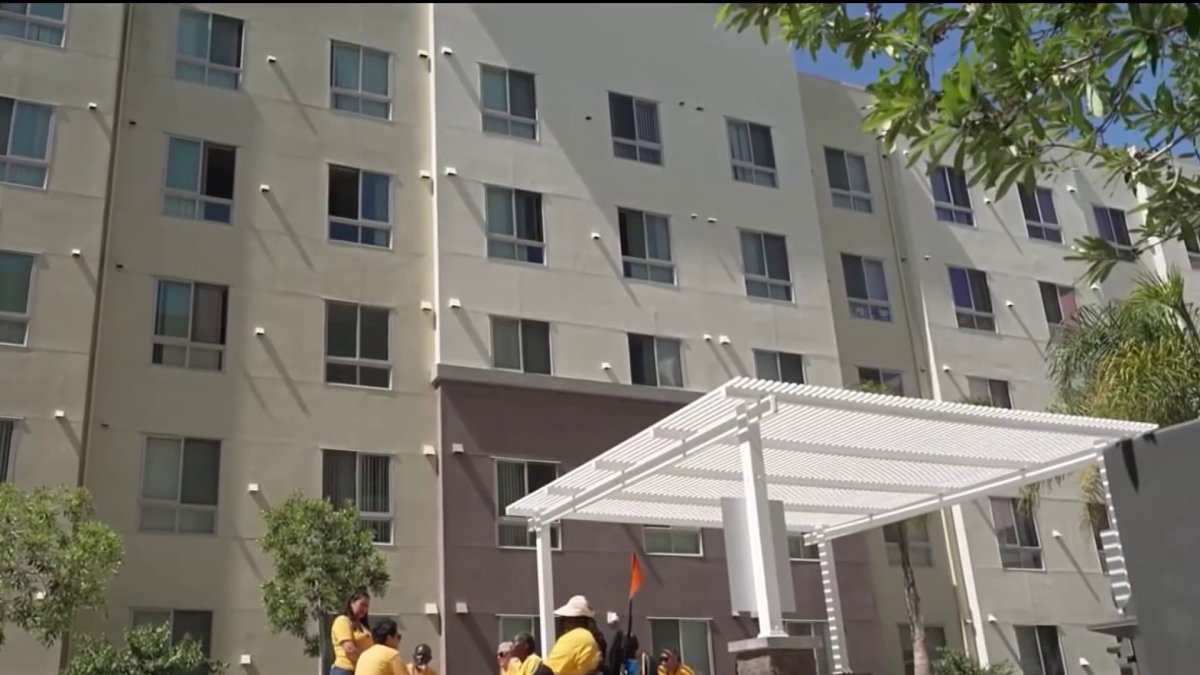
More than 20 seniors traveled by bus to Sacramento Thursday to protest the conditions at their East Oakland affordable housing complex and implore state officials to take enforcement action against their landlords and property managers.
As NBC Bay Area recently reported, dozens of tenants living in the Oakland Station apartments allege the building is filthy and infested with cockroaches. They also say the building is unsafe – especially for its senior tenants – with frequent elevator outages and a broken security gate that allows anyone to come inside.
Last month, more than 60 current and former tenants filed a lawsuit against the building’s owners and management company, alleging a long list of civil violations, including elder abuse and harassment.
On Thursday, they took the fight to the doorstep of their property management company, CONAM, protesting outside the company’s Roseville office.
“Roaches, trash everywhere, dog poop and people poop, safety hazards…” said tenant Cathy Harris, rattling off a list of concerns through a megaphone.
Another tenant, Isabelle Ruiz, held up a jar of roaches – now dead – calling it a small sample of the infestation in her apartment.
“I have my new roommates with me that I’ve brought in to show everyone,” Ruiz said.
The tenants have been organizing with the help of community organizers at ACCE.
“We came to CONAM because they have not been hearing us,” said Valarie Bachelor, the nonprofit’s Oakland director. “We need our units fixed.”
NBC Bay Area reached out to CONAM after the protest for comment but has not yet received a response. Neither CONAM nor the building’s owners have commented in two previous NBC Bay Area stories on tenant concerns.
While in Sacramento, the tenants and organizers also met with state officials with the California Tax Credit Allocation Committee, asking them to take enforcement action against their landlords.
“They are not maintaining the building and they’re disrespecting us and we’re living in squalor,” one tenant said.
The tenants allege in their lawsuit that the building’s owners received millions-of-dollars’ worth of low-income housing tax credits for developing affordable housing but let the building fall apart in just five years.