
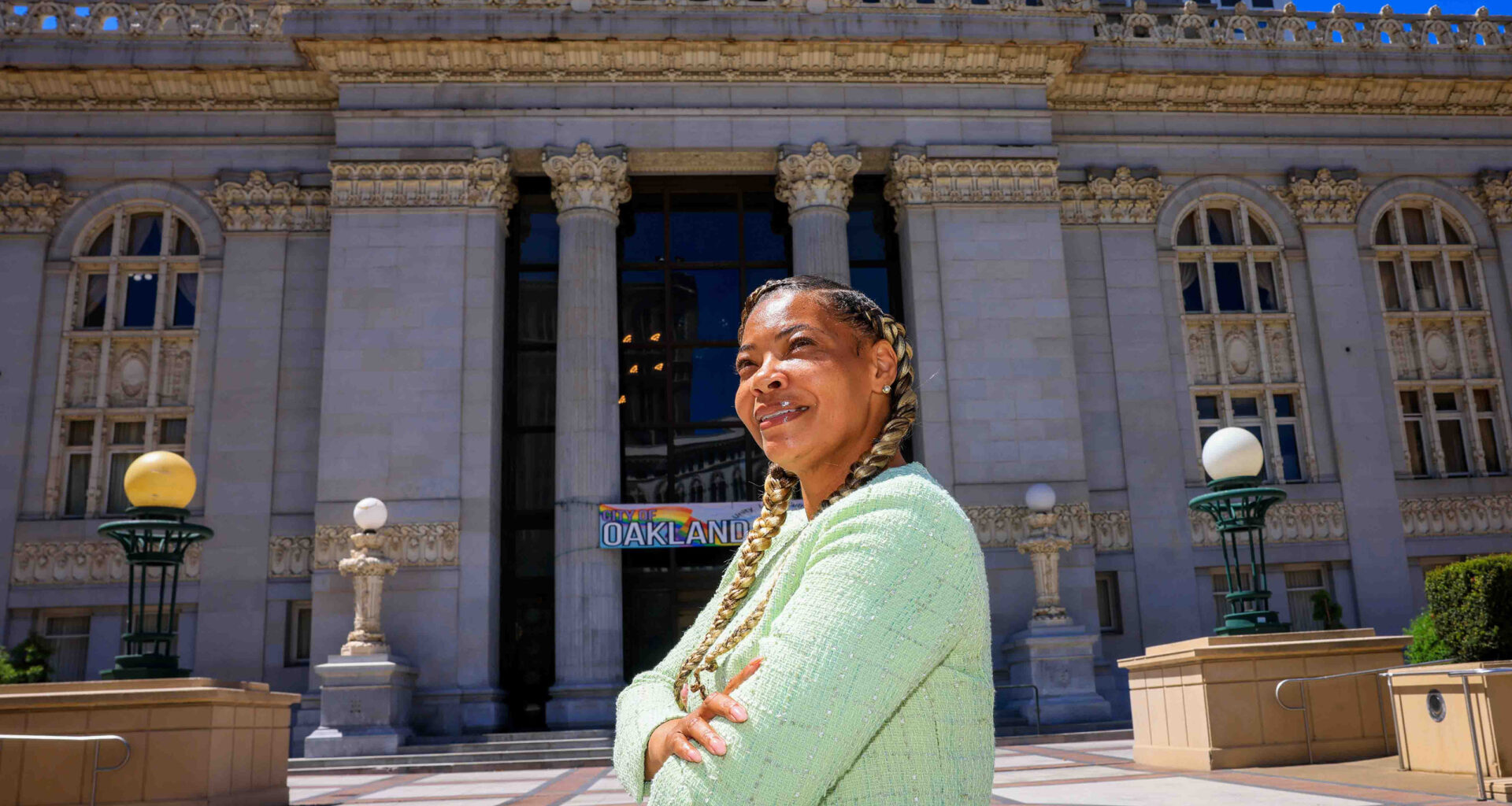
OAKLAND — Perhaps the most consequential court hearing in the Oakland Police Department’s recent history is next month, when city leaders will ask that a judge relinquish the embattled force from longstanding oversight by a federal court.
Already, Michelle Phillips feels exhausted when she thinks about the big day. Her permanent gig as an assistant city administrator became more intensive late last year when Mayor Barbara Lee appointed Phillips to a newly created job intended to ensure “constitutional policing” in the department.
“I’ve straddled both full-time positions for eight months,” said Phillips in an interview this week. “It was always supposed to be for a short time. But you don’t know what a position like that will truly need until you diagnose the challenges involved.”
City officials are officially seeking a permanent replacement for Phillips as the constitutional policing administrator, a $264,000-a-year role that could prove pivotal to OPD’s ability to sustain progress when oversight ends.
U.S. District Court Judge William Orrick counts the mayor’s appointment of Phillips as a core factor in his intent to formally eliminate oversight in late September — a milestone that has long eluded OPD amid a run of misconduct scandals and a revolving door of police chiefs.
He cites the working harmony between Lee and Chief James Beere, praising Phillips as an effective intermediary who has bridged shaky communication between the two offices and added a fresh layer of accountability within OPD’s ranks.
But what happens when others fill their roles? Phillips’ job, which pays up to $264,000 a year, could be the first test.
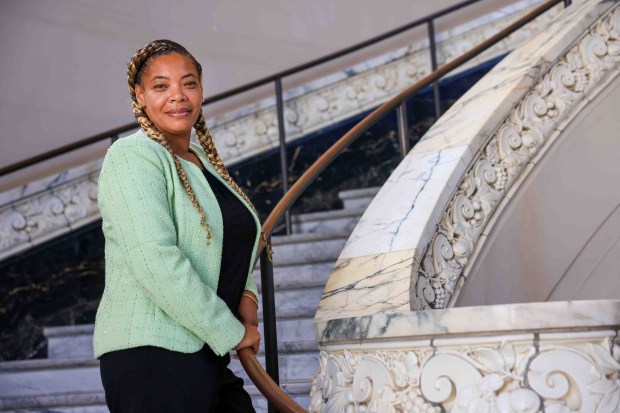 Oakland Assistant City Administrator and Constitutional Policing Administrator Michelle Phillips looks on from the steps of the Oakland City Hall in Oakland, Calif., Wednesday, Aug. 5, 2026. (Ray Chavez/Bay Area News Group)
“We can’t create positions solely around individual people,” she said in an interview promoting the open position. “As long as someone is flexible and coachable, they can continue this sustainable infrastructure that we have tried to build for the city.”
If anything, OPD’s dysfunctions had until now proven immune to reforms imposed by the individuals in charge. Scandal after scandal tore through the department in the years after oversight took effect, while police leaders were poked, prodded and — on several occasions — overhauled entirely by the court-appointed monitor, Robert Warshaw.
The Oakland Police Commission, a volunteer civilian body intended to take over Warshaw’s reins, has struggled to establish stable footing or avoid clashes with elected city leaders since it was formed in 2016.
Phillips, however, has uniquely worked both alongside police leaders and on the side of the watchdogs, winning rare support across the aisle. Before her latest dual role, Philips had a previous stint as Oakland’s inspector general, working under the police commission as a kind of auditor of OPD.
“I was certainly pleased that she has taken on a greater responsibility,” civil rights attorney John Burris said about Phillips. “It has been very positive seeing her build a working relationship with the chief.”
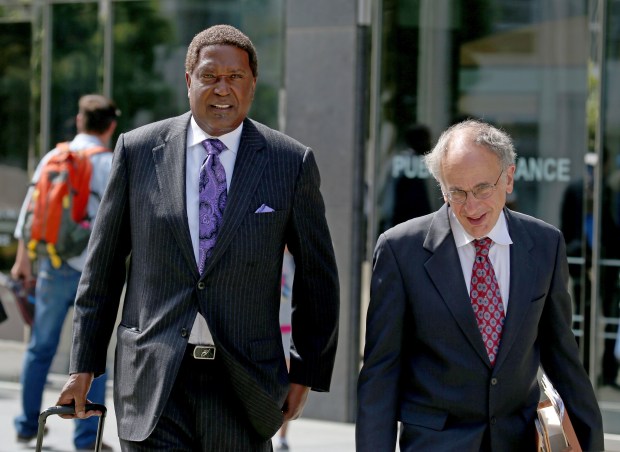 Civil rights attorneys John Burris, left, and Jim Chanin leave after a federal hearing at the Phillip Burton Federal Building and United States Courthouse in San Francisco, Calif., on Monday, July 10, 2017. (Jane Tyska/Bay Area News Group)
Burris and fellow attorney Jim Chanin first litigated brutality cases that brought OPD under oversight and are on board with Orrick’s intent to end it, agreeing that the department is in compliance with 52 “tasks” by which Warshaw tracks the department’s progress. Still, they believe OPD’s future depends on those in charge.
“The infrastructure will be there,” Burris said, “but it’s only as good as the people who interpret it. That’s the test, and it’s a function of who gets hired, how they are trained and how informed they are of what works.”
A half-mile separates Oakland City Hall and the downtown police administration building, where Phillips has gone back and forth this past year. But the former “military brat” — who was born in Okinawa, Japan, raised overseas and graduated high school in Baltimore — is used to bouncing around.
Before returning to Oakland as Lee’s assistant city administrator, Phillips briefly served as a civil rights director in Minnesota.
“I really had to break down the silos that had made building trust a challenge,” said Phillips, who helped devise a training for academy recruits about police accountability after reviewing data that indicated many young cops distrust misconduct investigations.
 New Oakland Police Chief James Beere and Mayor Barbara Lee embrace as she congratulates him during his official announcement at Oakland City Hall in Oakland, Calif., on Thursday, July 9, 2026. (Ray Chavez/Bay Area News Group)
Police critics speak less glowingly about the possible end to oversight, noting that police still have not identified a homeless man killed by officers on July 13. Authorities have cited difficulties tracking down the man’s next of kin, but overall police have said little about the case besides that the man had been armed with dangerous weapons.
“I’m really ticked off by their logic,” said Chanin, the attorney who helped litigate the oversight case. “There’s no reason why publishing his name and photograph should be a problem. If anything, it’s the single thing that would most likely facilitate them finding his family.”
Burris, his colleague, is separately representing the family of Doug Martin, an ex-NFL star whose family sued the city after he died in police custody last October. Few details of either incident were publicly available in real time because OPD encrypted its scanner traffic last year, hiding the activity of its officers.
Phillips, for her part, acknowledges that OPD still has hurdles to cross. But the internal failures that once derailed efforts to end federal oversight, she said, may soon be a thing of the past — even when she, Lee and Beere are no longer around to impress the judge.
“It’s taken a minute to get here,” she said. “And more incidents will happen, force will be used. But if we can catch some things that need to be fixed, that will be vital over the long term.”
Shomik Mukherjee is a reporter covering Oakland. Call or text him at 510-905-5495 or email him at shomik@bayareanewsgroup.com.