
Tow trucks moved through the Bayview on Wednesday morning, removing at least a dozen parked RVs, according to those who watched as trucks descended upon the neighborhood.
The industrial, southeastern community has the highest concentration of mobile homes in the city and was the city’s first target for enforcing San Francisco’s ban passed in July. The ban prohibits RVs from parking on city streets for more than two hours.
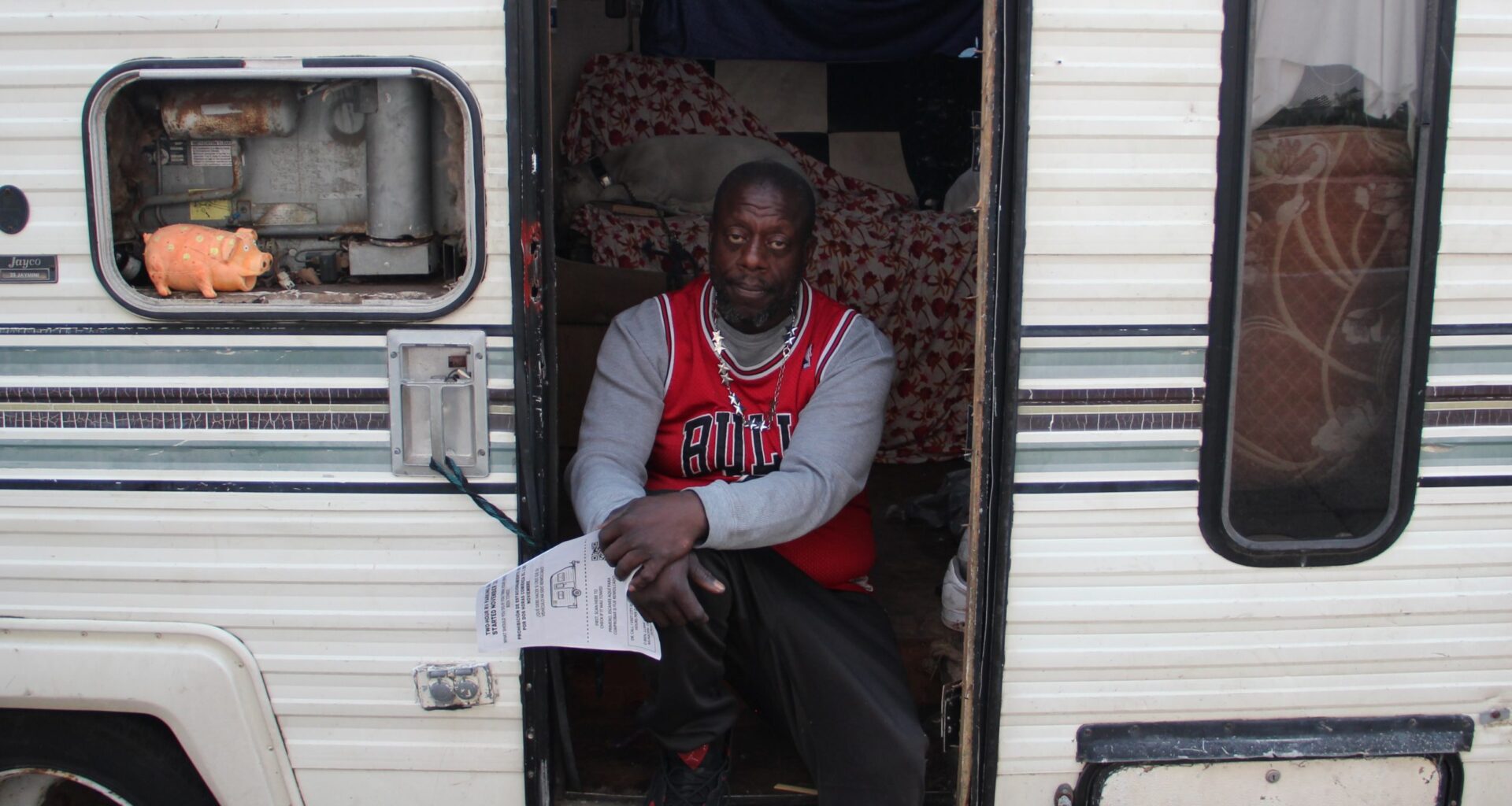
“They came out here banging on doors, threatening people, telling them to move,” said Aiol Williams, sitting on the front steps of his RV as his two dogs rested their heads on their paws on the pavement.
Williams’ own vehicle, which he has parked in Bayview for the past seven months, is currently immobile while he works on it. A dented door lies on the sidewalk, along with various tools and vehicle parts.
Williams’ RV wasn’t towed on Wednesday, but he is worried it may be because he hasn’t yet received his six-month extension permit. The RVs counted in a city-wide survey last May automatically qualified for the permit, but Williams was somehow missed. He is one of at least 80 people who have filed appeals to obtain the extension.
Hans Ege Wenger, a local activist, and Zach Bollinger, who lives in his RV, have spent months knocking on RV doors, warning inhabitants about the upcoming ban, and meticulously fastening warning flyers to the RV windshields.
On Thursday evening, they piled into Bollingers’ car heaving a tote bag nearly overflowing with paper onto the car floor. I accompanied them on their trip.
Many RV owners were apprehensive as we approached their vehicles, but warmed after recognizing Bollinger, who is conspicuously tall and wears his hair in a ponytail.
“I didn’t think I would be back out here so soon,” said Bollinger. But that morning, Bollinger, who lives in his RV, and Wenger, learned through an Instagram video that San Francisco authorities had begun enforcing the two-hour parking restriction on RVs. They spent the rest of the day driving across Bayview, searching for vehicles at risk of being towed.
Dozens of RVs in varying condition, some newly maintained and meticulously cleaned of debris, and others dilapidated to the point of immobility, or missing license plates, are parked near Hunters Point, tucked into dead-end alleyways or surrounded by quiet warehouses on large, industrial streets.
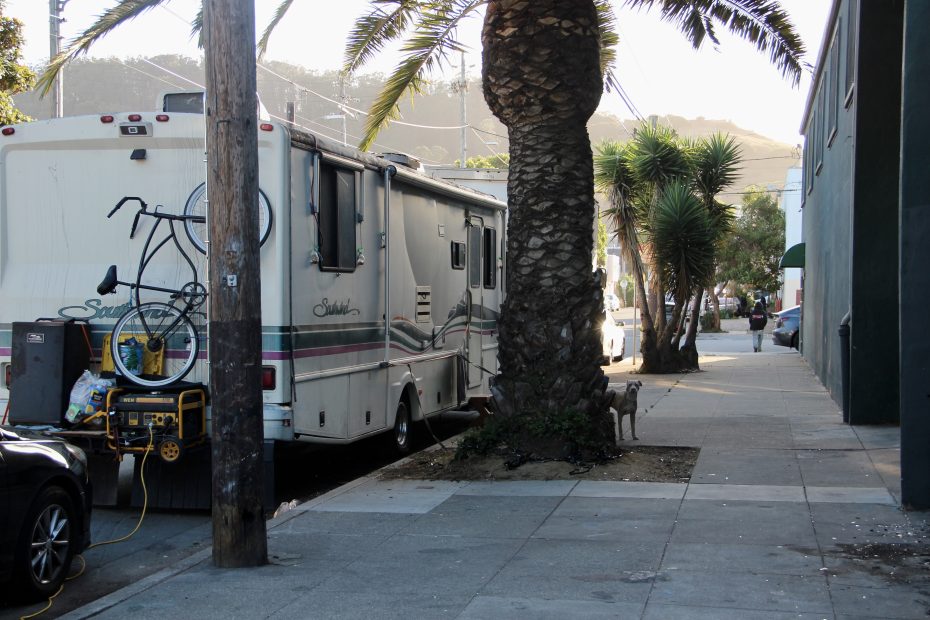 Advocates counted 41 RVs parked in Bayview Hunters Point that did not have a permit and are at risk of towing as enforcement begins. Photo by Marina Newman.
Wenger and Bollinger counted 41 Bayview vehicles without a permit and in danger of being towed. They pointed to one parking spot that has been empty since they last visited on Saturday, the beginning of enforcement. “It may be gone,” they said of the mobile home once parked there.
The city allocated $12.9 million to help transfer some 400 adults and families living in RVs into housing. That funding has paid for 165 rapid rehousing vouchers: 100 for single adults, 65 for families, and 100 for transitional-aged youth.
Though there is not enough housing for the growing number of people living in their vehicles in San Francisco, the permit program offers a pathway for some.
But many who have not received permit extensions are taking their chances on the street.
Take Anthony, whose last name — like all of those interviewed here — has been withheld for privacy concerns. He’s received the flyers and warnings at his door, but he’s not interested in leaving the RV he’s lived in for years. Living in his RV, the San Francisco native said, is the only way he can afford to stay in the city.
Anthony said that on Wednesday, his vehicle wasn’t threatened with towing, but if it is, he’s considering relocating to San Leandro. “This is my home,” said Anthony, leaning out of his RV door. “But I’ll leave if I have to.”
Others who parked in Bayview on Thursday without a permit are still awaiting decisions on their permit appeals.
George, who said he applied for a permit last month, is one of those who haven’t heard back yet. He shares his RV with his spirited husky, Lucy.
A spokesperson for the Department of Emergency Management said that street team workers have done outreach “five days a week” in the weeks leading up to the ban. But RV owners like George, Anthony, and three other RV residents told Bollinger and Wenger on Thursday that they had not received help from the city’s outreach workers.
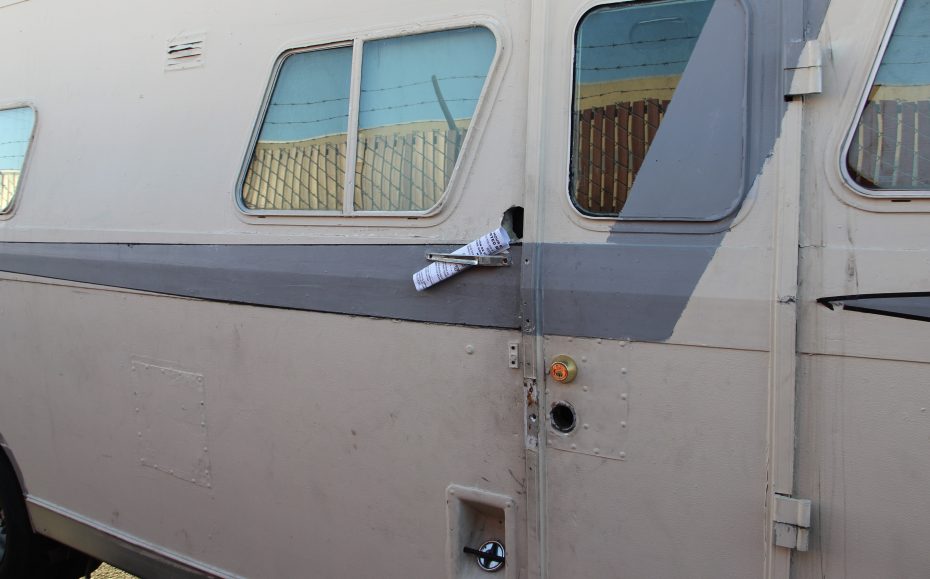 A flyer warning an absent RV resident that towing has begun is placed by the doorway to the vehicle on Thursday, November 6, 2025. Photo by Marina Newman.
Tío sat in his truck with his nephew and his nephew’s friend as Bollinger and Wenger approached his RV, waving them down. Talking through a translator, Tío told us that he watched as tow trucks “banged” on the doors of nearby vehicles and towed his neighbors. He expected his vehicle to also be towed.
“They can’t tow you if you stay in your vehicle,” Bollinger advised in Spanish. “You have a right to stay in your vehicle.”
Andrew, who opened his door to Wenger and Bollinger, quietly accepted a flyer. He sat in his vehicle next to his belongings and burned refuse, as his dog, named, “Dog,” leapt and licked at Wenger and Bollinger.
“It’s been too difficult,” said Andrew, shaking his shaved, scabbed head when asked if he had applied for a permit. “I didn’t do it.” Wenger and Bollinger, said Andrew, are the only people who have approached him about the upcoming ban.
On the last visit of their drive through the more remote, industrial corners of the neighborhood, Bollinger and Wenger spotted another RV without a permit. It was parked on a street they hadn’t yet covered and belonged to Williams who sat outside with his two dogs. He was taking a break from working on his RV. Two chickens he keeps in his vehicle squawked inside.
Williams doubts his permit application will be accepted because he lacks the proper paperwork to prove he has been in the city. “They want a ticket,” he said, tilting back his head into a hearty laugh. “Why would they want that?”