
San Diego gets a large portion of its water from the Colorado River, and that supply appears to be safe under the sweeping 10-year plan recently released by the federal government to address the river’s drastically decreasing flows.
At least for now.
The plan calls for the federal government to reassess the cuts every two years. Meanwhile, important details related to the document are expected in a matter of days, which would start shaping how the immediate reductions affecting California, Arizona and Nevada may play out.
The near-term cuts were essentially what those Colorado River Lower Basin states proposed a few months ago and were adopted by the federal government. Much worse reductions could have been imposed, and still may be in the future.
Soon there will be negotiations over how California water agencies will divvy up responsibility for the state’s reduced Colorado River take.
Historic water rights, which give some districts greater legal priority than others, likely will help guide those negotiations, but the goal is to achieve a voluntary resolution.
“I don’t expect it to impact us,” said Tina Shields, water department manager for the Imperial Irrigation District. “We have very senior water rights.”
That’s an important perspective locally, given the IID in Imperial County provides the San Diego County Water Authority with its Colorado River water — 200,000 acre-feet annually gained through conservation measures via a 2003 landmark agreement.
An acre-foot is 325,851 gallons of water, or the amount that would cover 1 acre of land, 1-foot deep.
That’s not to say the IID won’t be involved in trade-offs and sharing water, particularly given its growing conservation efforts. But attempts to force the IID to do anything it believes would cause undue harm to its farmers could get bogged down in a quagmire of legal and political hurdles.
“The whole point of voluntary agreements is to avoid litigation,” Shields said.
The Imperial Valley produces as much as two-thirds to 90 percent of the nation’s winter vegetables, according to IID. The district is the largest user of Colorado River water, a supply long envied by others.
“We always have concerns,” Shields said. “We have a very large target on our backs.”
Should the Imperial County agency face future cuts, say around 10 percent, it could pass on a pro-rata reduction to the San Diego County Water Authority.
Odds are the local agency and its members could absorb that without affecting water availability for customers. The SDCWA is in the rare position of having more water than it needs — in part because of a costly overbuilding of its supply — and is working to sell considerable amounts to other districts.
The federal plan may not have been universally cheered, but it likely was received with a sigh of relief by some water officials in the lower basin states. Still, some of them weren’t happy that they’re burdened with all the reductions, while the upper basin states of Colorado, New Mexico, Utah and Wyoming face none.
The plan, which was laid out in the U.S. Department of the Interior’s Final Environmental Impact Statement on the river, allows for steeper water cuts if they’re deemed necessary. That could require California, Arizona and Nevada to cut up to 3 million acre-feet per year — as much as 40 percent of the combined allotments, according to the Los Angeles Times.
For the first two years, those states must reduce their river water by about half that amount — 3.2 million acre-feet between now and the end of 2028. Officials told the Times that California will cut its use of Colorado River water by about 12 percent through 2028, Arizona will take about 31 percent less and Nevada 28 percent less.
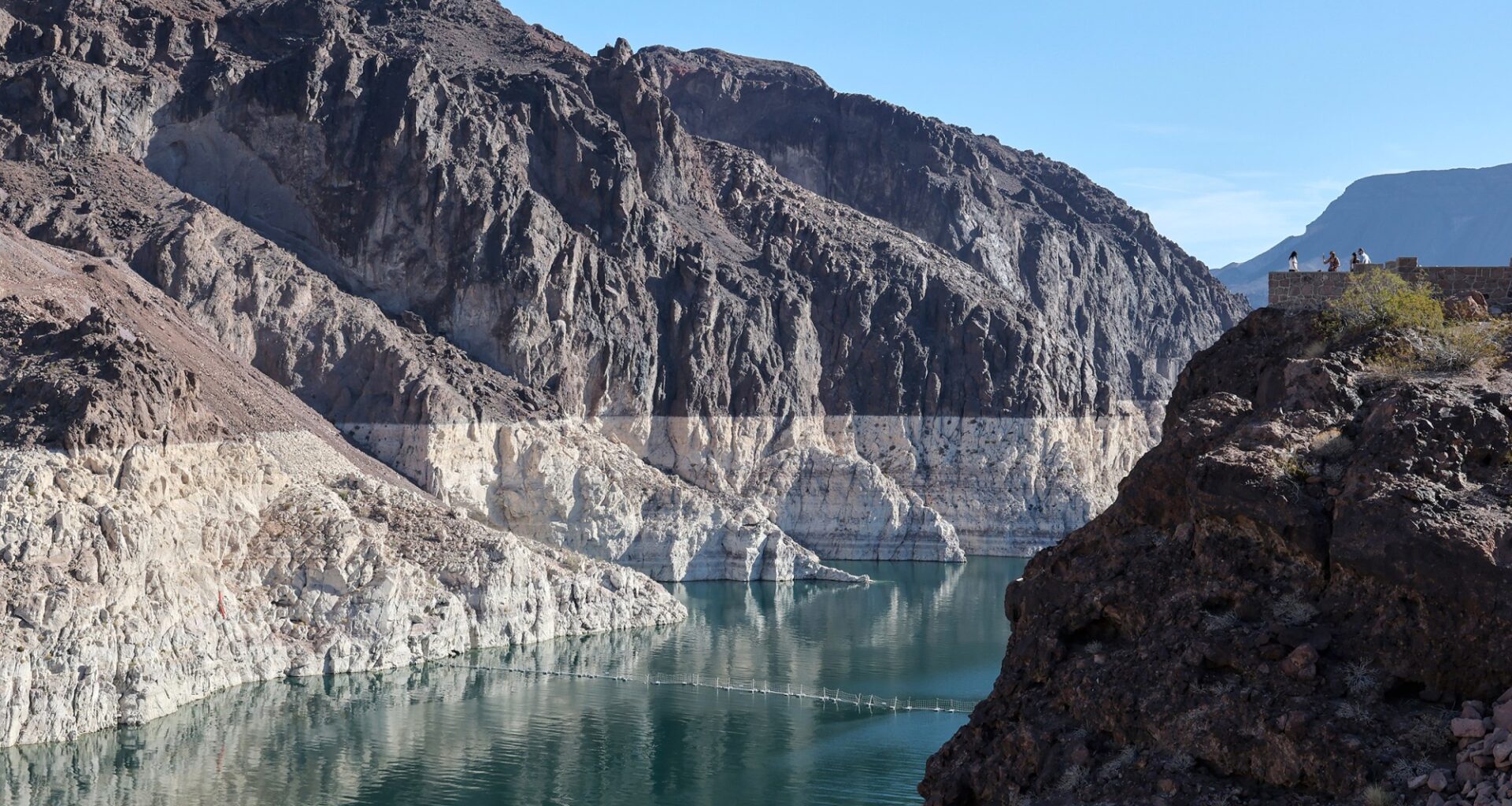
Lakes Mead and Powell on the Colorado River — the largest man-made reservoirs in the United States — are experiencing historically low water levels. If the equation doesn’t change, that result could be water shortages throughout the region and reduced or halted flows that power hydroelectric plants.
The river basin already was in the throes of yearslong drought conditions when the Rocky Mountains recorded the worst snowpack on record this past winter.
“Hydrology. Just when you think it can’t get worse, it does,” Shields said.
Seven U.S. states, Mexico and several Native American tribes depend on the Colorado River, which supplies water to more than 35 million people and irrigates about 5 million acres of farmland.
San Diego County Water Authority officials have predicted for some time that the county likely would experience little or no effect from the upcoming river reductions because of IID’s water rights.
Most immediately, authority board member Jim Madaffer expressed concern over whether the mechanisms of the Colorado River plan would be welcoming to San Diego’s push for water transfer sales in a unique effort to create an “exchange marketplace.”
Water laws, legal disputes and other restrictions made such transfers nearly impossible, but much has changed. The water authority has completed water sales to small Southern California districts, which San Diego officials said helped them lower planned rate increases that have skyrocketed in recent years.
But their big deal is more conceptual — potential agreements to sell water to Arizona and Nevada.
In a paper transaction, the authority would “sell” water from the Carlsbad desalination plant, but keep that water here while giving those states an equal amount from San Diego’s Colorado River water — at the higher desalination cost.
With more desalination and wastewater recycling plants in the works in San Diego County, around Southern California and in Mexico, Madaffer sees this as a new frontier in freeing up water.
“Every drop of water created is a drop of water not taken from the river,” said Madaffer, vice chair of the California Colorado River board and a former San Diego City Council member.
“The 20th century was all about allocating water,” he added. “I believe the 21st century has to be about creating water.”
“Critics see this as the commercialization of water,” he continued. “I see it as the commercialization of innovation.”
The complexity of reaching and executing such water swaps is daunting. Shields noted that what San Diego is contemplating would have to involve numerous agencies, including the Los Angeles-based Metropolitan Water District, whose infrastructure would likely be needed to make it happen.
IID would also have to be a party to the agreement.
“If they wanted to retransfer the IID water, they would have to seek our approval,” she said, but added, “(w)e have a very good working relationship with San Diego.”
The water future in the western United States may look grim, but Shields expressed some optimism.
“We have lots of opportunities, and we also have limitations,” she said. “… Our long, storied history is fighting, then collaborating. Our most productive agreements have come in times of drought.”
What they said
KRON4 News (@kron4news)
“‘Let’s do nothing together’: Leading candidate to fill Nancy Pelosi’s Congressional seat launches AI chatbot parody of opponent.”