
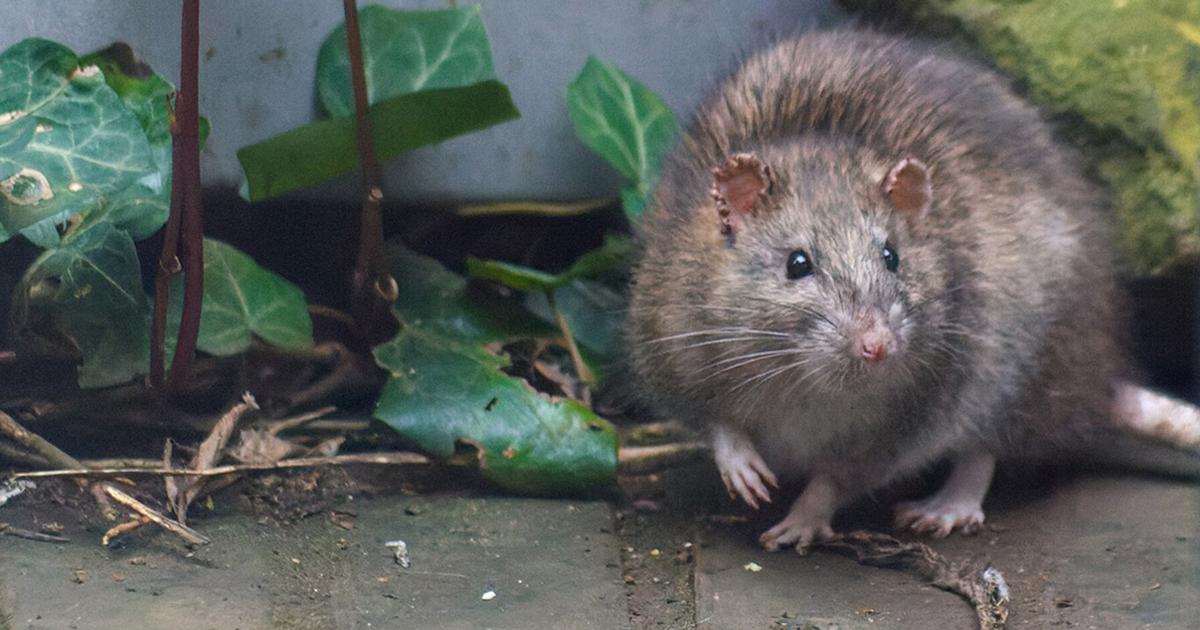
Invasive rodents are one of the biggest causes of biodiversity loss on islands around the world, responsible for an estimated 40% to 60% of all island bird and reptile extinctions.
A new computer modeling study conducted in part by UC Berkeley researchers suggests that a proposed CRISPR-based genetic approach could one day eliminate invasive rodent populations while reducing the risk of uncontrolled environmental spread.
Current rodent control often relies on anticoagulant poisons that kill non-target wildlife after predators consume poisoned rodents and can build up in the environment. According to Prateek Verma, a researcher at UC Berkeley, this tactic poses a risk to animals and the environment.
The study was authored by Verma and campus professor John Marshall alongside professor Omar Akbari of UC San Diego.
“Our paper is a computer simulation study, not a lab experiment,” Verma said in an email. “The technology we studied, called a Y-linked editor, has been built in mosquitoes, but nobody has ever built one in a mouse. What we did was run computer models to predict what would happen if someone did build one and released it.”
In the researchers’ approach, scientists would place a CRISPR-based gene editor onto the Y chromosome of male mice, and when an edited male mates with a wild female, the CRISPR tool would disrupt a gene essential for female fertility — rendering the female offspring of any edited male nonviable for reproduction.
Because only males inherit the Y chromosome, female offspring do not inherit the editor itself. Instead, they inherit the edited gene, leaving them unable to reproduce.
“The Y-linked editor doesn’t spread on its own, so it mostly stays where you put it,” Verma said in an email. “But unlike sterile males, its effect builds up over time instead of bouncing back the moment you stop releasing.”
In a simulation of an island population of 10,000 invasive house mice, the model predicted that by releasing approximately 350 modified male mice per month, the population would be completely exterminated in five years.
According to Verma, producing that number of mice would require roughly 58 to 130 breeding pairs, a scale he said could be managed by a relatively small laboratory facility.
Although the research is primarily aimed at protecting wildlife, reducing rodent populations would also have public health benefits by reducing human exposure to rodent-borne diseases including plague, leptospirosis, hantavirus and food poisoning bacteria such as salmonella.
While the computer model produced encouraging results, the approach remains theoretical. Verma noted the next step is for scientists to physically construct a Y-linked editor mouse in the laboratory and test the predictions found by the computer model.
“This is a promising prediction and a roadmap for the scientists who would build it — not a tool that’s ready to use,” Verma said in an email.
This article was authored by West Young and William Cain, participants in The Daily Californian’s High School Journalism Intensive.