California’s LGBTQ business community enters 2026 with hard-earned momentum and a clear sense of direction. After several years defined by disruption, recovery, and recalibration, LGBTQ-owned businesses across the state are shifting from survival mode to strategy. The next chapter is less about bouncing back and more about building businesses that are resilient, visible, and ready to scale.
What makes this moment distinct is not just economic conditions, but how LGBTQ entrepreneurs are responding to them. In California, values and commerce are deeply intertwined, and that reality continues to shape how LGBTQ-owned businesses grow, partner, and lead.
Supplier diversity becomes more local and more intentional
Across California, public agencies, utilities, and large institutions are rethinking how they engage small and diverse suppliers. For queer-owned businesses, this means fewer symbolic commitments and more emphasis on readiness and performance. Certification still matters, but in 2026, it is increasingly paired with expectations around capacity, compliance, and the ability to deliver consistently.
This shift creates an opportunity for LGBTQ entrepreneurs who understand their communities and can operate at scale. Community-facing procurement is gaining traction, especially in sectors like professional services, marketing, construction, workforce development, and hospitality. LGBTQ businesses that combine cultural competency with operational discipline are well-positioned to compete for contracts that prioritize both impact and execution.
Compliance and trust move to the center of brand reputation
As California continues to set the pace on privacy, labor, and consumer protection, compliance is no longer just a legal requirement. It is part of brand trust. LGBTQ-owned businesses, many of which rely on digital tools for marketing, customer engagement, and payments, are becoming more intentional about how they collect and protect data.
In 2026, customers, partners, and funders are paying closer attention to how businesses operate behind the scenes. Clear policies, responsible use of technology, and transparency are becoming differentiators, particularly for companies serving marginalized communities that have historically been over-surveilled or under-protected. Trust is not assumed. It is earned.
AI shifts from hype to practical operations
Artificial intelligence is no longer a novelty for LGBTQ entrepreneurs. In 2026, its value lies in operations, not experimentation. LGBTQ business owners are using AI to streamline customer follow-up, manage inquiries, schedule appointments, draft proposals, and reduce administrative overload.
The most effective adopters are not replacing relationships with automation. They are using technology to strengthen follow-through. In a competitive marketplace, the ability to respond quickly, stay organized, and deliver consistently, matters. AI is becoming a tool for sustainability, not spectacle.
Visibility, collaboration, and community media drive growth
One of the most notable trends shaping queer businesses in California is a renewed focus on visibility through trusted, values-aligned platforms. As digital advertising becomes more expensive and increasingly governed by opaque algorithms, LGBTQ entrepreneurs are turning toward partnerships, collaborations, and community media that speak directly to their audiences.
Rather than chasing reach alone, queer-owned businesses are investing in relevance. Editorial storytelling, cross-promotion, and collaboration with LGBTQ publications, chambers, and peer organizations are helping founders build credibility and deepen connections. In cities like Los Angeles, San Francisco, and San Diego, where competition is fierce and attention is fragmented, community media plays a vital role in narrative ownership.
Promotion in 2026 is not just about selling a product. It is about being seen in the right context, alongside aligned voices, and within a community that understands the value of mutual support. Businesses that prioritize collaboration over isolation are building trust that translates into loyalty, referrals, and long-term growth.
Resilience remains a defining strength
Climate uncertainty, supply chain disruptions, and economic volatility continue to shape California’s business environment. For queer entrepreneurs, resilience is not an abstract concept. It is a lived experience. In 2026, that resilience becomes a strategic asset when it is documented, operationalized, and communicated to partners and customers.
LGBTQ-owned businesses are increasingly clear about how they adapt, protect their teams, and stay open in the face of disruption. That clarity matters to buyers, investors, and communities looking for stability in uncertain times.
Looking ahead
The throughline for queer business in California in 2026 is readiness. Values still lead, but systems now support them. LGBTQ entrepreneurs are pairing purpose with performance, visibility with credibility, and innovation with discipline. In a state that often sets the tone for the rest of the country, queer-owned businesses are not waiting to be included. They are building models that endure.
Marquita is a business strategist and the CEO of the California LGBTQ Chamber of Commerce, where she works to expand economic opportunity, visibility, and access to procurement for LGBTQ-owned businesses across the state. She focuses on helping LGBTQ entrepreneurs build sustainable, scalable companies through partnerships, education, and community-driven growth.
For more information, head to CalRainbowChamber.org.
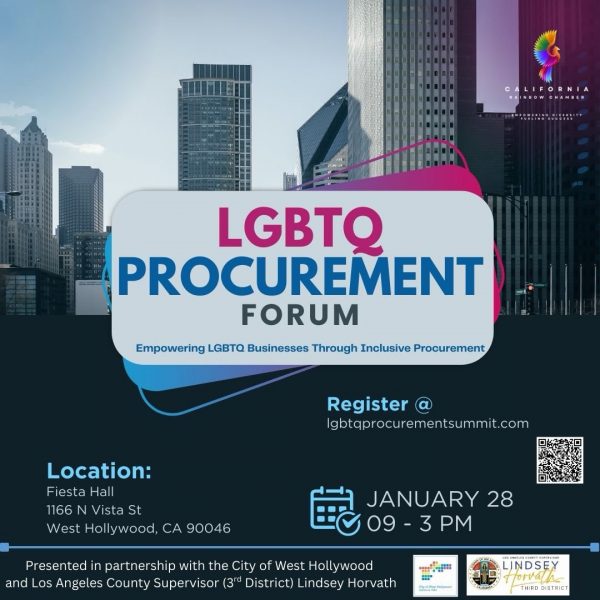
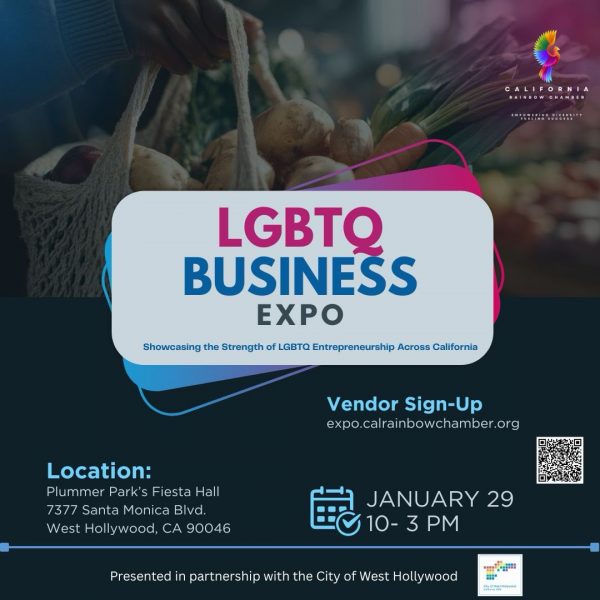
Join the LA Blade and the California LGBTQ Chamber of Commerce for two days, two distinct events, one bold mission.