
Modge Podge drips from my hand as I tightly grip rice paper in my right fist. I lean over a precarious paper lantern in progress, my front teeth securing two wooden rods and my gaze fixed with frustration. What I initially envisioned as a soothing, meditative Thursday night activity at San Francisco’s Kindred Studio is not going as planned.
Just as I’m about to give up, the unassuming stranger seated opposite me offers his twist ties with a smile, rescuing my teeth from their ill-conceived role as makeshift clamps. Looking up for the first time in what feels like hours, I notice every paper lantern around the table has taken on a distinct personality. Each attendee is absorbed in their own quiet concentration, yet a feeling of camaraderie emerges through brief exchanges, shared glances and small acts of generosity.
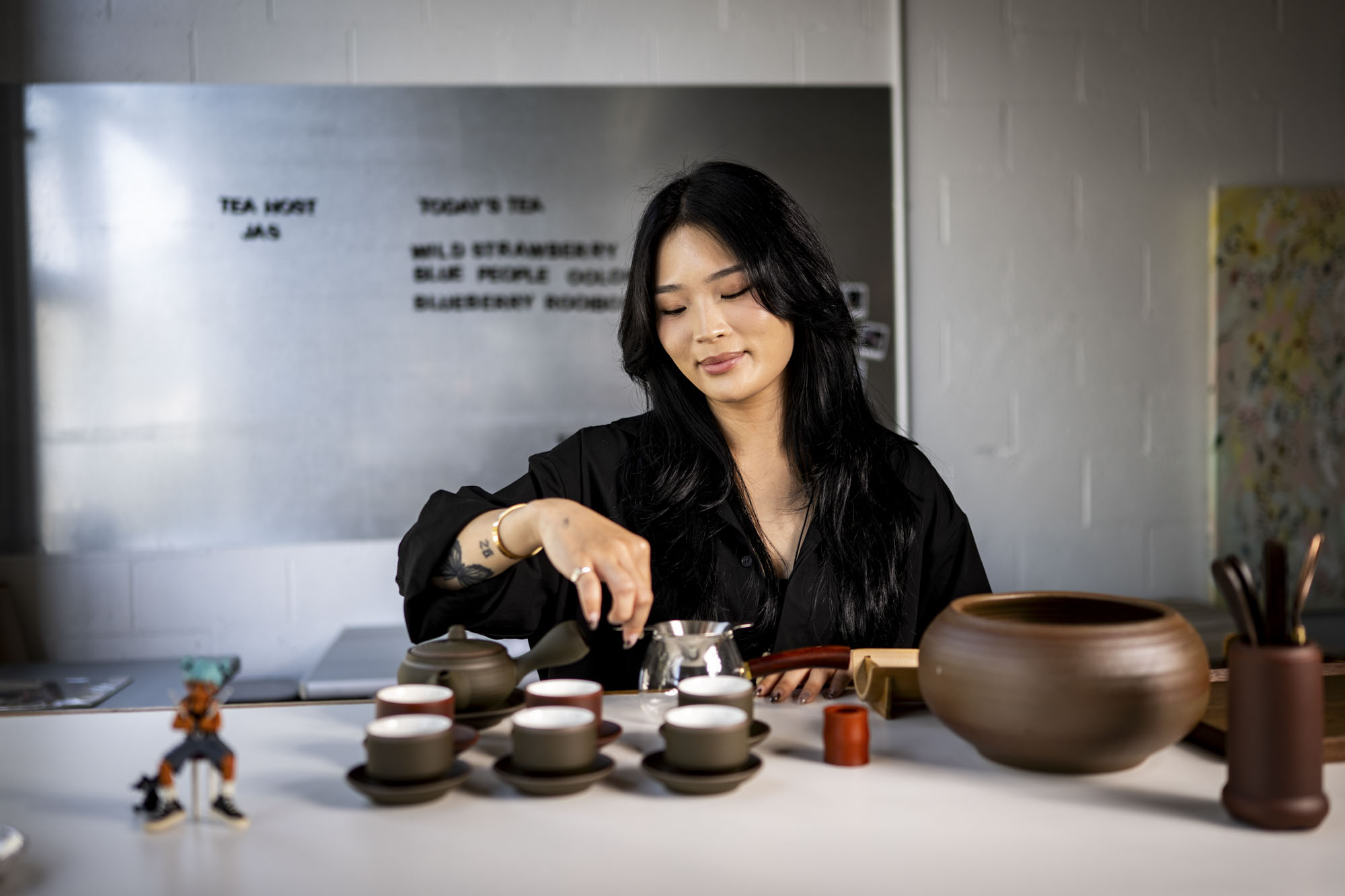 Tayler Vo sets up a Vietnamese tea set at Kindred Studio, a tearoom and community space, in San Francisco on Aug. 7, 2026.
A haven for the creative and curious
Kindred Studio is about “being present, meeting people,” emphasizes co-owner Tayler Vo. A self-described introvert searching for community in San Francisco, Vo envisioned a tearoom that could also triple-function as a co-working and workshop space, all meant to foster genuine connection.
For Vo, socializing is a lot like tea. “You cannot force it. You have to slow down,” Vo says.
Kindred Studio is intentionally split into four sections separated by curtains: a tearoom, a workshop space, a shoes-on living room and a shoes-off living room. This unconventional layout encourages visitors to embrace uncertainty.
“I like to say that if it feels weird or uncomfortable, that’s exactly what you should lean into,” Vo explains.
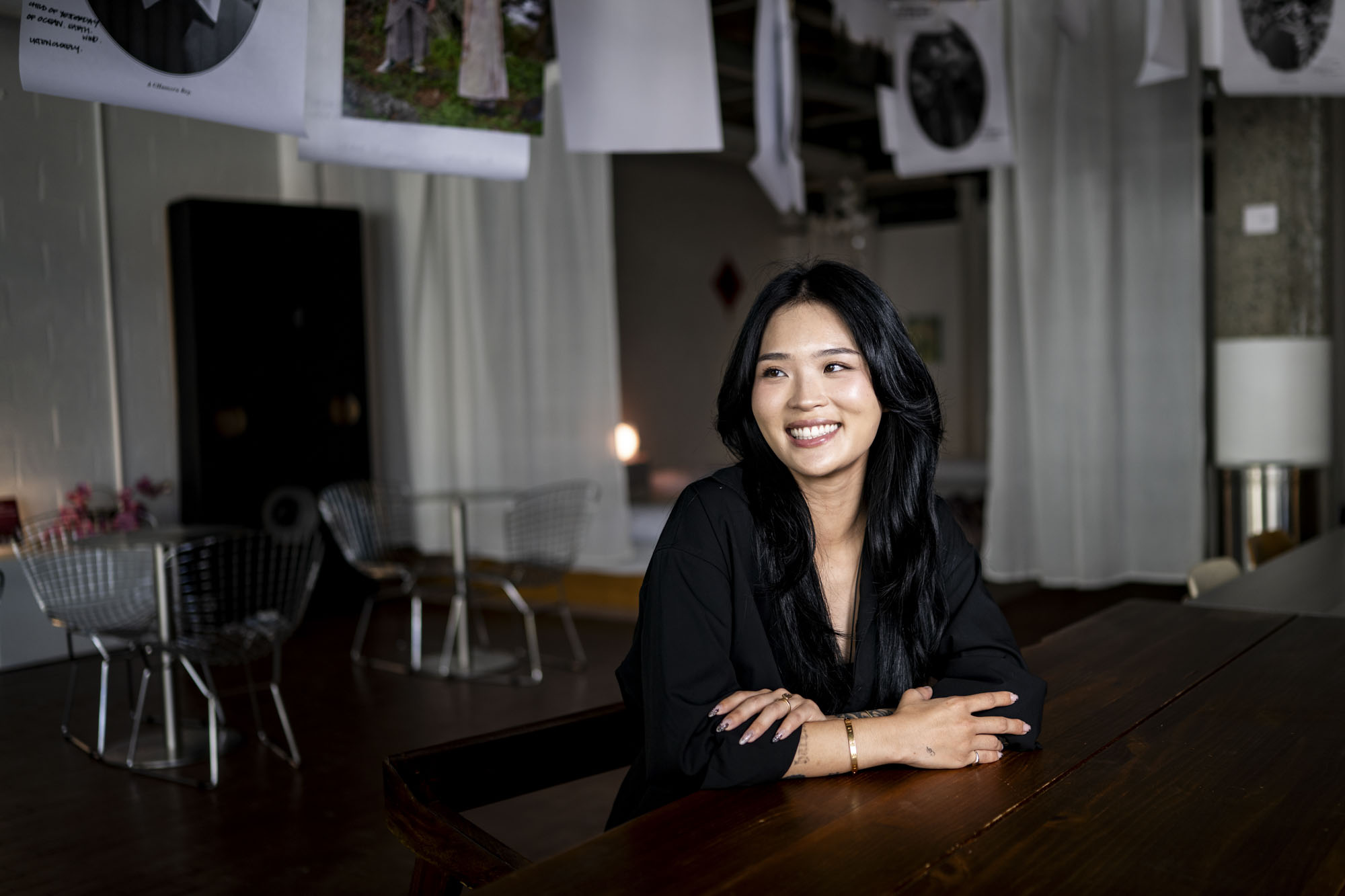 Tayler Vo at Kindred Studio, a tearoom and community space, in San Francisco on Aug. 7, 2026.
Since opening at the beginning of this year, Kindred has hosted a wide array of workshops with local artists, including live figure drawing with Rena Monet and paper lantern workshops with Grace Bishop.
Anyone who wants to be part of the Kindred community is invited to contribute to the space. One such collaborator is Sage Kitamorn, a former software engineer turned puzzle maker, whom Vo discovered through his puzzle series, Cozy Cubs Puzzle Club. “I have a feeling she had already read every word on my website,” Kitamorn says, “because she already knew the core shape of what I do in my weird little art project.”
The proliferation of concept stores over the past several years attests to Bay Area audiences’ appetite for the unknown and unfamiliar. Oakland-based artist Derwin Deon Brown II recently hosted a community lecture and hi-fi listening session at Kindred Studio for his traveling installation, Black American Sound System. Brown II describes his experience as “incredibly affirming.”
“The audience wasn’t just listening blindly; they were genuinely engaged,” he says. “People are hungry for spaces where music can be experienced as something deeper than entertainment.”
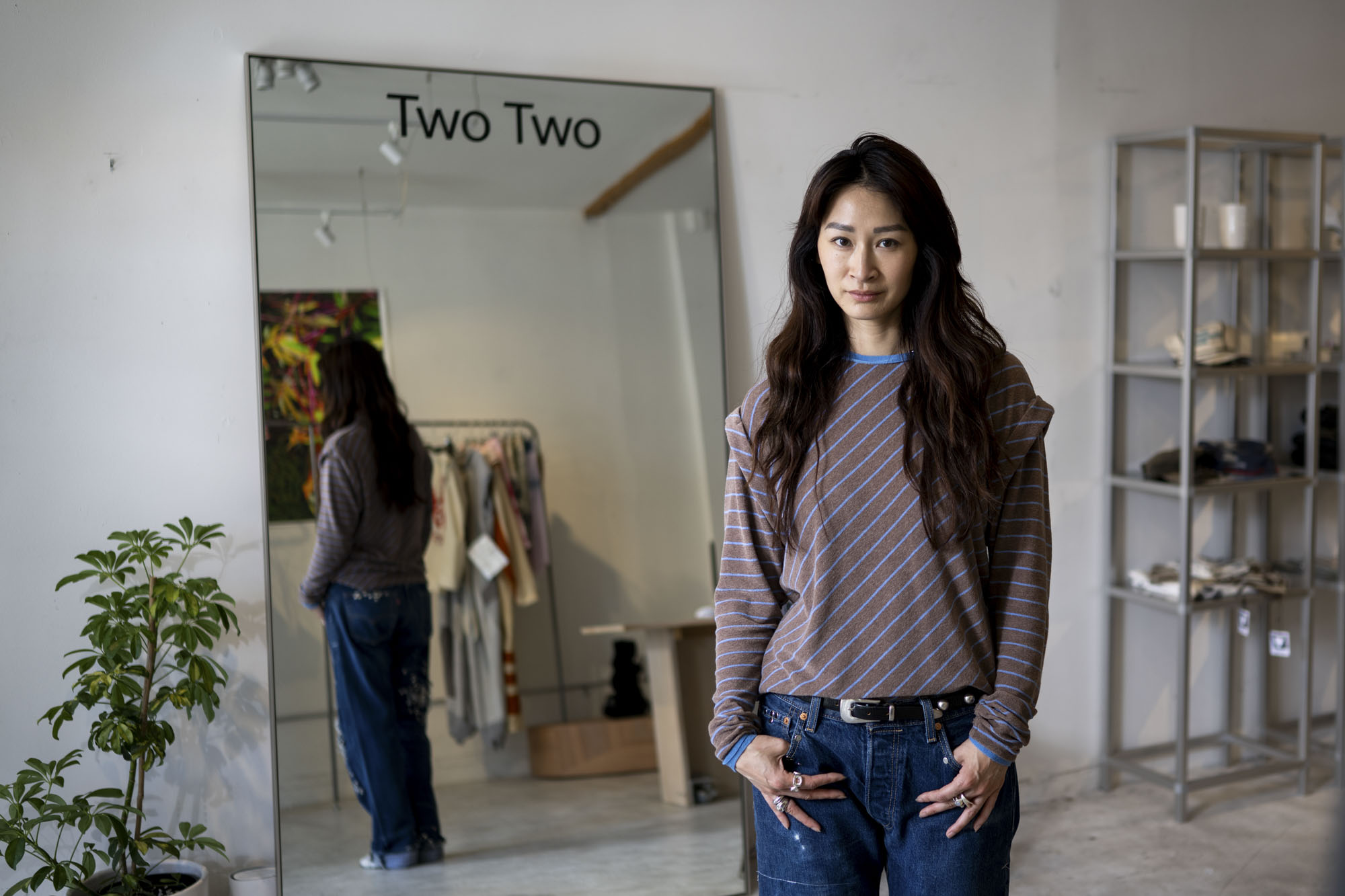 CC Doan, founder and curator of Two Two, at the Oakland shop on Aug. 7, 2026. The shop features clothing and accessories from independent designers and artists and hosts workshops.
Making room for artistic experiments
Oakland concept store Two Two arose from a similar observation by its founder, CC Doan. “When I moved here, I felt like … a weirdo in places,” she says. “People looked at me like I was pretentious…because I cared about fashion. I was like, ‘OK, if there are 10 other people like me, there’s probably 100 other people like me out in these streets.’”
Two Two showcases work by local, national and international designers, and they’ve hosted over 120 workshops and events since 2022. Subjects include beeswax candle-making with Ravenne Swaner of Lucky Star Candles and a recent incense-making workshop with Hyungi Park.
“Every time I return, it feels both familiar and completely different,” Park observes. “It’s a space that continually evolves while still feeling welcoming.”
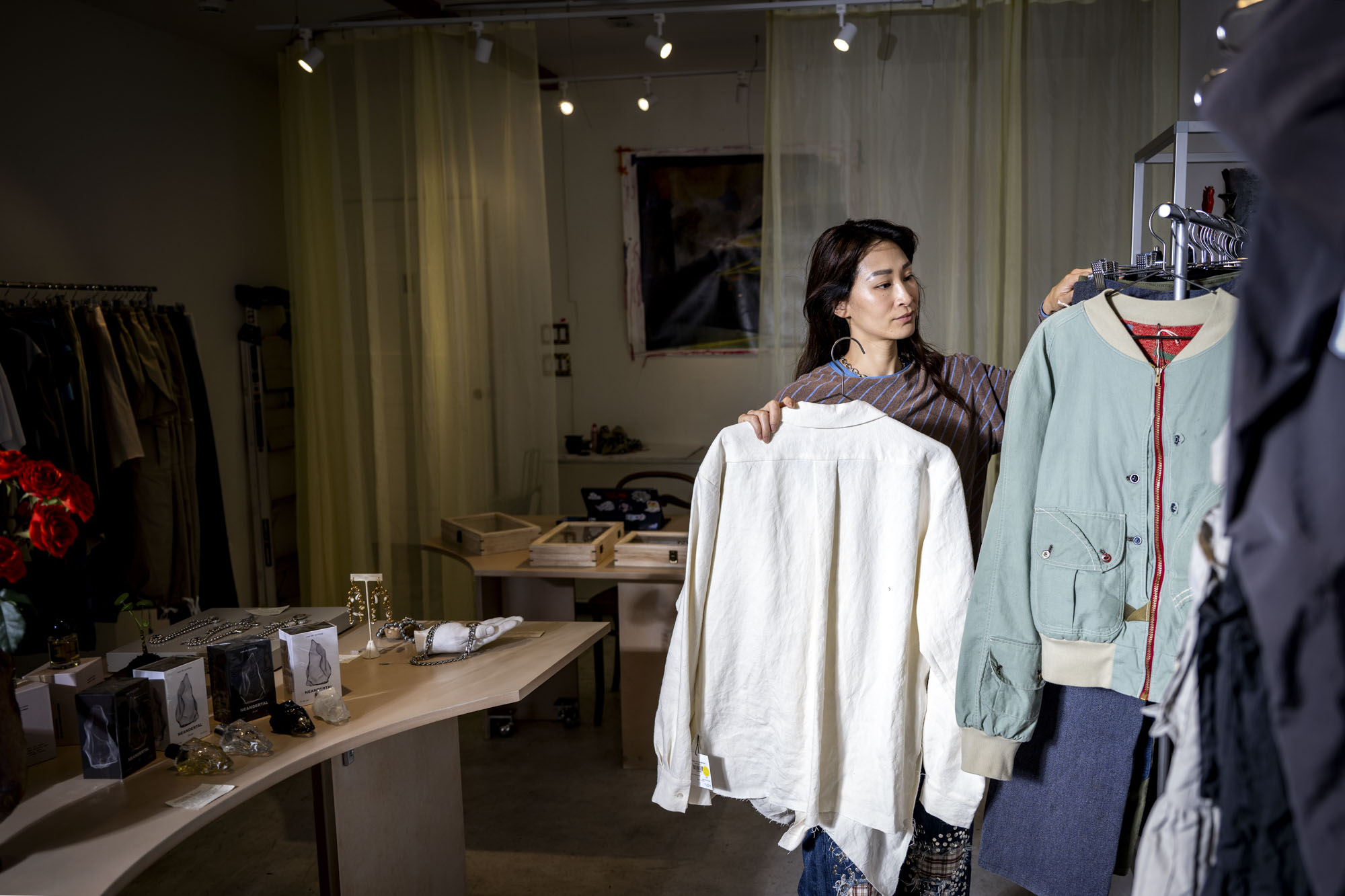 CC Doan, founder and curator of Two Two, at the Oakland shop on Aug. 7, 2026. The shop features clothing and accessories from independent designers and artists and hosts workshops.
The clothing designers featured at Two Two embrace that experimental mindset. Local artist Isabella Manfredi’s hand-sewn clothing, screen-printed with designs inspired by sunflower sea stars and her grandfather’s tools, is an extension of her artistic practice.
“I appreciate showing my work in a context that is as conceptual as a gallery space,” Manfredi says. “Everything that enters the space is filtered through an artful lens or sought out because it is art.”
Bringing different scenes together
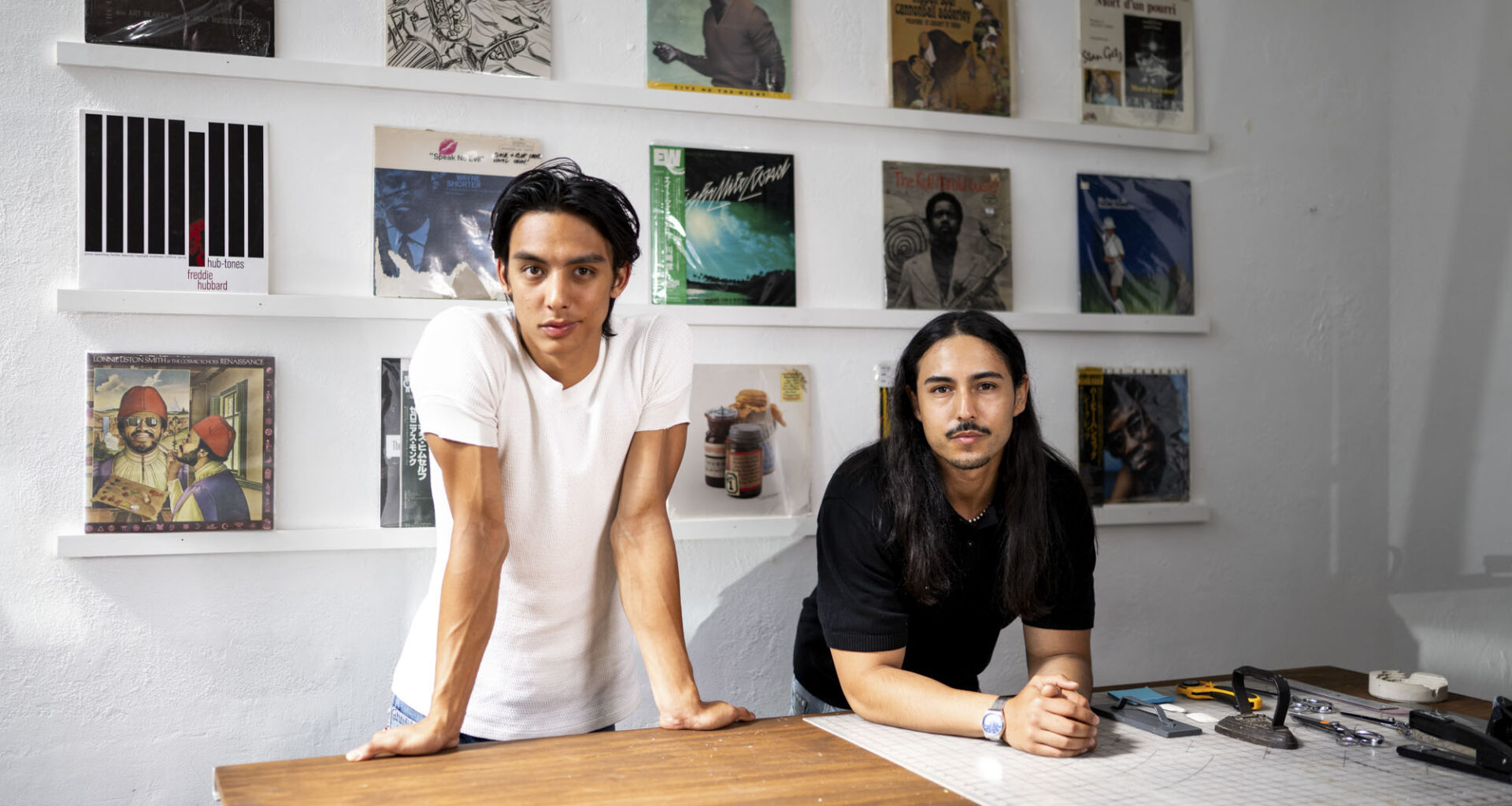
Just one street over from Two Two is 3319 Marché, which opened in 2024 with a focus on contemporary and vintage clothing, music and art. Founded by born-and-raised Oaklanders Tai Raino-Tsui and Marco Verdin, the shop emerged from the duo’s desire to create a “fashion and design destination” they felt Oakland was missing.
While some people might associate the Bay Area with Patagonia and the “tech-bro aesthetic,” Verdin says a considerable shift is happening. “It’s like that demographic is also looking to get outside the box a little bit,” Verdin says.
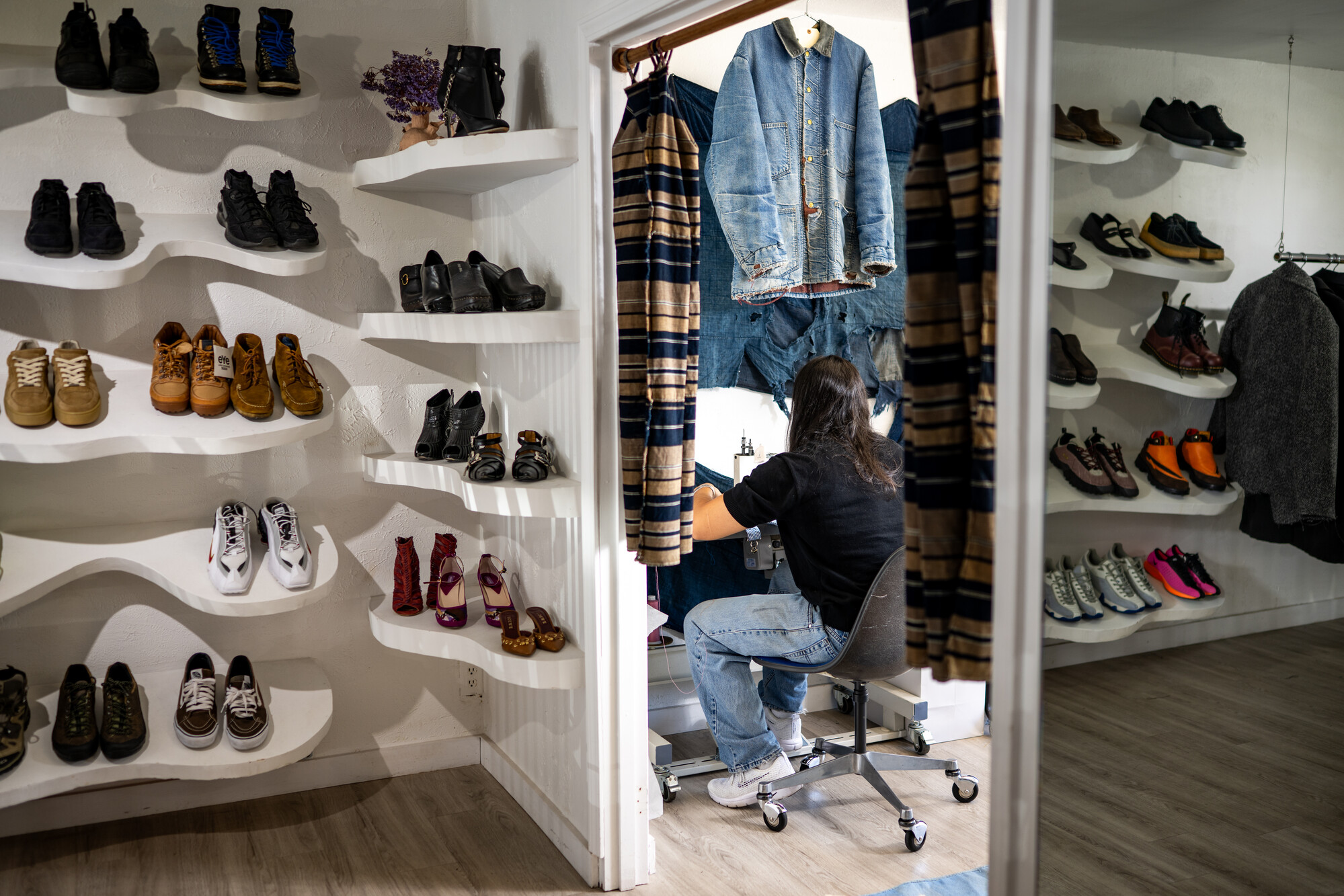 Co-founder Marco Verdin embroiders a garment at 3319 Marché in Oakland on Aug. 7, 2026. The vintage and designer clothing store also serves as a creative space for art, music and community events.
Raino-Tsui asserts that the overarching mission of the space is to create “a new wave of cultural renaissance from within.” 3319 Marché has hosted performances by prominent Bay Area musicians like Kehlani, Toro y Moi and Ovrkast. Visual artists Phillip Okonma and Esteban Samayoa have shown their work there, and Samayoa’s exhibition doubled as a toy, coat and food drive.
While ham-fisted intersections between tech and art can often feel awkward, the Bay Area’s concept stores bring together artists, designers, makers, technologists and curious neighbors with surprising ease. As prominent Bay Area arts institutions close and public funding for the arts continues to shrink, these concept stores offer an alternative model for cultural exchange.
The concept store owners who spoke to KQED all emphasize that they intended to remain permanent players in this conversation. Two Two founder CC Doan reflects, “As more people come, I realize that I have this responsibility to others. Two Two needs to be here because I need to be in service of my community.”
Raino-Tsui of 3319 Marché echoes the same sentiment: “It’s really just about being here and doing our best to show up for ourselves and our people.”