
This story is part of our August 2026 issue. To read the print version, click here.
Standing inside a redwood tree hollowed out by wildfire, Annie
Cresswell looks tiny. She is dwarfed by the huge tree, but also
by its massive cavity, which could serve as a small bedroom.
The tree at Armstrong Redwoods State Natural Reserve has burned
repeatedly over the years, creating a hole called a “goosepen,”
so named because early settlers used these cavities throughout
Northern California to hold farm animals. The most recent fire at
Armstrong Redwoods started outside the park and joined with other
lightning-caused fires in late 2020.
The park was closed for over a year as officials cleared dead
trees, limbs and other debris. Remarkably, none of the redwoods
were killed. During a visit this year, I didn’t see evidence of
the fire on redwoods until Cresswell, executive director of the
Stewards of the Coast and Redwoods, pointed out the expanded
goosepen and some burn marks on other redwoods at the edge of the
park.
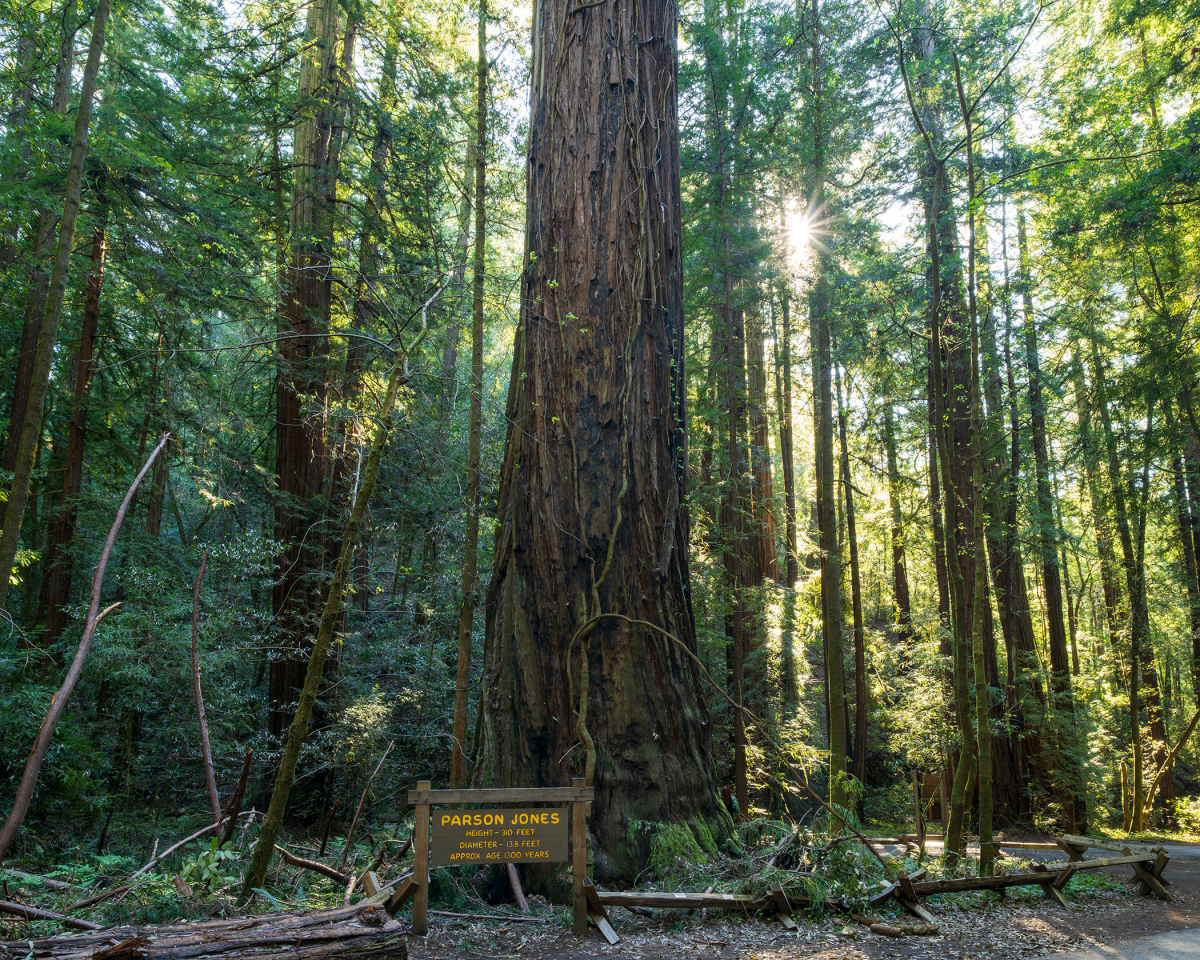
The Parson Jones tree stands 310 feet tall and has a diameter of
138 feet.
“That’s what is really remarkable about the redwoods — the bark,”
says Cresswell, whose nonprofit organization co-manages Armstrong
Redwoods in Sonoma County, alongside California State Parks. “It
slows down the fire and protects them from death.”
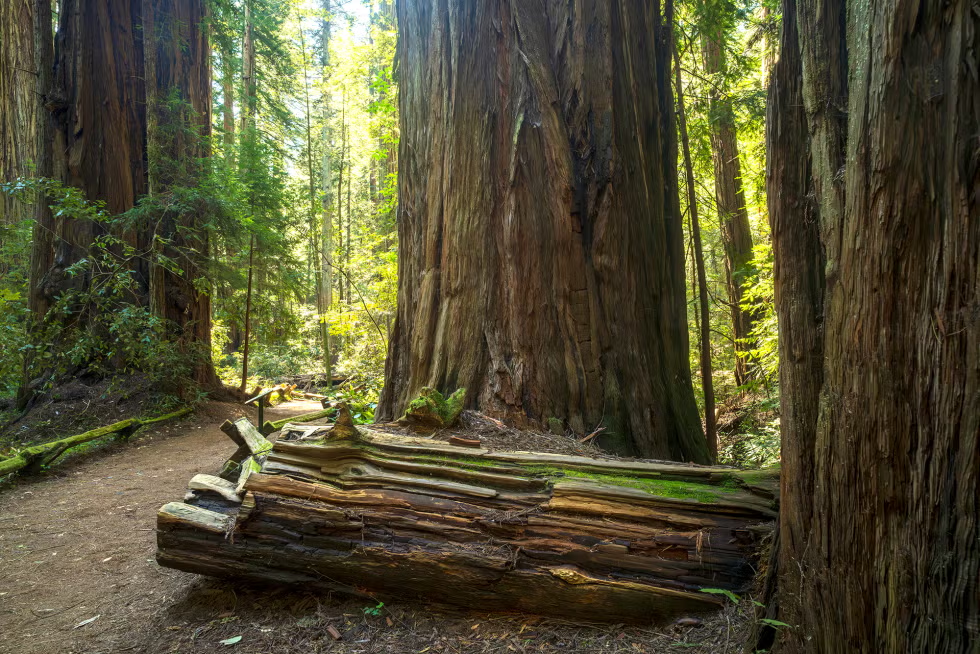
I have been fascinated with redwood trees since I visited
California for the first time as a teenager. Coast redwoods can
grow to more than 300 feet tall, making them the world’s tallest
tree, and they have developed numerous fascinating adaptations to
help them live hundreds of years. Thick, resinous bark is among
the most important. Redwoods instill a sense of awe in me.
I enjoy visiting redwood parks in the summer, as they provide a
cool escape from Sacramento’s heat. About a two-hour drive west
of Sacramento, Armstrong Redwood’s home of Guerneville usually
has high temperatures in the low 80s in July. In addition to the
cooler coastal weather, the thick tree canopy helps keep redwood
forests comfortable. The forests are dark, cool and damp.
California State Parks has 49 redwood parks stretching from Big
Sur to the northern state line. The amount and size of the
redwoods vary by park, with the oldest and tallest trees in the
northwest corner of the state, in Humboldt and Del Norte
counties. But there are some large, beautiful redwoods at parks
closer to Sacramento, including Henry Cowell Redwoods State Park,
near Santa Cruz, and Armstrong Redwoods.
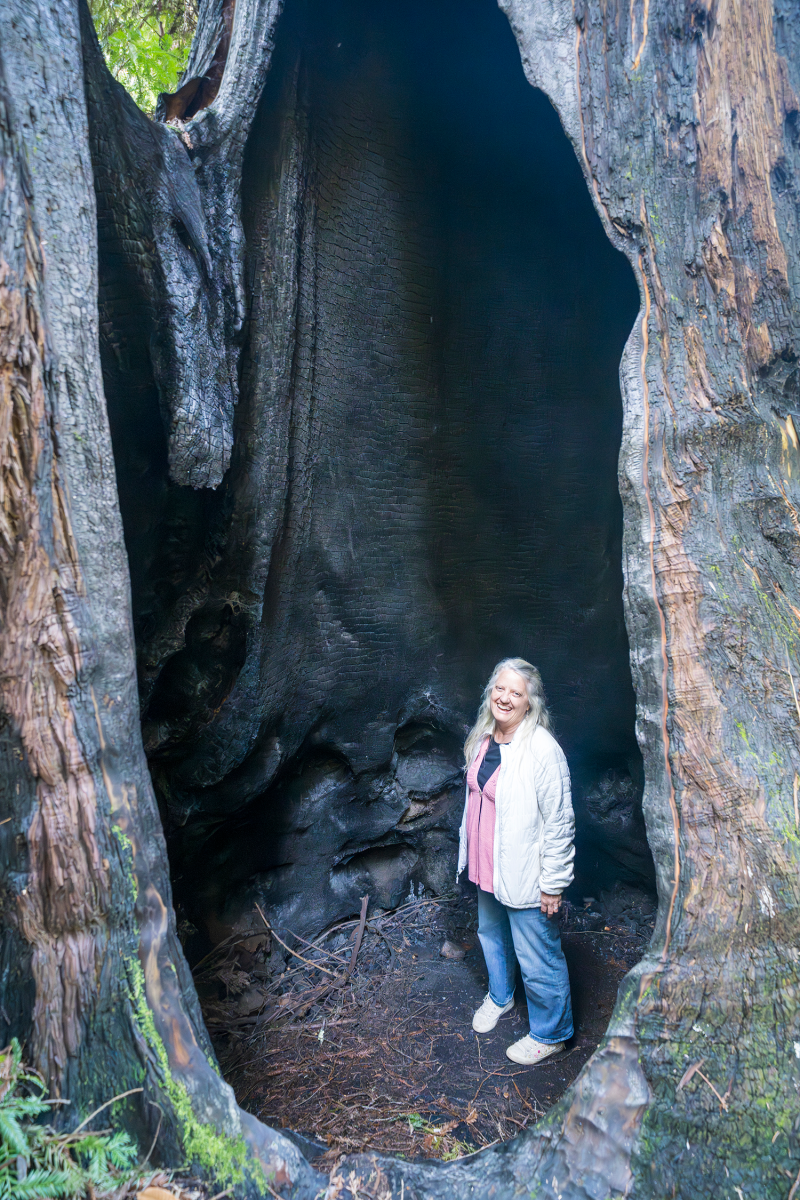
Annie Cresswell, executive director of the Stewards of the Coast
and Redwoods, stands inside a redwood tree hollowed out by
wildfire at Armstrong Redwoods State Park. The tree is still
living.
Unfortunately, redwood and other trees have been put under great
pressure by the gargantuan wildfires that have burned across the
state in the last decade. In 2020, the same year Armstrong
Redwoods burned, another major wildfire devastated Big Basin
Redwoods State Park near Santa Cruz. The fire torched the entire
park, killing much of the Douglas fir and other tree species,
according to California State Parks officials. Most of the
redwoods survived, but most of their tree canopy was killed,
drastically changing the look of the forest as sunlight now fills
areas that were previously shaded. Also, the redwoods are
charcoal black and will likely remain so for years.
I’m glad Armstrong Redwoods survived relatively intact, because
it will now be my go-to redwoods park, replacing Big Basin, where
I used to visit at least once a year. Walking through Armstrong
Redwoods earlier this year, I saw the Parson Jones Tree, 310 feet
tall and an estimated 1,300 years old. And I saw the Colonel
Armstrong Tree, estimated to be 1,400 years old and dedicated to
the lumberjack who preserved that part of the park in the 1870s.
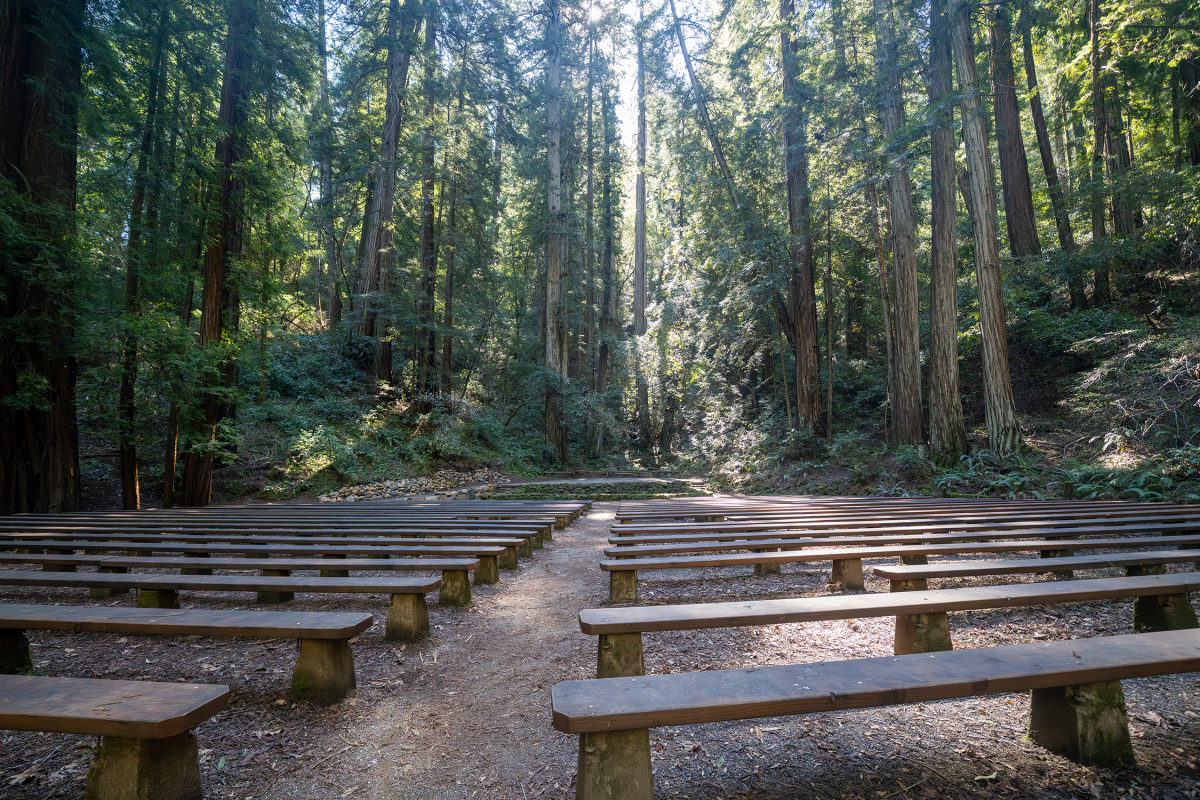
Concerts are held in the summer at the Redwood Theater at
Armstrong Redwoods State Natural Reserve.
I admired the open-air Redwood Theater, where the park has summer
concerts. Last summer, former U.S. Poet Laureate Ada Limón read
there. The theater is simple enough, with a small stage and rows
of benches. Located in the middle of a redwood forest, it has the
feel of a church.
Redwood groves are often compared to cathedrals. The groves
create a reverential feeling with a high canopy of branches that
allows light to filter in, like some churches. I noticed another
similarity to churches during my recent visit to Armstrong
Redwoods. Crowds of people who had been talking quieted as they
approached me on the trail, as if they had walked into a church.
I just pray that this redwood cathedral is spared from future
flames and lives another thousand years.
–
Stay up to date on business in the Capital Region:
Subscribe to the Comstock’s newsletter
today.