
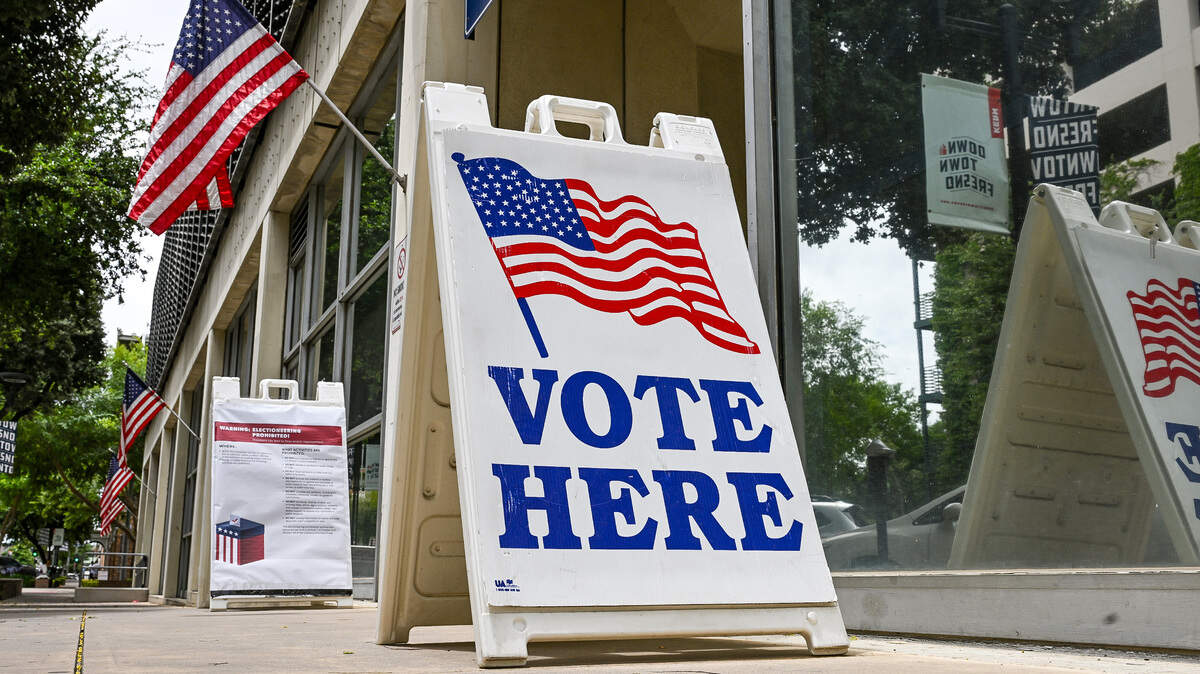
The Fresno County Elections Office, located on Kern Street in downtown Fresno.
CRAIG KOHLRUSS
ckohlruss@fresnobee.com
In what one insider called the craziest week in Fresno political history, the battle to replace Measure C — the Fresno County transportation tax expiring next year — continues to rage. There are dueling tax proposals on the ballot, twists and turns for ballot access, and plenty of name-calling and political grandstanding.
As it stood early this week, voters within the city of Fresno will see two tax measures, each a half-cent. One is a city-only sales tax going to the general fund and can be used for any purpose. The second, all Fresno County voters will decide the Better Roads, Safe Streets plan.
The city-only plan would instantly expire if the county plan passes, so city voters will not be double taxed. Otherwise, it sunsets in 10 years.
A looming threat of a lawsuit leaves the Better Roads, Safe Streets in limbo. Here is how we got here:
Failure to renew Measure C
Voters first passed Measure C in 1986 for 20 years. The tax helped extend the major highways in Fresno County — 41, 180, 168. Voters renewed it for another 20 years in 2006.
A third renewal in 2022 ran into opposition from social justice groups. Sandra Celedon of Fresno Building Healthy Communities and Assemblymember Joaquin Arambula, D-Fresno, campaigned against it. Needing two-thirds, Measure C received 58%, failing to pass. A post-election analysis found tax-conscious voters in Clovis and north Fresno voted it down.
The Fresno Council of Governments, the government agency charged with administering Measure C, bypassed a 2024 attempt, and started a complicated process last year to renew the measure.
Aug. 7 deadline
Any Measure C successor or alternate transportation tax measure needed to be placed on the Nov. 3 ballot 88 days ahead of time, or Aug. 7. .
For measures where taxes are spent for a specific purpose, such as transportation, it matters how it reaches the ballot. A signature-gathered measure needs a majority of voters to pass; a government-led effort needs two-thirds. There is also another ballot item, Proposition 43, which would make the threshold two-thirds no matter how it got to the ballot.
Social justice version of Measure C renewal
Last year, Fresno COG began a bureaucratically-oriented method for the official Measure C renewal. The policy board — composed of the 15 mayors in Fresno County and a supervisor representative — formed a steering committee, made up of city community members and experts in the transportation field.
A social justice group called Transportation for All (later to form as Better Roads, Safe Streets) demanded seats at the table. If not, they would gather signatures for its own initiative. Like 2022, they argued Measure C did not focus on public transportation enough, and did not help poorer, rural communities. A policy board subcommittee acquiesced, and the group essentially took over the formation of the Measure C renewal.
Opponents said the group hijacked the steering committee and proposed something different from the Measure C mission for fixing roads. Eventually, the policy board voted against the official Measure C renewal, allowing the social justice groups to circulate their own plan.
The Better Roads, Safe Streets plan dedicated 65% for fixing roads and 25% for public transportation, drastically different amounts than the current Measure C. That created a schism among supporters — including Fresno Mayor Jerry Dyer and Clovis Mayor Vong Mouanoutoua — and opponents such as Fresno County Supervisor Garry Bredefeld and Clovis Councilmember Diane Pearce.
Better Roads, Safe Streets started the process in January 2026 and turned in the required signatures, about 22,000, in April. The effort was funded by the Central Valley Community Foundation, and its president/CEO Ashley Swearengin.
The formal name of the legislation is the Fresno County Transportation Improvement Act.
When the county clerk found duplicates in the random sample, it delayed certification until James Kus could examine every signature. His office completed the task and certified the Better Roads, Safe Streets measure on July 8.
Supervisors find a way to delay
By law, the Fresno County Board of Supervisors has to approve a certified signature-gathering effort and place it on the ballot. But, state law also allows government board to order a study, pushing back a required vote.
The supervisors on July 14, voted 3-2 for the study option. The study would take up to 30 days.
The supervisors will receive the study on Aug. 11, past the Aug. 7 deadline. That could have pushed the Better Roads, Safe Streets plan to the next statewide election in March 2028.
Supporters objected, saying the move denied the right to vote in November. Mendota Mayor Victor Martinez even called Bredefeld and two other supervisors “racist.”
Advocates implored Bredefeld, the board chair, to call for a special meeting before Aug. 7. He refused.
It seemed Better Roads, Safe Streets were out of moves.
Emergency state law passed
Dyer and Mouanoutoua and the other mayors had one option — ask for help from Sacramento. Better Roads, Safe Streets also hired a Sacramento lobbyist to make things happen.
On Aug. 3, Assemblymember Esmeralda Soria, D-Fresno, and state Sen. Anna Caballero, D-Merced, wrote “emergency” legislation to change election law, taking away the supervisors’ role in placing an item on the ballot.
AB 1923 moved through Sacramento at record pace. It took just four days from introduction to a signature from Gov. Gavin Newsom to make it law. The urgent nature required a suspension of rules, which normally require a bill to be in print for 72 hours.
Bredefeld and Pearce criticized the move, calling it election tampering and taking away local control. At an Aug. 6 news conference, Bredefeld called for the county to instigate a lawsuit.
Fresno goes it alone
In between the supervisors delay tactic and the Sacramento Hail Mary, the city of Fresno decided it could not let $54 million in Measure C road repair money, its annual share, to expire.
It voted July 30 to place its own tax measure on the ballot. However, this would be a general tax, where spending on transportation could not be guaranteed. The fine print allowed for expiration of the Fresno measure in either 10 years or if a county measure passed.
Dyer had until Aug. 7 to sign the legislation to guarantee a spot on the Nov. 3 ballot. He said he would let the city-only measure lapse without his signature if the Sacramento bill passed. He told The Bee he did not want two tax measures on the same ballot.
On Aug. 6, Dyer sent out a news release confirming he would not sign. A day later, something changed in the city’s legal analysis of the viability of the Better Roads, Safe Streets on the Nov. 3 ballot. Suddenly, the city worried it might not appear — despite public assurances from Soria’s office that it was iron-clad law.
Even Kus told The Bee he considers the Better Roads, Safe Streets to be on the ballot, unless told otherwise by a court.
At 4 p.m. on Friday, with one hour to spare, Dyer signed the city-only measure and submitted it to the county clerk.
What’s next
The Fresno County Board of Supervisors meet Tuesday, Aug. 11, to receive the study and by election law, vote to place the Better Roads, Safe Streets plan on the ballot.
The agenda item offers two options for the supervisors — to place the item on the March 2028 ballot, as originally intended; or on the Nov. 3 ballot “under protest” to comply with AB 1923.
In closed session, the board is expected to discuss the possibility of a lawsuit.
Which ballot Better Roads, Safe Streets appears on could be decided by a judge. The absolute deadline to appear on the Nov. 3 ballot is Sept. 8, Kus told The Bee. That is the date he needs to print ballots to send overseas and to military members.
Note: this story was updated on Aug. 12 to correct the body’s name to the Fresno Council of Governments, and to remove a line that the supervisors had up to 10 days to send a tax measure to the ballot after receiving a report. That only applies to adopting the measure.
This story was originally published August 11, 2026 at 7:21 AM.
The Fresno Bee
David Taub joined the Fresno Bee in 2026 after reporting 10 years for digital publication GV Wire. He has worked in the Fresno market since 2007. Prior to moving to the Central Valley, he worked for TV and radio stations on the Central Coast. He has also worked behind the scenes in local TV and radio. During his career, he has covered City Hall, the state Capitol, the White House and several houses of government in between. When not in a reporting capacity, he works tracking stats for the Fresno Grizzlies as an official scorekeeper, and also with televised basketball and football games. He has worked the Super Bowl, NBA Finals, and several MLB games. Growing up in the San Francisco Bay Area, Taub is a die-hard Giants and 49ers fan. He graduated from the University of Michigan with dual degrees in communications and political science. Go Blue!