
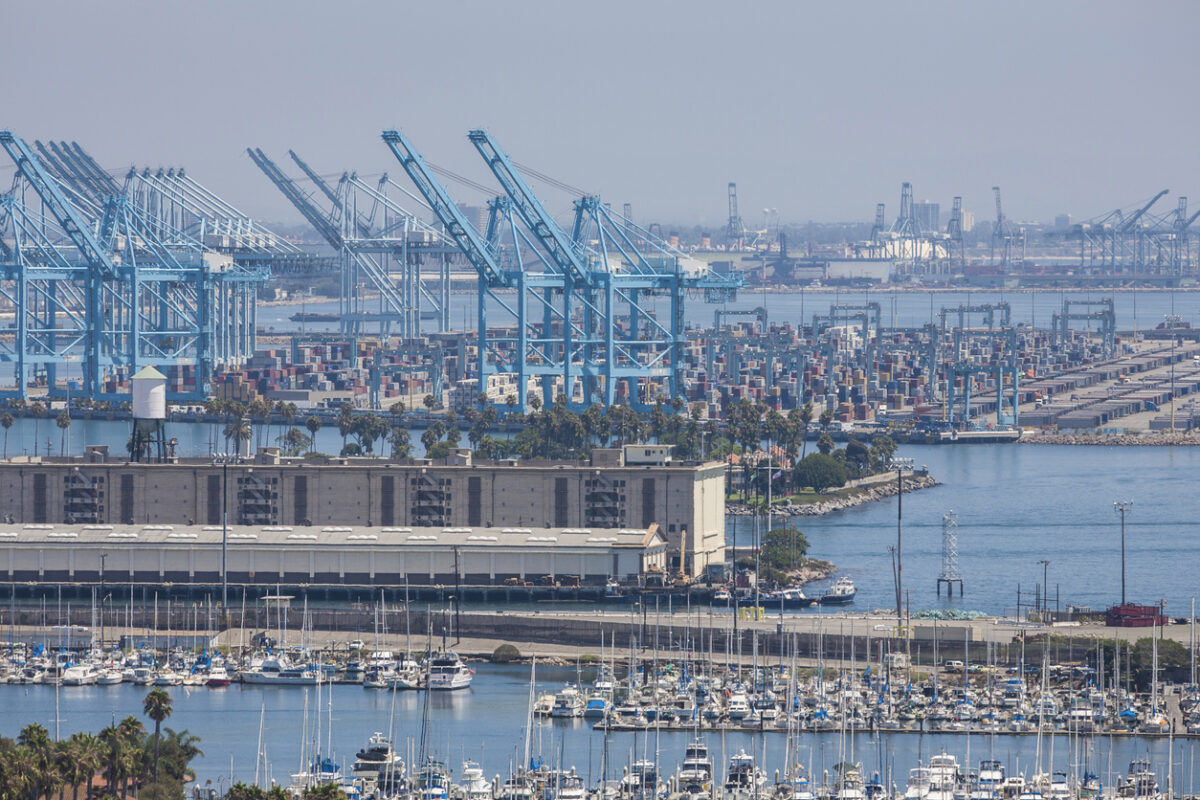
The Port of Long Beach handled 928,508 TEUs in July 2026, marking its second-busiest July on record and the fourth-highest monthly throughput in the port’s 115-year history.
Container volumes were 1.7 per cent lower than in July 2025, with results varying across imports, exports and empty container movements.
Imports remained broadly stable at 467,461 TEUs, a decrease of 0.1 per cent compared with the same month last year. Exports rose 14.8 per cent to 104,843 TEUs, while empty container movements fell 7.4 per cent to 356,205 TEUs.
The July figures were announced by Port of Long Beach CEO Dr Noel Hacegaba alongside Stephen Carmel, Administrator of the U.S. Maritime Administration.
READ: US port imports stay above 2.2 million TEUs in August
Through the first seven months of 2026, the Port of Long Beach handled 5,758,086 TEUs, representing an increase of 1.2 per cent compared with the same period in 2025.
The port is continuing with longer-term plans to expand its capacity and modernise infrastructure under its 2050 vision, which targets a doubling of annual container volumes to 20 million units by 2050.
As part of this programme, Long Beach plans to invest $3.3 billion in capital projects over the next decade, alongside the development of digital systems intended to improve cargo-handling efficiency and visibility.
The port has also set out plans to become a zero-emissions port as part of its longer-term development strategy.
According to the Port of Long Beach, cargo moving through the gateway is valued at approximately $300 billion annually and supports 2.7 million jobs across the US.
Long Beach is also one of 18 commercial strategic seaports in the US responsible for supporting force deployment during national defence emergencies.
The latest container figures follow a year in which the port is pursuing infrastructure, digitalisation and emissions-reduction initiatives alongside its plans for future cargo growth.
For more information:
Port of Long Beach – https://polb.com/