
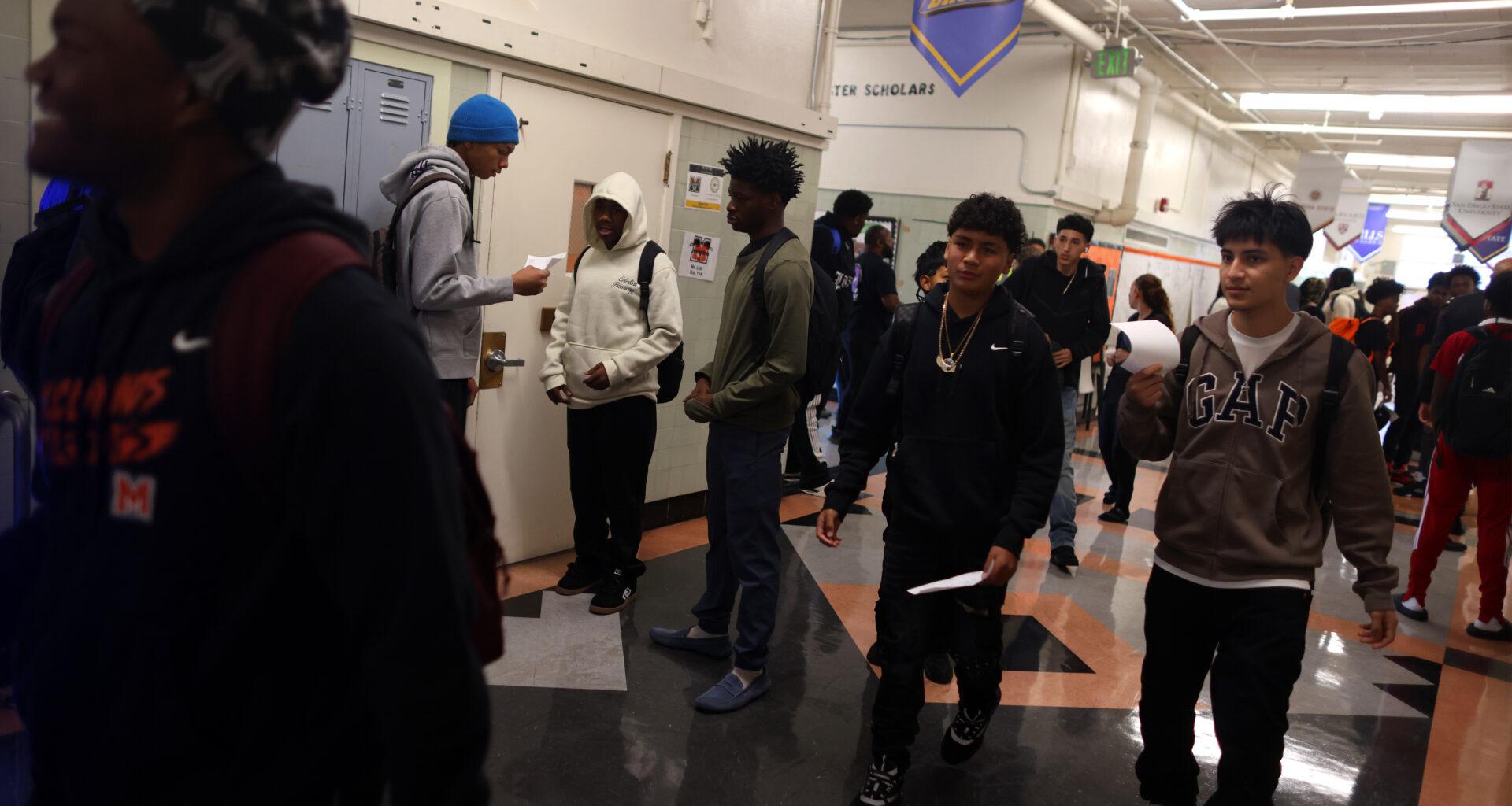
At McClymonds High School this week, students lined up to lock away their phones under Oakland Unified’s new “Cell Phone Free Day” policy. Despite the new restrictions on their cellphone use, the mood was cheery as they compared class schedules and discussed summer break with their peers amid the clanking and pounding of renovations to the 88-year-old campus.
Across town, transitional kindergarten students at Sankofa United Elementary School snacked on cereal and juice boxes Monday while awaiting classroom “job” assignments, and newly minted fourth graders introduced themselves to their peers and discussed goals for the year.
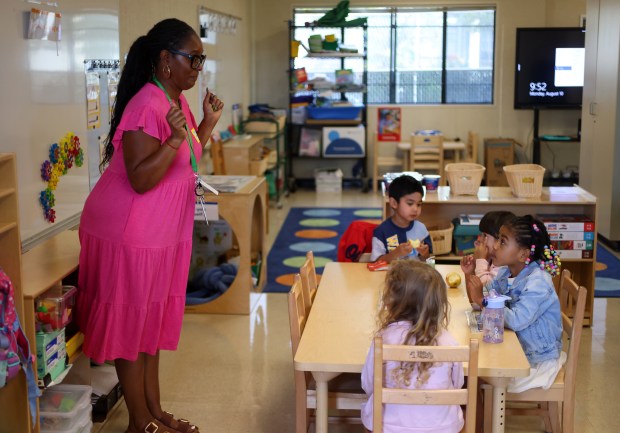 Transitional kindergarten instructor Meccah Coleman, left, teaches class on the first day of school at Sankofa United Elementary School on Monday, Aug. 10, 2026, in Oakland, Calif. (Aric Crabb/Bay Area News Group)
Sankofa United Principal Leigh Daniels said all of the school’s teacher positions are fully staffed and so are other key positions like instructional aides and counselors. (The district did not respond to questions about whether all schools in the district were fully staffed by press time.)
The upbeat return to city schools might come as a shock to those who remember when Oakland Unified School District exited more than two decades of state oversight a little more than a year ago, amid a ballooning $100 million budget shortfall and alarming projections that the district could run out of cash as early as fall 2025.
As students returned to campuses earlier this week to begin a new school year, the district’s worst-case scenario has not come to pass, although its apparent financial reprieve remains fragile.
“We’ve done a really great job in the last two years,” said school board member VanCedric Williams. “We’ve cut close to $200 million.”
While the district has made hefty budget cuts in the last year to slash its looming deficit, Oakland Unified Superintendent Denise Saddler said officials have been able to keep most of the cuts out of the classroom.
“We prioritize our instructional program,” Saddler said. “The staff, our teachers and principals who work directly with students, the materials that they need, the programs that we think are really critical. … At this point, we’re focused on what we’re doing with students in the classroom.”
The district did not respond to questions about which services and staff were cut, but the February layoffs included counselors, literacy coordinators, social workers, assistant principals and teachers, as well as reading tutors, custodians and behavior specialists, among others.
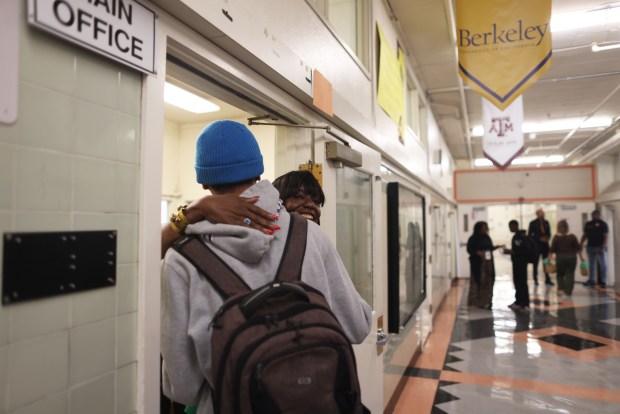 Dr. Denise Saddler, center, superintendent of the Oakland Unified School District, gets a hug from a student on the first day of school at McClymonds High School on Monday, Aug. 10, 2026, in Oakland, Calif. (Aric Crabb/Bay Area News Group)
But the journey to stabilize the district’s finances and keep Oakland Unified from returning to state control has been a lengthy, tumultuous process.
In January, Saddler claimed that preliminary cost-saving measures — like a three-week spending freeze — and future measures, including layoffs and retirement incentives, had successfully halved Oakland Unified’s projected $100 million budget deficit.
The next month, the district’s board approved 421 layoffs and reduced the hours of an additional 144 positions in an effort to stabilize finances. Less than 48 hours later, the district approved a tentative contract with the teachers union, promising double-digit wage increases for educators over the next two years.
In April, Alameda County Superintendent of Schools Alysse Castro warned Oakland Unified that the tentative labor contract — estimated to cost the district nearly $40 million over the next three years — could threaten the district’s ability to balance its budget by the summer.
“OUSD is continuing a pattern of adding new expenses before making the cuts and tradeoffs to afford them,” Castro said in a letter to school leaders. “The district has not yet identified the sustainable, ongoing solutions required to offset these new ongoing commitments and costs.”
But in June, district officials came back with a surprising announcement: a $30 million spending reduction in recent months resolved the deficit and even produced nearly $8 million in breathing room. Although that surplus depended on the district executing an additional $30 million in budget cuts this fall, officials added.
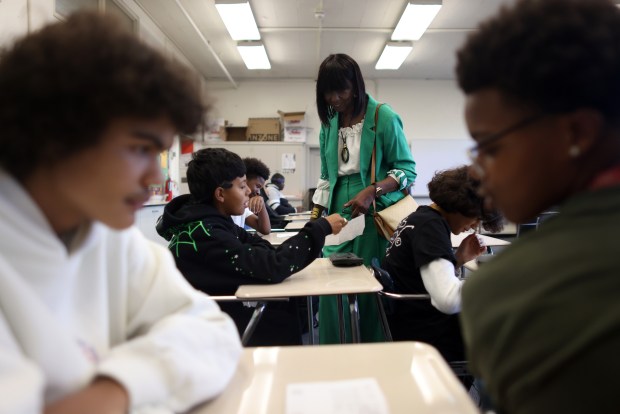 Dr. Denise Saddler, center, the superintendent of the Oakland Unified School District, visits a class at McClymonds High School on Monday, Aug. 10, 2026, in Oakland, Calif. (Aric Crabb/Bay Area News Group)
Leaders credited a reduction of $14.7 million in special education funding, eliminating $3 million in consultant contracts, budget adjustments across school sites and reduced staff as some of the ways the district was able to stabilize its spending.
The district did not respond to questions about what specific services were cut in the $14.7 million reductions to special education funding by deadline.
The district also said additional revenue streams, like increased student attendance, more transitional kindergarten classes and additional funding from the state, could help lower the district’s projected deficit.
The district’s budget troubles have been worsened by leadership turnover among top school officials.
The school board has been rife with political conflict since longtime superintendent Kyla Johnson-Trammell was ousted in the spring of 2025. Oakland Unified’s top business official, Lisa Grant-Dawson, also resigned at the end of 2025 along with the district’s chief of staff, Dan Bellino. Grant-Dawson cited concerns over the board’s financial decisions as the reason for her departure, while Bellino alluded to “harm done” in a social media post.
The district’s subsequent chief of staff, Lynette McElhaney, resigned in June after six months on the job.
Oakland Unified’s board appointed Saddler, who formerly served as the president of the teachers union — as the interim superintendent last summer and initiated a search for a permanent leader. But in the spring, the board quietly suspended the search for Johnson-Trammell’s replacement, choosing to first focus on resolving the district’s financial crisis.
The board extended Saddler’s contract for an additional year, setting it to expire at the end of June 2027.
Board member Williams said last week that the board plans to renew the search for a permanent leader this year.
“We promised the community we would do a superintendent search,” he said. “Last year was difficult. We had to get our finances together.”
While Oakland Unified’s journey to financial stability has been a rocky one, the district is not alone in its budget woes.
In the last two years, dozens of Bay Area school districts have announced layoffs, budget cuts or school closures in an effort to repair gaping budget deficits stemming from declining enrollment, rising costs and uncertainty in state and federal funding.
 Fourth grade instructor Amanda Lockwood, right, teaches class on the first day of school at Sankofa United Elementary School on Monday, Aug. 10, 2026, in Oakland, Calif. (Aric Crabb/Bay Area News Group)
Even in its darkest financial days, Oakland Unified was reluctant to close school sites, despite pressure from former superintendent Johnson-Trammell and senior staff. Plans to close or merge schools have stalled in recent years without board support and amid community outrage.
Superintendent Saddler and board member Williams said campus consolidations are not currently being considered.
“When you consolidate schools, it usually falls on the backs of our most at-risk communities,” Williams said. “In West Oakland, we’ve closed over seven schools in the last 15 years, I believe.”
Still, the district must address a $39 million budget deficit for the 2027-28 school year and a $28 million budget deficit for the 2028-29 school year.
Williams said going into the new school year, the board is focused on moving forward and working with the community.
“We had to make some major decisions. A lot of folks were upset,” he said. “I look forward to this year that we’re going to have more town halls reaching out to communities in each district to really nail down what they’re feeling and where we should be investing our energy and support.”