
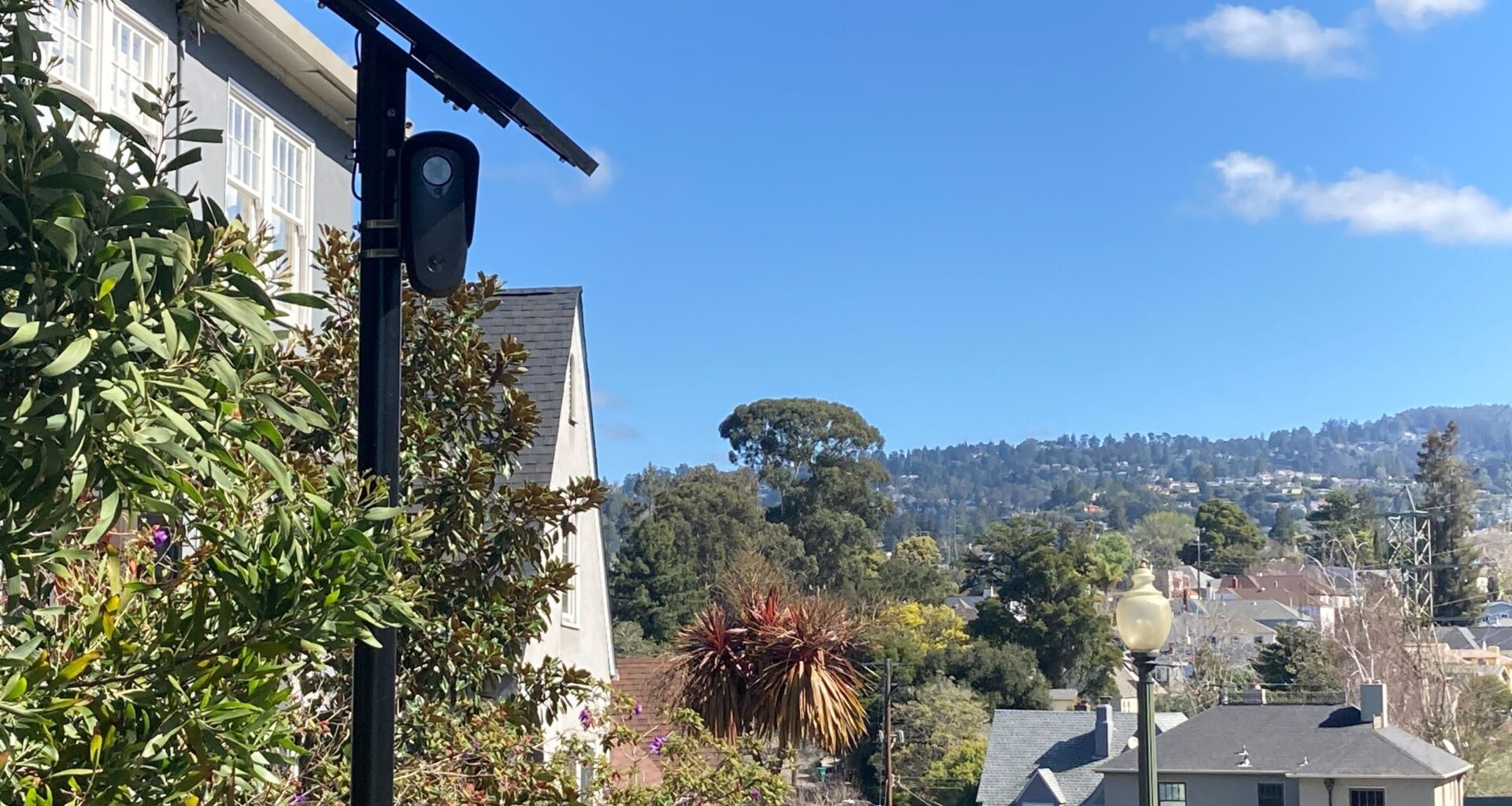
In a national training for law enforcement agencies to show police how they can better persuade city leaders to adopt surveillance technologies, Flock Safety cited two East Bay cities — Oakland and Richmond — as successful case studies, according to leaked documents obtained by 404 Media.
The Atlanta-based police technology vendor, known for its controversial national network of automated license plate reader cameras, held the webinar in May for law enforcement officials considering deploying Flock in their jurisdictions. The training, according to the event description, would equip agencies with “clear ways to reframe common concerns and respond to misinformation.”
After years of growth, Flock is facing increasing skepticism and opposition in many communities over concerns about the mass surveillance network the company operates. Flock’s cameras, deployed in every state except Alaska, capture vehicle license plates and other data, tracking the movements of millions of Americans. Police in multiple states have been investigated for using Flock cameras to illegally stalk people. The cameras have also been used by police in states that ban abortion to track people seeking reproductive healthcare. And federal immigration agents have gotten access to Flock’s data, stoking concerns among immigrant rights advocates. Some communities have rejected Flock and taken down its cameras.
The Oaklandside registered for Flock’s May webinar to see how the venture capital-backed private company communicates with law enforcement officials, but our access was denied.
In an interview with The Oaklandside after the training, Trevor Chandler, a spokesperson for Flock, said the event was intended for public safety agencies and that no new or secret information was shared.
Flock declined to provide a comment for this story.
A PDF of the guide distributed to webinar attendees, reported by 404 Media earlier this month, shows how Flock encourages police to “own the narrative before someone else does.” This is accomplished by reframing concerns about mass surveillance to shared community priorities about governance and public safety.
“Don’t avoid the concept of mass surveillance because you’re not going to convince opponents that it’s not,” Flock explains in the handbook, quoting Jamie Hudson, a Flock strategist and consultant.
The guide goes on to describe how Oakland city leaders adopted Flock ALPR devices, despite widespread opposition from residents and the city’s Privacy Advisory Commission, by focusing on oversight and transparency. Rather than addressing the community’s concerns about privacy rights and civil liberties, the Oakland Police Department explained its use policy, live audit logs, independent compliance reviews, and other accountability measures.
“The conversation shifted when officials stopped asking the public to trust the technology and started showing how the technology could be audited, reviewed, and held accountable,” the company says in the guide. “Trust moved from assumption to evidence.”
The company also cites an unnamed “former skeptic” in Oakland who changed their mind on Flock after reviewing its accountability tools and privacy safeguards.
In December, following a long and heated meeting, the Oakland City Council voted 7–1 to approve a $2.25 million contract with Flock for 293 license plate reader cameras. District 3 Councilmember Carroll Fife was the sole opposing vote.
An unnamed spokesperson for OPD told The Oaklandside the department did not attend Flock’s webinar.
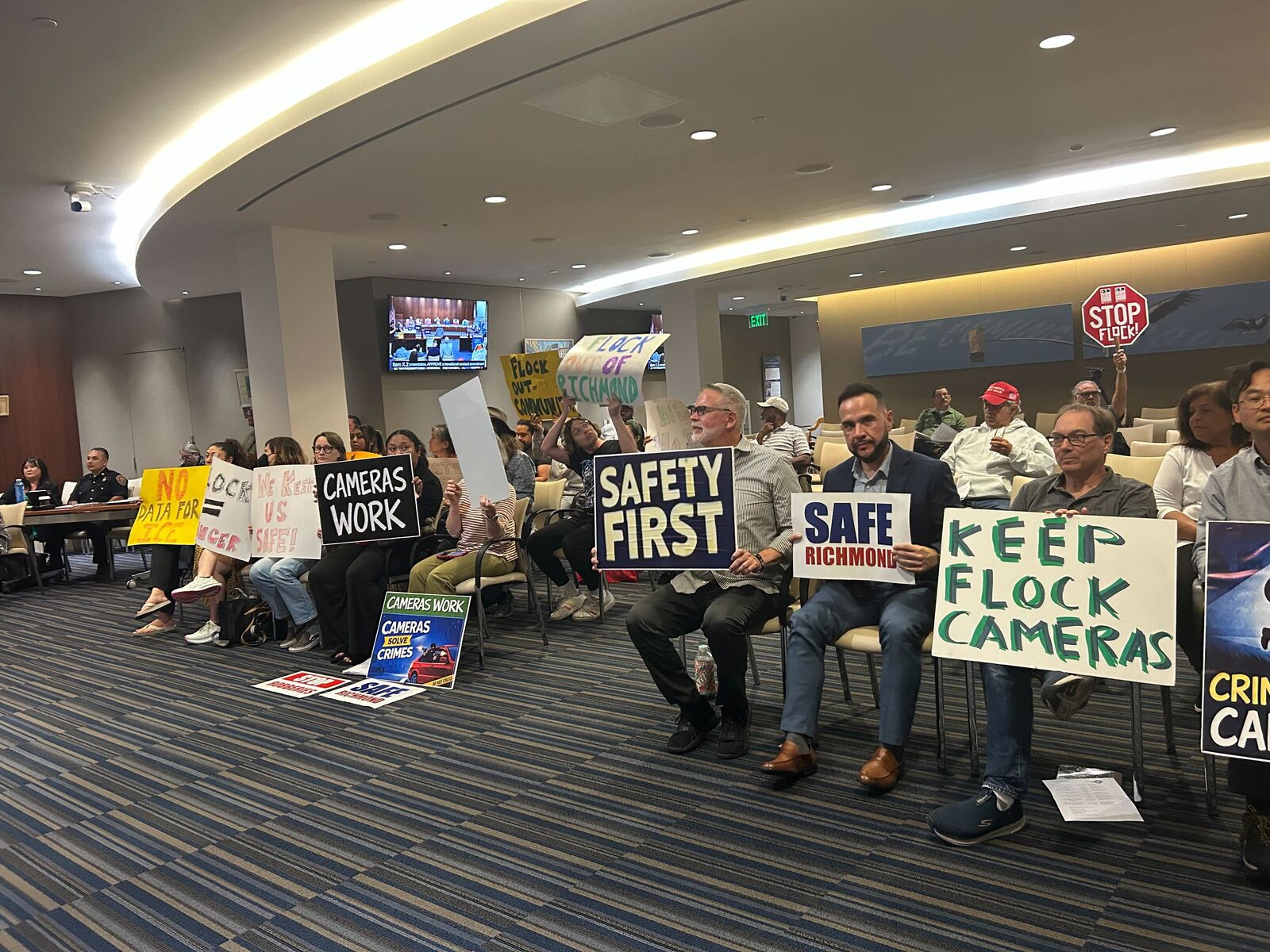 Supporters and opponents of Flock Safety cameras hold up signs during a Richmond City Council meeting on Tues., March 17, 2026. The council ultimately voted 4–3 to reinstate the cameras for the rest of 2026. Credit: Joel Umanzor/Richmondside
Flock also mentions Richmond as an example of a city in which a focus on accountability and results led city officials to embrace the technology.
In late 2025, the Richmond Police Department shut off its Flock ALPR cameras after the chief discovered a back-end “national lookup” tool that allowed outside agencies to access Richmond’s database, potentially violating sanctuary city laws. Richmond police leaders in March presented more than two years’ worth of local results they linked to Flock, including 274 arrests and 259 stolen cars recovered.
The city council, in a 4–3 vote, ultimately decided to extend Richmond’s contract with Flock through the end of the year, reactivating the city’s license plate readers. The contract also allows the police department to continue operating its Flock mobile CCTV trailer and drone.
“The deciding factor was not a new technology feature,” Flock’s guide read. “It was a clear connection between governance, accountability, and measurable public safety outcomes.”
“*” indicates required fields