
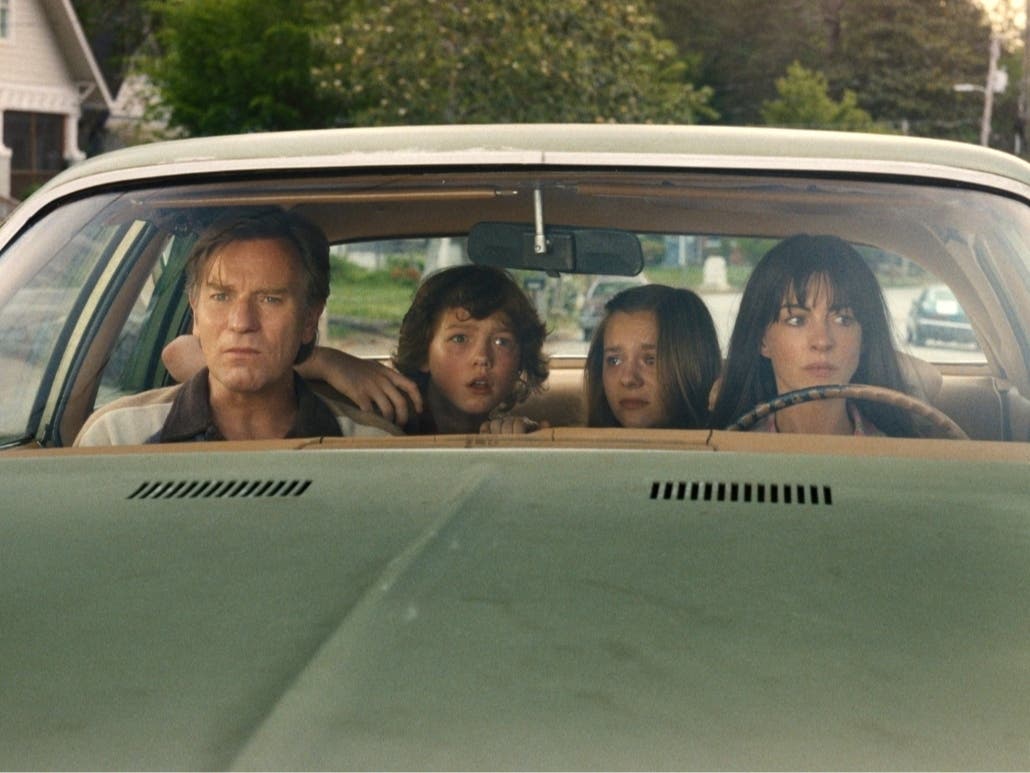
Seen alongside “It Follows” and “Under the Silver Lake,” “The End of Oak Street” completes a loose triptych tracing Mitchell’s fascination with the moment when familiar worlds lose their coherence. Across these films, he returns to the same pressure points: the emotional seams beneath domestic calm, the rituals that barely hold everyday life together, and the fragile sense of normalcy that buckles the moment crisis presses in. What links them isn’t genre but worldview — a conviction that extraordinary events don’t change people so much as expose how precarious their everyday reality always has been.
At its core, “The End of Oak Street” absorbs decades of dinosaur cinema, suburban mythmaking, and creature‑feature language into something sharper and more psychologically charged. Mitchell draws on the Spielbergian awe of Amblin suburbia, the stop‑motion menace of Harryhausen, and the uncanny domesticity of “The Twilight Zone,” but filters those influences through a modern sensibility attuned to the fractures that surface within a family when ordinary life is pushed past its breaking point. The film’s spectacle isn’t ornamental; it’s the pressure system that exposes the emotional seams of its domestic world. The result is a striking, uneven, and often exhilarating suburban thriller — conceptually bold, emotionally sharp, and just unstable enough to leave a mark.