
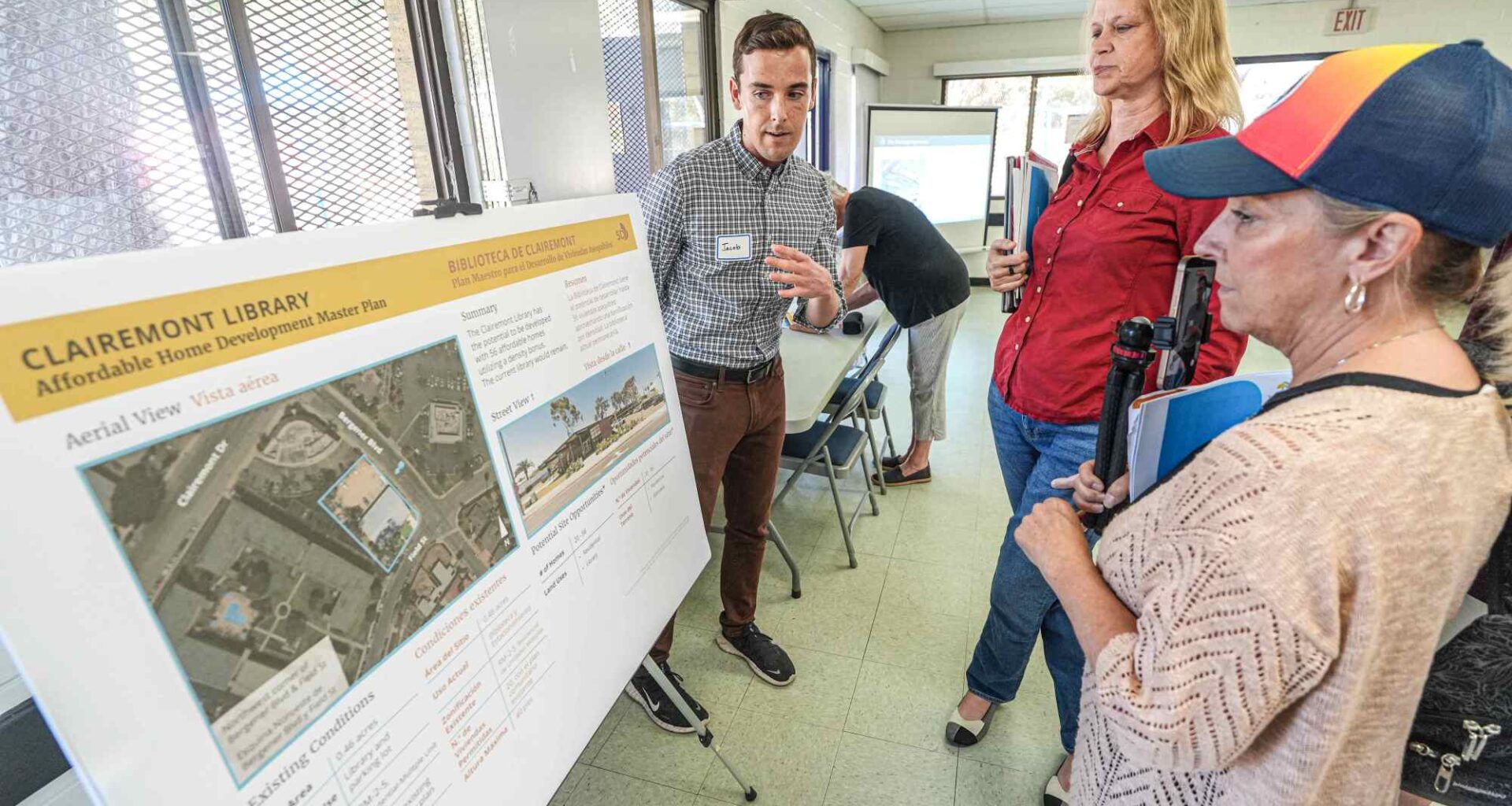
Some library branches in San Diego could soon be converted from one- or two-story buildings into high-rise housing complexes featuring a new and expanded library branch on the ground floor.
It’s a new city strategy that aims to spur more housing construction by eliminating the No. 1 hurdle developers face in San Diego: making a project profitable despite the high cost of land here.
San Diego officials have picked the 11 city-owned sites they say are best suited: seven library branches, along with two city workyards in Clairemont and Golden Hill and two empty lots in Point Loma and San Ysidro.
They now plan to create a master plan that will evaluate each site for how much housing it could handle, what new complementary infrastructure is needed and how the library or other existing city functions would blend in.
But the proposal is spurring significant community opposition, partly because many residents mistakenly believe the housing will replace library branches instead of incorporating the branches into a new housing complex.
Even when that confusion is cleared up, the plan is still generating opposition from some residents who don’t want the new residents and traffic they worry more housing will bring.
In addition, residents contend the libraries will likely have to close for a year or two during construction, forcing book clubs and other groups to meet elsewhere and making young people leave the neighborhood for after-school activities.
The seven branches under consideration are in Clairemont, University Heights, University City, Allied Gardens, North Park, Linda Vista and Mira Mesa. At the Mira Mesa site, the project may focus on an empty lot next to the library.
At workshops being held across the city to discuss the proposal and gather public feedback, city officials are emphasizing that no specific projects are yet being proposed and that any new housing likely won’t be built for years.
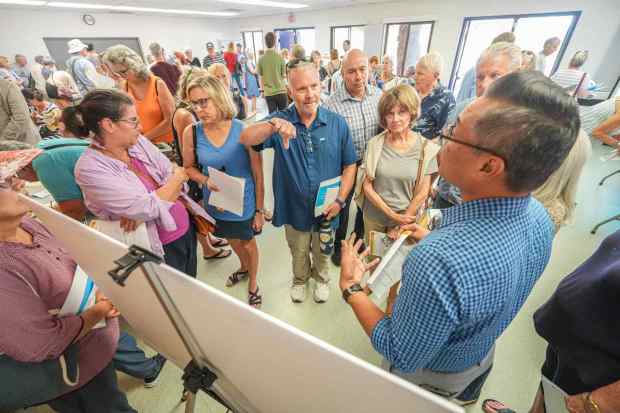 Marlon Pangilinan, far right, senior city planner, explains the affordable housing plan to the public at Standley Recreation Center on Wednesday, Aug. 12, 2026, in San Diego. (Michael Ho / For The San Diego Union-Tribune)
Heidi Vonblum, the city’s planning director, said this week that the master plan will evaluate what kind of project would work at each site, for both the community and the developer.
“We will really look at how these building sites integrate into the existing community and how they can enhance the community,” Vonblum said. “We’re also looking at financial feasibility for these projects.”
The idea of addressing the local housing crisis by inviting developers to build on public land is not a new idea, but it hasn’t happened often locally.
The Metropolitan Transit System has built a few housing projects at some trolley stations and is planning a few more. And San Diego Unified is building housing for teachers and other staff on some of its land.
City officials were spurred to more seriously consider the option after California enacted updates in 2019 to the Surplus Land Act, requiring local governments to prioritize affordable housing on any surplus land they want to lease or sell.
In 2024, San Diego considered 400 potential city sites where such housing could potentially be built and narrowed the list to 20 prime sites. Since then, officials have narrowed the list to the 11 properties that will be in the new master plan.
The criteria used to pick those 11 sites include access to parks, healthy groceries and other community resources and their proximity to transit, schools and jobs, along with the sites’ size, shape and topography.
“We asked, ‘What can be done at this site with housing?’” said Seth Litchney, the city’s deputy director for housing policy and environmental analysis. “We also wanted some geographic diversity — not to cluster all of these in one part of the city.”
Vonblum said the list of 11 sites and the master plan, which will likely be ready in early 2027, will transform a vague city ambition into concrete terms for developers and neighborhoods.
“This gets away from picking a random library and seeing if we can put housing on it,” she said. “This lets us take a step back and look comprehensively at all city-owned land to determine which ones are the highest priorities so we can use city land in the most strategic way to develop housing.”
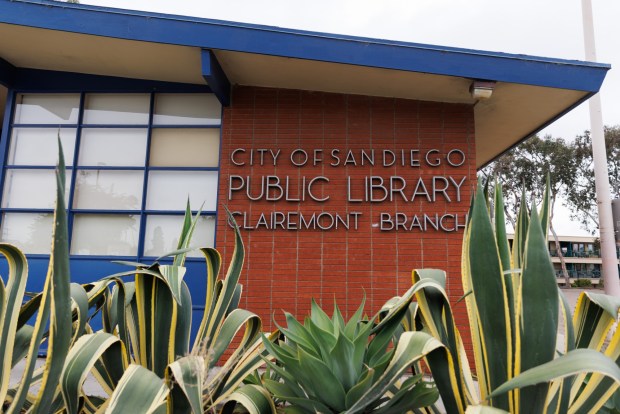 The Clairemont Library on Burgener Boulevard, as seen on Thursday, August 13, 2026. (Kristian Carreon / The San Diego Union-Tribune)
The master plan won’t propose specific projects — but it will likely recommend how much housing each site should host, and whether it should all be rent-restricted or contain a mix of rent-restricted and market-rate homes.
The plan will also recommend how to incorporate each site’s existing city use into the new mixed-use complex.
With many of the libraries, that will likely mean rebuilding the branches on the ground floor of a high-rise or mid-rise building.
With the empty lots — one at Barnes Tennis Center in Point Loma, the other at Foothill Road and Smythe Avenue in San Ysidro — the city doesn’t face that challenge.
But with the two operations yards, one at Rose Canyon in Bay Ho and the other on the edge of Balboa Park north of B Street, that could be a major challenge, Litchney said.
“The tricky part is determining how the city can continue its operations if housing is built,” he said.
Some of the sites might also be targeted for homeless shelters as a component use.
At a public workshop Wednesday evening in University City, residents living near the University Community Library said they don’t like the city’s ideas.
“The developers make a lot of money, and we get more traffic, more people and more crowded in our neighborhoods,” said Pattie Wells. “It will change our quality of life.”
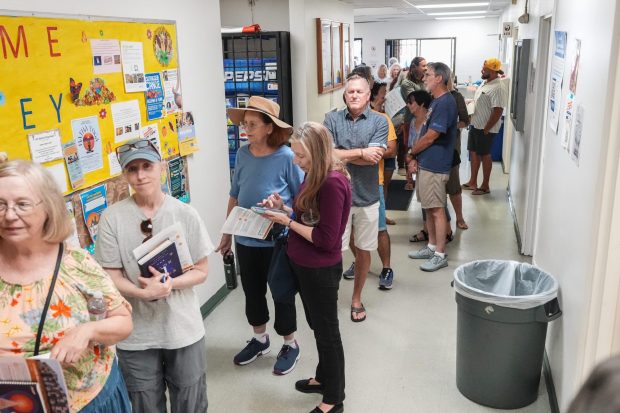 A long line forms for the open house event at Standley Recreation Center on Wednesday, Aug. 12, 2026 in San Diego. (Michael Ho / For The San Diego Union-Tribune)
Laura Freidman, who leads a book club at the library, came to the workshop believing that housing would replace the library. After city planning officials assured her a new library would definitely be part of any new housing project, she was still skeptical.
“I feel better, but in this day and age I don’t necessarily believe anything anyone tells me,” Freidman said.
Many others expressed similar sentiments at the crowded workshop at Standley Recreation Center. It was the third of four city workshops, with the final one scheduled for 6 p.m. Friday at the Golden Hill Recreation Center.
Vonblum said feedback gathered at the forums, including responses to written surveys, will be incorporated into the new master plan. The survey is also available online.
While developers won’t become a key part of the process until after the master plan, the local chapter of the Building Industry Association praised the city’s proposal Thursday.
“The BIA welcomes new policies and programs that make it easier to build homes San Diegans need,” said Aimee Faucett, chief executive of the local chapter. “Done correctly, this can enhance underused sites.”