
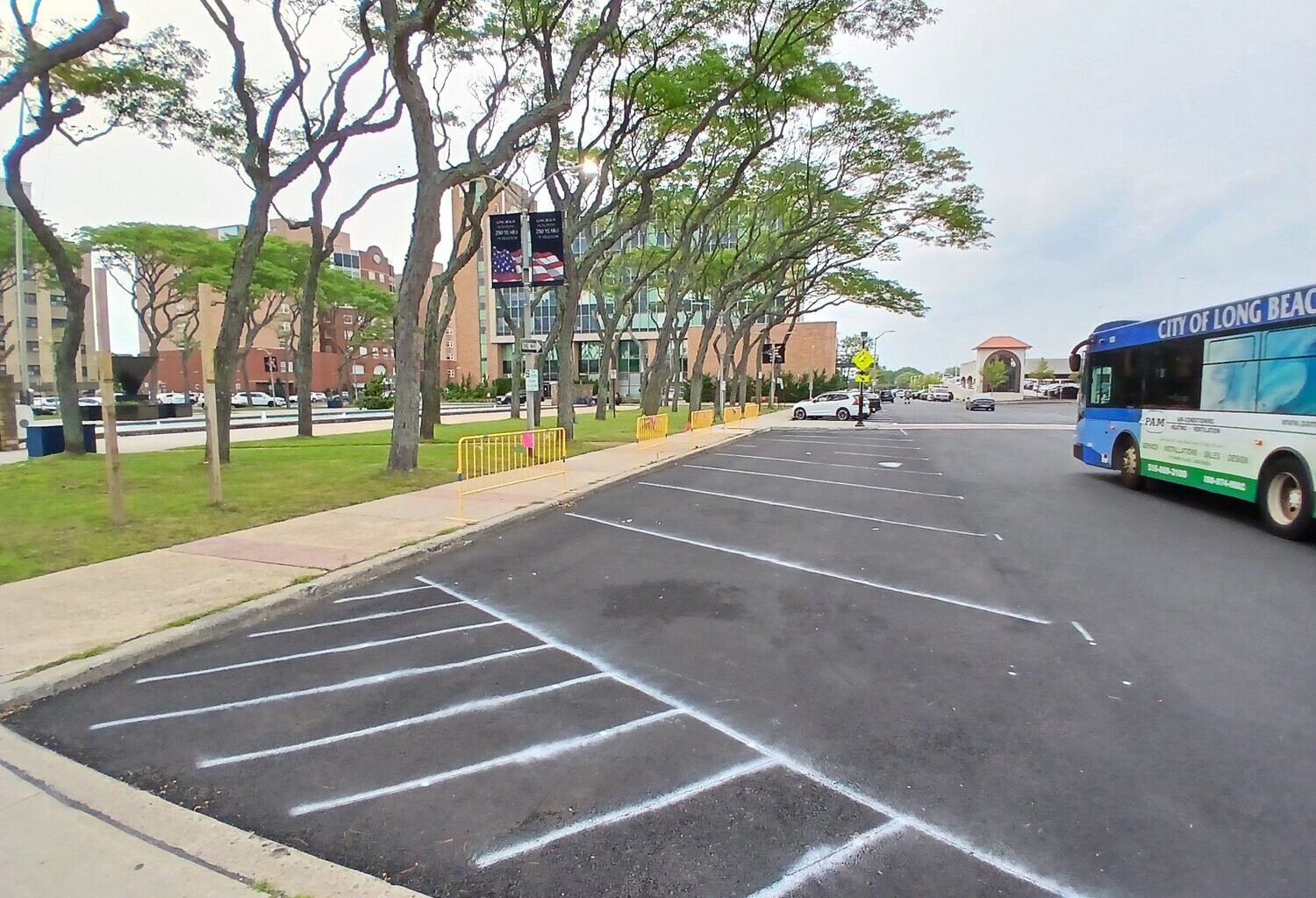
Support for electric cars is en route after last week’s city council meeting announced plans to install eight electric vehicle charging ports at Kennedy Plaza. The resources will be entirely funded by a pair of grants totaling nearly $480,000. The grants make the charging stations possible at no cost to the city.
The New York State Department of Environmental Conservation’s Municipal Zero Emission Vehicle Infrastructure Grant Program will deliver more than $296,000 for the purchase and installation of the necessary equipment, charging ports and stations. A separate grant for $183,000, from PSEG Long Island’s Electric Vehicle Charging “Make Ready” Incentive Program, will fund utility-side upgrades needed to support the stations.
Nearly two years ago, similar upgrades were considered but the grant funding was unavailable and a proposed deal would’ve involved complex revenue sharing, making it a cost-prohibitive project. “Through grants, we are not paying for any of it and all the revenue is going to come back to the city,” City Councilman Michael Reinhart said. “From where we had that presentation a couple years ago to now, it’s a vastly, vastly better deal for the city.”
The project calls for two dual-port Level 2 and four single-port DC fast-charging stations, for a total of eight charging stations at the location. To accommodate the units, eight parking spaces at the southeast section of Kennedy Plaza will be allocated to electric vehicle charging. The EV charging stations will be the first of their kind in the City of Long Beach, with the nearest comparable public option for EV owners set up in Hewlett. Several residences and private or members-only properties in Long Beach and surrounding areas offer electric charging, but the Kennedy Plaza stations would be available to any or the more than 620 electric vehicles are currently registered within city limits, as well as any electric vehicles that make up the more than 35,000 vehicles traveling Park Avenue daily.
Lindenhurst-based Woodhollow Energy Partners was awarded the installation contract. The city expects the project to be completed by the end of the year, with work expected to take four to six weeks once begun. With the units operational, PSEG will bill the city for electric usage, which will be compensated by the consumer’s costs. Steve Friedman, deputy commissioner of the Department of Public Works, explained the process. “All these fees will cover the cost of this installation,” Friedman said. “It’ll cover the maintenance. It’ll cover the year-to-year cost on the EV charging. It will be billed by PSEG and we get paid back through our users.” Charging costs are expected to be set slightly lower than average market rate, to encourage use while still covering city expenses.