
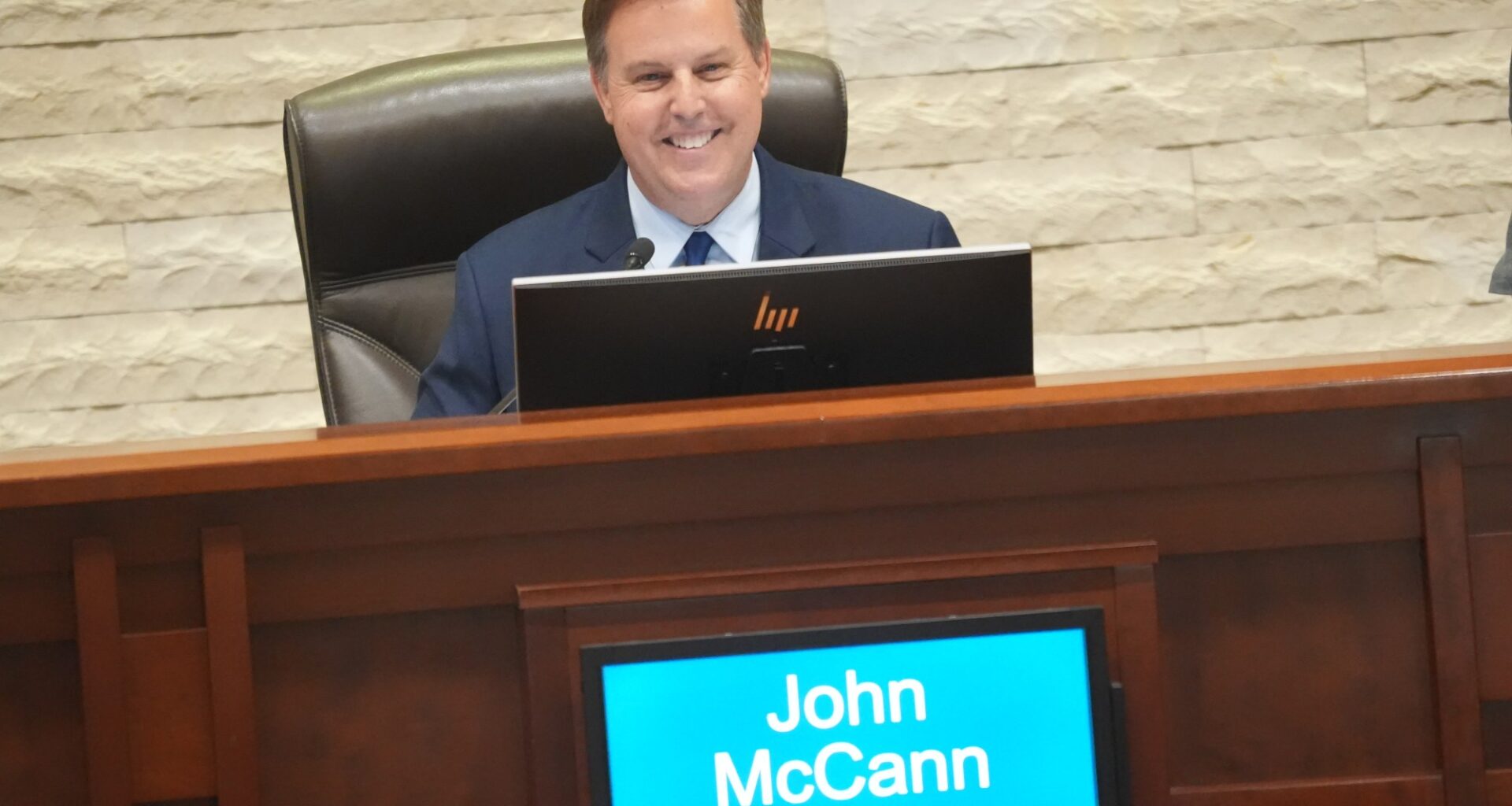
The Chula Vista City Council voted 3-1 last week to adopt a revised special events policy that shifts operational control of city-run events, including the State of the City address, from the mayor’s office to the city manager’s office.
Mayor John McCann cast the dissenting vote. Councilmember Jose Preciado was absent.
The decision followed direction given at the council’s July 28 meeting, when members asked staff to draft amendments to the city’s policy on special events after a staff report found the 2026 State of the City was funded largely through behested payments from companies with city business ties, some of which also donated to McCann’s reelection campaign.
Prior to the July 28 meeting, Councilmembers Preciado and Michael Inzunza made a request to staff in May, asking for a full accounting of city civic events dating to 2022 — including the 2026 State of the City held at the city-owned Elite Athlete Training Center, featuring McCann taking part in a filmed skit and a skydiving exhibition.
City Manager Tiffany Allen told the council Tuesday the revised policy establishes eight event categories, ranging from “signature” and “civic” events with the highest level of city ownership and control to externally produced events where the city’s role is limited to recognition or permitting. The State of the City will be classified as a civic event, with the mayor retaining authority over the speech’s content, while the city manager’s office assumes operational responsibility.
City spokesperson John Cihomsky said in an email the city manager — or designee — is responsible for controlling and approving funding for the State of the City under the new policy.
Signature events will fully transition to the city manager’s office effective Oct. 1, Allen said. Until then, the city manager’s office will handle communications and day-of support, while the mayor’s office manages other logistics, including vendor coordination and permits.
Special event funding will be treated like any other city expense, Cihomsky said, with funds appropriated either through the annual budget process, which requires a three-fifths council vote, or mid-year with a four-fifths vote. Expenditure approval authority varies by expense type under the city’s purchasing system, outlined in Chapter 2.56 of the municipal code.
Inzunza moved to approve the policy, telling the public that “nothing is going to change” regarding the mayor’s role in leading the State of the City. Inzunza described the policy as a response to behested payments — contributions solicited by elected officials from vendors who also do business with the city — calling the effort “about transparency.”
McCann has maintained opposition to the measure since it was first proposed back in May. During Tuesday’s meeting, he argued shifting control of events to the city manager’s office could require more full-time staff, costing potentially millions of dollars in additional staffing, planning and permitting expenses.
Deputy Mayor Cesar Fernandez pushed back on McCann’s comments, asking the city manager directly if the policy would carry any additional cost.
“At this time, we don’t anticipate the need to add any staff in order to implement these changes,” Allen said in response to Fernandez’s question.
McCann also argued donor-funded events like the Starlight Parade and El Grito have saved taxpayers money, adding that increased scrutiny of behested payments has created a “chilling effect” for donors.
Fernandez again demurred, asking McCann if he would stop asking for behested payments as a result of the new policy.
“When I talk to some of these larger companies, I don’t hear an issue with them wanting to (provide proper documentation),” Fernandez said, arguing the policy was about ensuring donations and behested payments are properly documented, not discouraging them. “I don’t hear the framing that this is going to cause a chilling effect.”
McCann did not provide Fernandez with a response.
Cihomsky said under the new policy behested payments are still permitted.
During public comment, resident Norma Toothman urged the council to preserve mayoral control over event scheduling and location, arguing the State of the City is “the mayor’s single most important annual opportunity to communicate directly with residents.”
All five speakers who addressed the council echoed similar support for McCann’s position.