
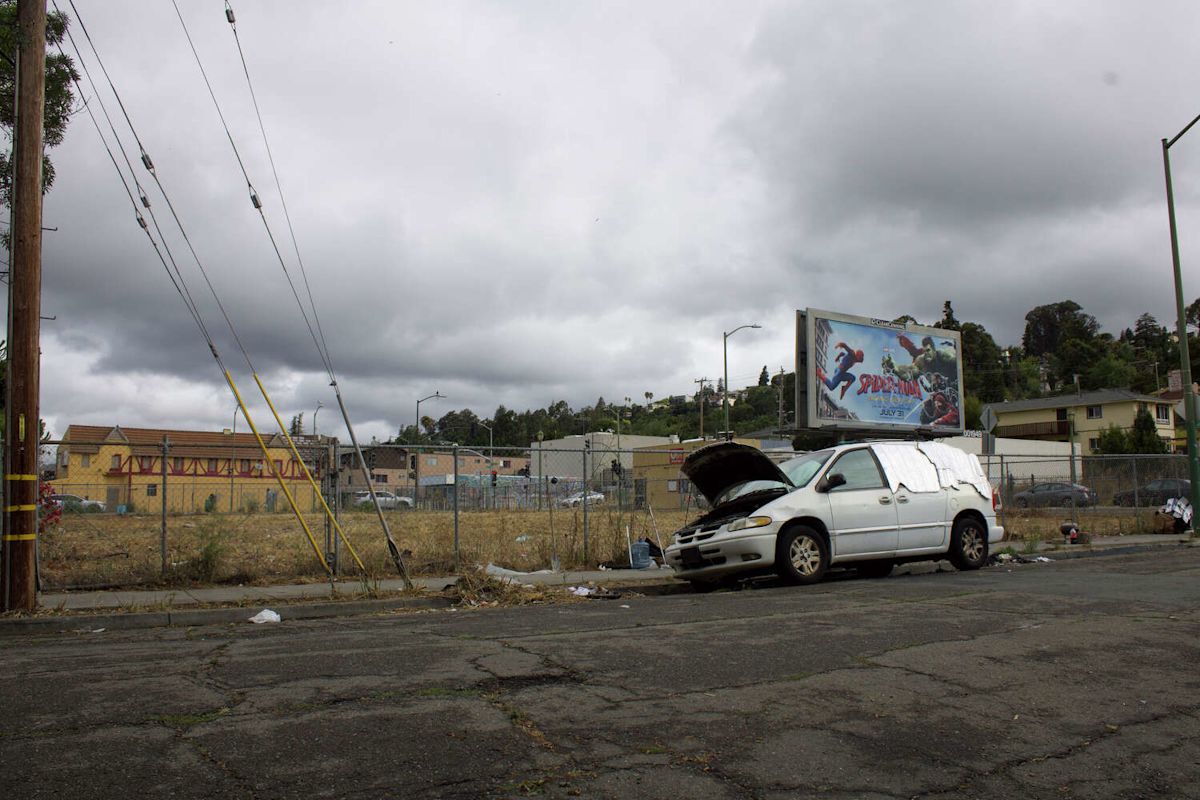
As a Castlemont High School student in the 1980s, Carolyn Johnson remembers walking past a vacant lot on MacArthur Boulevard in East Oakland whenever she left school to grab lunch at a nearby corner store.
The lot sat empty then, and remained that way over the next 40 years. A nonprofit bought the 15,000-square-foot parcel in 2005 but it dissolved in 2013, unable to develop it as affordable housing. Back taxes, penalties and city liens on the property grew to nearly $1.7 million, and it eventually fell into the ownership of Alameda County.
The lot at 8215 MacArthur Blvd. became a hot spot for illegal dumping, while weeds flourished between cracks in the pavement and eventually grew taller than the chain-link fence surrounding the property. Cars with popped hoods and broken windows found homes on the curb around the property, which sits on the edge of a residential neighborhood.
But on July 14, the Alameda County Board of Supervisors approved a deal to sell the lot for just $10 to the Black Cultural Zone Community Development Corp., or BCZ, a nonprofit built to combat gentrification and displacement. Johnson, now about 40 years removed from her days as a Castlemont student, is the organization’s CEO.
The deal could become a test case for other abandoned properties. When supervisors approved the sale to BCZ, Henry Levy, the county’s treasurer and tax collector, said the county had identified nine other Oakland properties that could be eligible for similar transactions, known as Chapter 8 agreement sales. Under California law, eligible nonprofits generally may buy residential or vacant property after at least five years of unpaid property taxes, or after three years if the property has been cited for serious nuisance problems. Vacant land must be used for low-income housing or services, or for public use.
Starting this summer, county leaders are leveraging Chapter 8 to find opportunities for affordable housing developments. The BCZ deal is the county’s first Chapter 8 transaction in nine years, reviving a process that had been dormant due to its complexity. In 2024, the county began streamlining the Chapter 8 process, adding dedicated financing and technical support to make it easier for affordable housing developers to use.
At MacArthur, BCZ has already cut down the weeds and removed some trash from the property. As it works to secure permits and funding, the organization next plans to level the ground and beautify the space with temporary art and potted plants before construction begins. Eventually, Johnson hopes to build a complex with at least 40 units – but it could be several years before BCZ comes up with the plan, raises the money, and breaks ground on the project.
“Although it’s $10, it costs $40-plus million to develop,” Johnson said.
That figure is a preliminary estimate based on Johnson’s expectation that each apartment could cost roughly $1 million to develop. She said BCZ would likely need a mix of foundations, government bonds, tax credits, loans and donations to finance the project.
“With a lot of prayer, ancestors, miracles, gifts, donations – all the things,” Johnson said when asked how BCZ would raise the money. “The capital stack for a mixed-use development project is very complex.”
Johnson estimated that it could take as long as 10 years before residents move into the completed development, although she hopes BCZ can shorten that timeline to six to eight years.
BCZ already has several non-Chapter 8 projects underway in East Oakland, including the planned 119-unit affordable Residences at Liberation Park and a 12-unit apartment project on MacArthur Boulevard. The group is also developing commercial and community spaces, including its planned Sankofa Sanctuary and Black Cultural Zone Marketplace and Hub.
Casey Farmer, Alameda County’s Chapter 8 program manager, said most tax-defaulted properties first go to county auctions in hopes of recovering the money lost in unpaid taxes. Chapter 8 offers another route when properties remain unsold and the tax debt has grown beyond what buyers would pay.
If they’re large enough and don’t require costly environmental cleanup, they could be candidates for affordable housing. In Chapter 8, the county sacrifices a likely uncollectible tax claim in exchange for getting a blighted, tax-defaulted property into the hands of a developer that will build affordable housing.
“It allows counties to be the midwife” in a transfer between a tax-defaulted owner and a nonprofit or government agency, Farmer said.
Under a new program, a nonprofit applies for a property, explains its intended use and must show that the use qualifies under the law. The tax collector reviews the application and negotiates the sale before seeking approval from the board of supervisors and the State Controller’s Office.
The MacArthur project comes as Oakland renters face renewed pressure. The median rent for a one-bedroom apartment reached $2,077 in July, up 13% from a year earlier, according to Apartment List data.
The nine properties that Alameda County has identified for potential affordable housing would address only a small part of Oakland’s shortage. Under the city’s 2023-2031 Housing Element, Oakland must plan for 26,251 new homes at a range of income levels by 2031. The city’s housing plan specifically identifies infill development as one way to add homes while using existing streets, utilities and public services.
For BCZ, 8215 MacArthur is part of a broader strategy to secure community control of East Oakland real estate before residents and local businesses are displaced.
The organization works across a 60-by-60-block area divided into 12 districts. The MacArthur Boulevard parcel is BCZ’s sixth acquisition along that corridor.
“The Black Cultural Zone is homegrown folks who are here to support,” Johnson said. “We take our goals and our promises seriously, and we work tirelessly to ensure that we can create a vibrant community where everyone has what they need in order to stay and to thrive.”
Subscribe
There’s more to San Francisco with the Chronicle. Subscribe today for just 25¢.
This article originally published at County sells long-vacant Oakland lot for $10, paving way for affordable housing.