
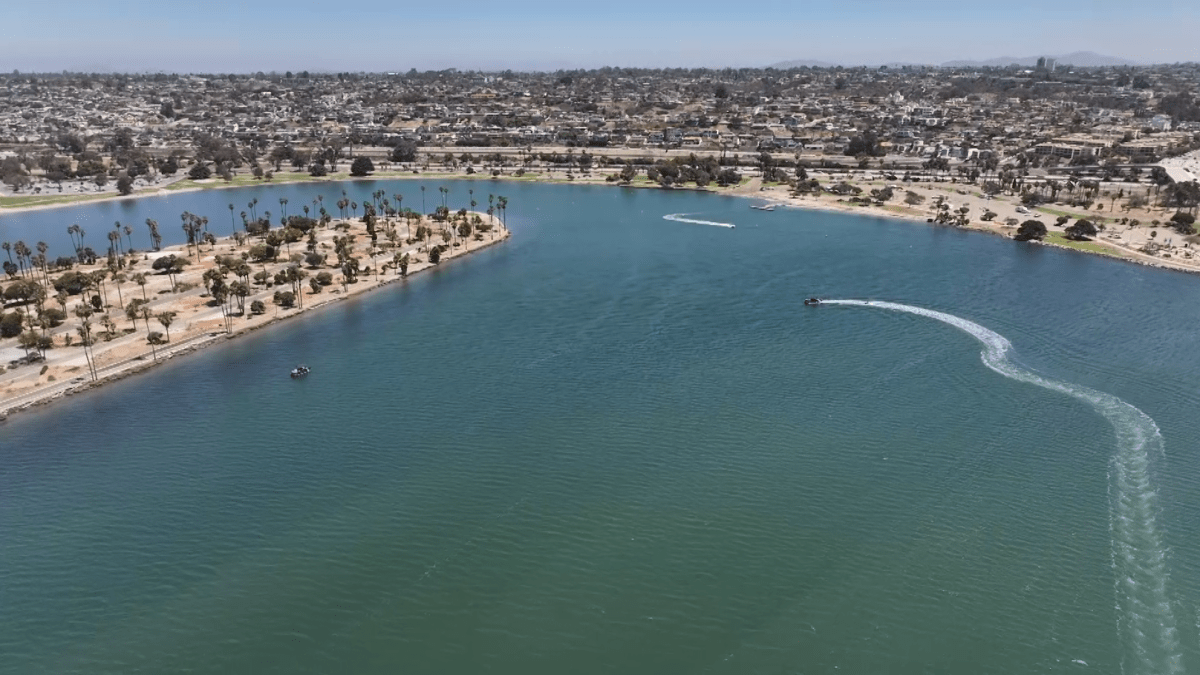
A long-discussed transformation of De Anza Cove in Mission Bay has cleared a key hurdle, giving the City of San Diego a path toward dramatically expanding wetlands while maintaining space for recreation and camping.
The California Coastal Commission approved the city’s plan for De Anza Cove, according to San Diego Coastkeeper Executive Director Phillip Musegaas. The proposal could eventually expand wetlands in the area from about 70 acres to 260 acres, although Musegaas said the full transformation could take at least 20 years.
“We’re very supportive of it,” Musegaas said.
De Anza Cove is home to a mix of recreational uses, including walking, paddling, golfing, camping, and an RV resort. Nearby is the Kendall-Frost Marsh Reserve, a natural habitat for numerous species.
Musegaas said the future of the area does not have to be a choice between recreation and environmental restoration.
“You can have both. And this is our really our chance,” Musegaas said.
One of the biggest potential changes would come along the wetlands. Under the plan, marshland could expand significantly by taking in part of the current Campland site.
“Creating areas that will restore, that we can restore to wetlands,” Musegaas said. “And at the same time, we want to balance the need for public recreation.”
The expanded wetlands could help protect natural habitat and the surrounding area from flooding. The plan would also preserve space for camping and recreation.
Despite the Coastal Commission’s approval, major changes are not expected anytime soon.
“You know, there are things that need to happen before we actually put this bigger plan in motion,” Musegaas said.
The city must first secure funding and conduct studies before developing a more detailed plan.
“Now that the plan has been approved, the responsibility is really on the City of San Diego to find the funding to do the studies that they need,” Musegaas said.
After those studies are completed and analyzed, the city will need to formulate its plan and return to the California Coastal Commission for approval before implementation can begin.
Musegaas said it could realistically take at least 20 years before De Anza Cove is fully transformed.
“A lot of the work we do is going to outlive us,” Musegaas said.
This story was originally reported for broadcast by NBC San Diego. AI tools helped convert the story to a digital article, and an NBC San Diego journalist edited the article for publication.