
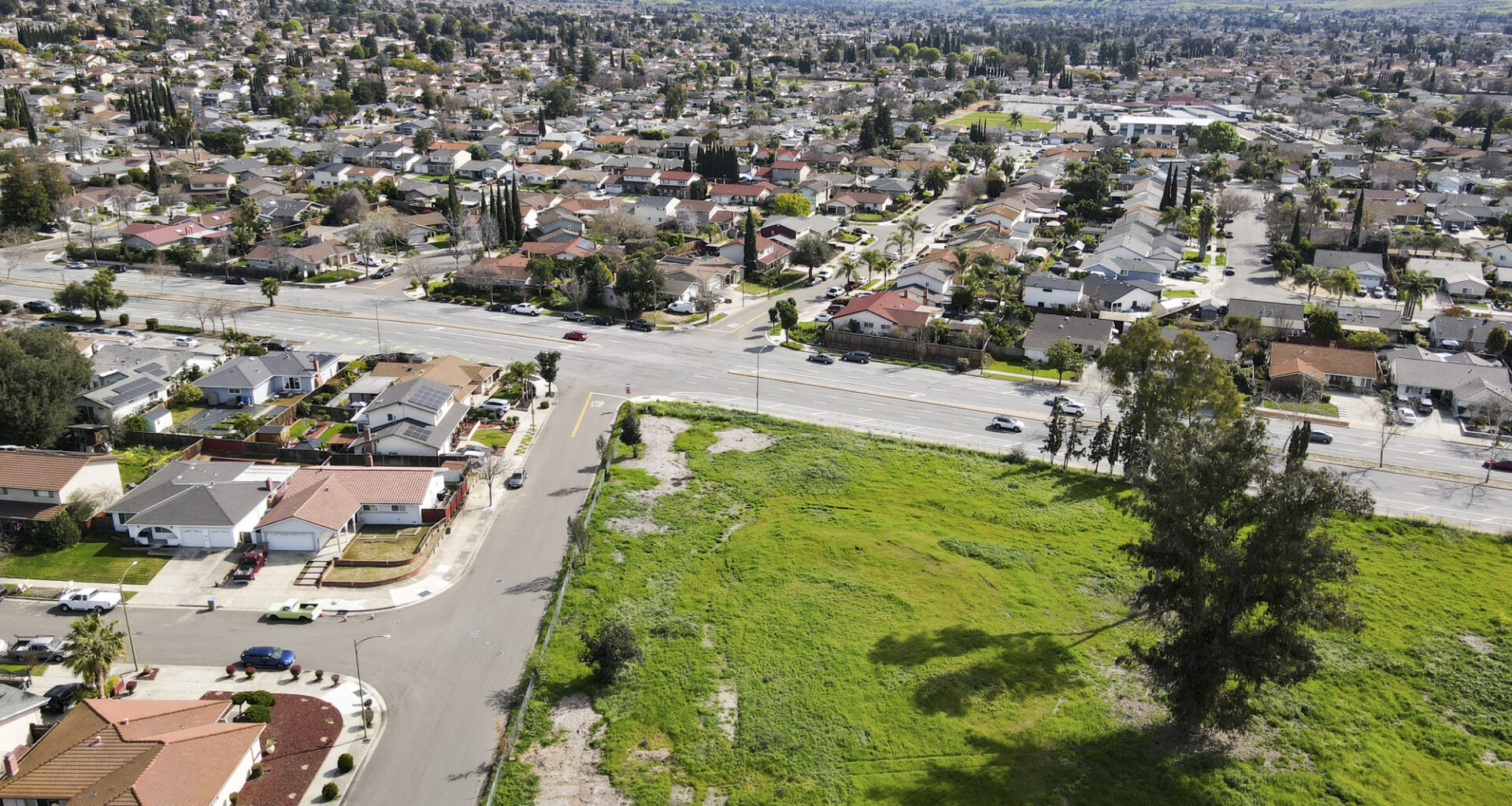
City leaders are considering allowing more density in single-family neighborhoods, which make up the bulk of the city’s residential space.
Aug 18, 2026
Updated 12:19 pm PT
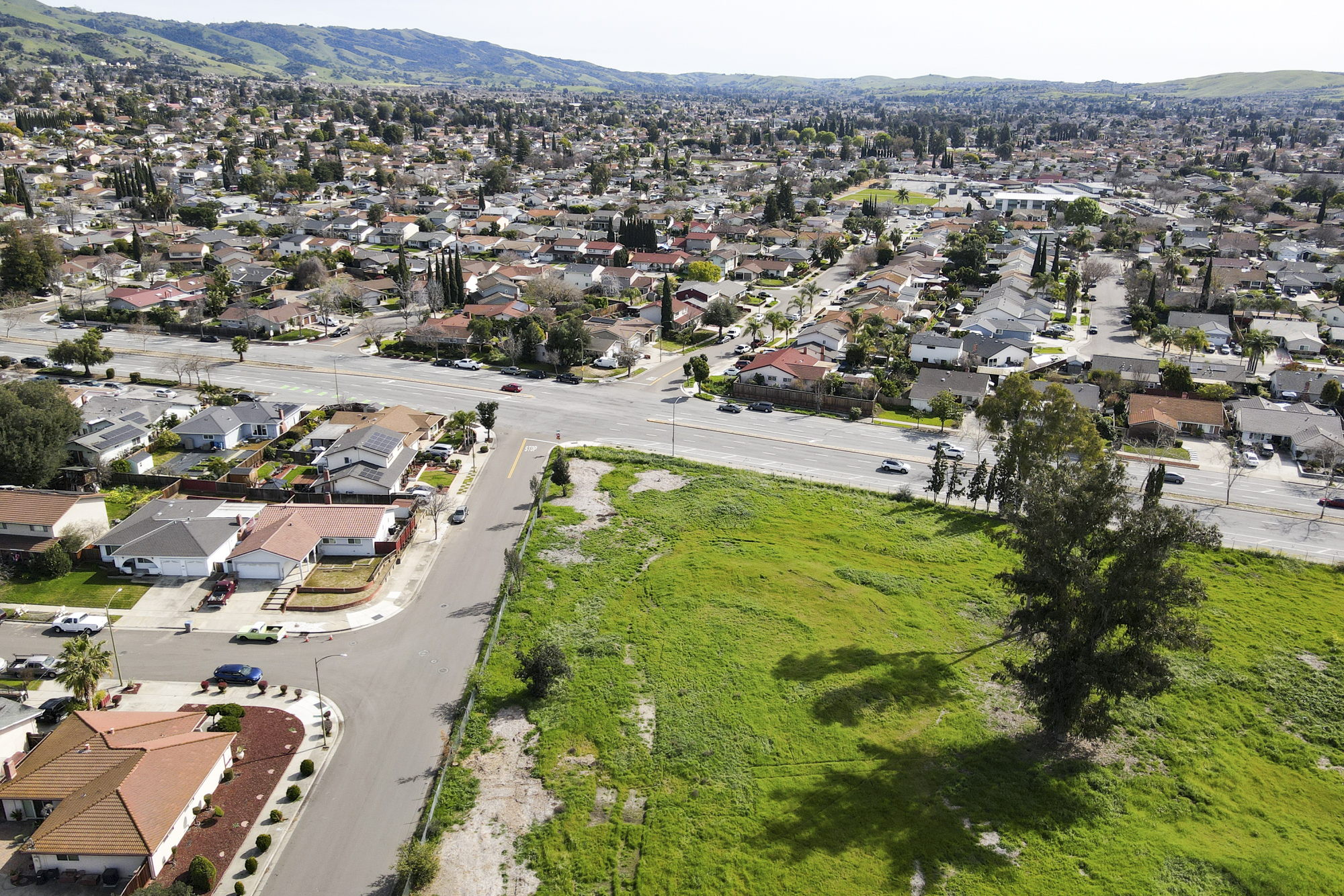
An open grassy area at the former Pleasant Hills Golf Course in San José on Feb. 23, 2026. The golf course closed in 2004, and the site has since been the focus of redevelopment proposals that include housing and open space. (Beth LaBerge/KQED)
The San José City Council will consider big shifts for single-family home neighborhoods on Tuesday that could ultimately allow for much denser housing in large swaths of the city that have long been shielded from major change.
City planners and leaders are eyeing ways to foster more housing overall to help meet stringent state goals, and to bring in more “missing middle” housing, aimed at lowering the sky-high cost of homeownership for people earning middle incomes. The median home sale price in Santa Clara County is about $2 million, and residents need an income of nearly $500,000 to purchase one, according to the California Association of Realtors.
City officials say rezoning San José’s low-density single-family neighborhoods — which make up about 85% of its total residential area — could bring more apartment buildings, triplexes and fourplexes, or other kinds of small multifamily housing, to help more equitably distribute housing.
“We have to strike a balance between allowing the city to change and evolve so that it can create space for our kids and grandkids on the one hand, and really thinking holistically about the built environment and things like access to transit and the walkability of community-serving amenities,” Mayor Matt Mahan said in an interview.
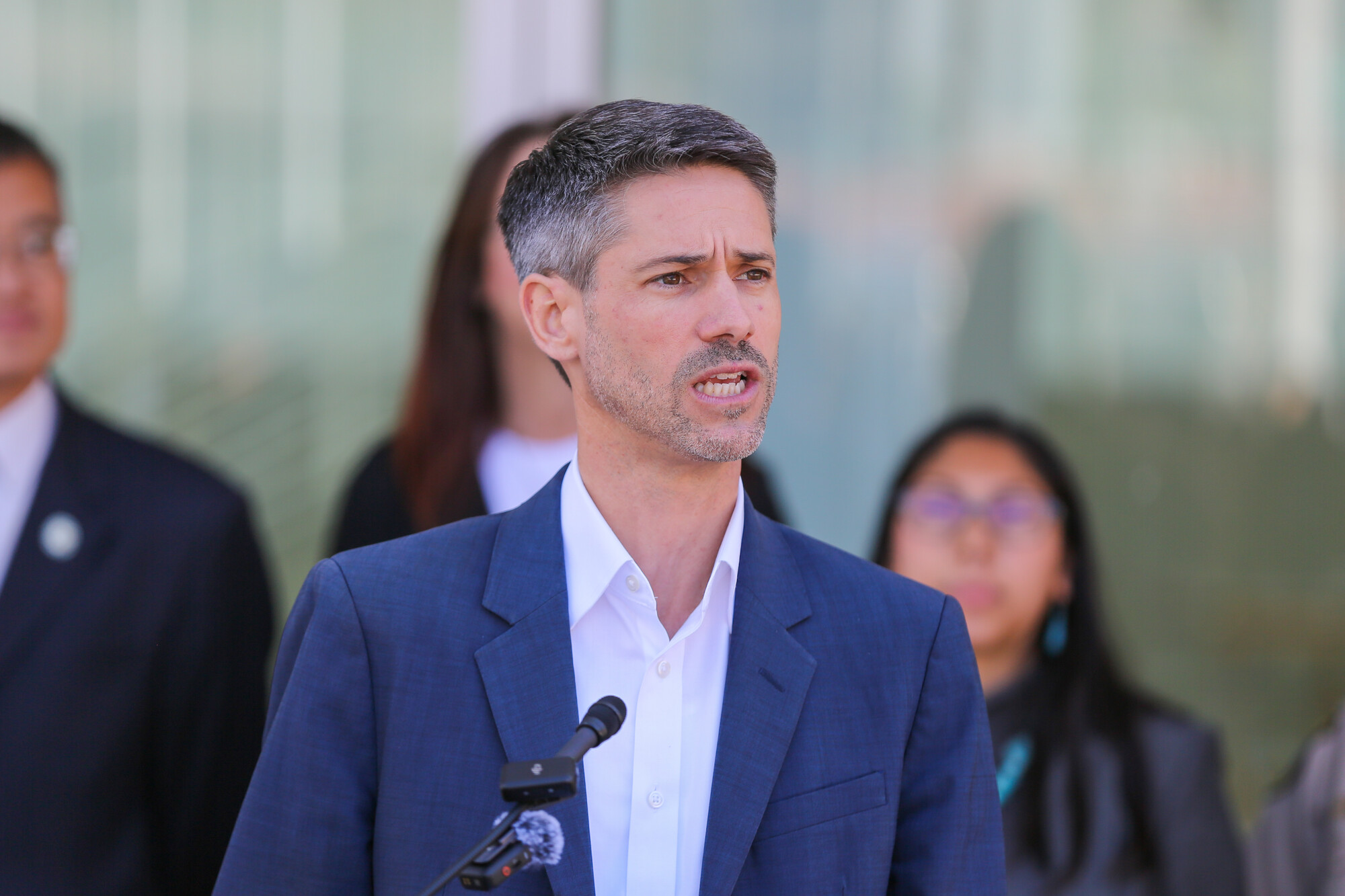 San José Mayor Matt Mahan speaks about the need for deportation protections for immigrants who have been victims or witnesses of crimes, during a press conference outside City Hall on July 31, 2025.
City leaders will weigh increasing residential neighborhood density from its current 8 units of housing per acre to as high as 32 units of housing per acre, among a series of other proposed zoning changes in other areas of the city.
After Tuesday’s meeting, proposed changes will be brought back for review by the Planning Commission and City Council around December 2027, according to city staff reports, so single-family neighborhoods are unlikely to transform anytime soon. Anyone seeking to build denser housing would also have to contend with high construction costs, which have for years affected the pace of residential development in the city.
The changes are supported by several pro-housing organizations and city leaders, but have sparked significant concern for some residents and longtime advocates of protecting established neighborhoods.
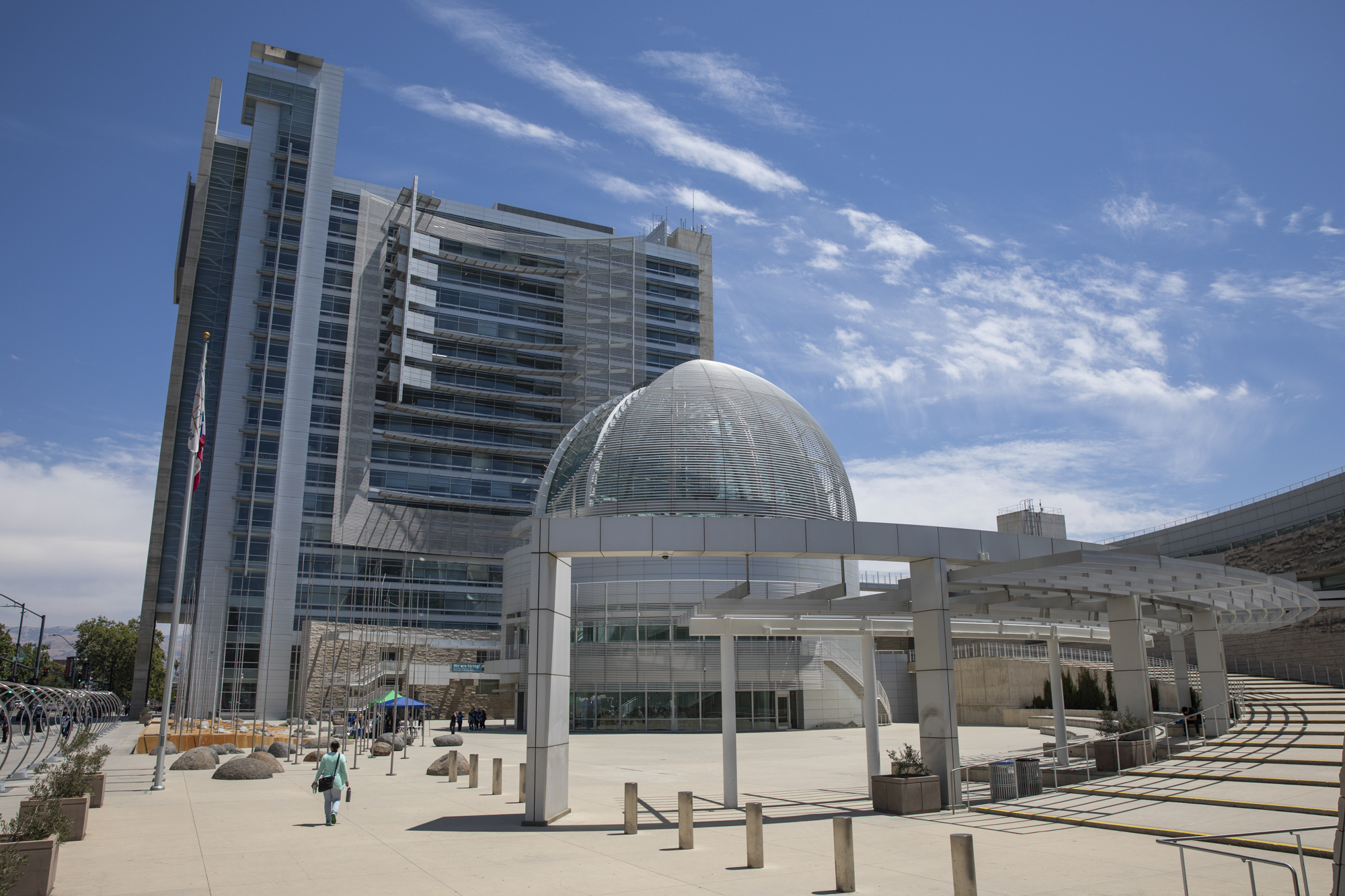 City Hall in San José on Tuesday, Aug. 1, 2023.
A memo from Mahan and four other council members suggests the city staff members bring back a range of potential density increases for the council to consider in the future, and to ensure there are minimum amounts of parking required in areas of the city with low access to transit.
“We can encourage the creation of new homeownership housing, such as row homes, with parking,” the memo said.
In dozens of emails from opposed residents to city leaders, the loss of character, parking space and the city’s tree canopy were raised as concerns, as well as doubts about whether newly built homes would be affordable.
Changes could also be enacted for public or quasi-public lands such as schools and faith organizations, to more easily allow affordable housing to be built there.
The City Council meeting begins at 1:30 p.m. and can be attended in person at San José City Hall, or online at this Zoom link.