
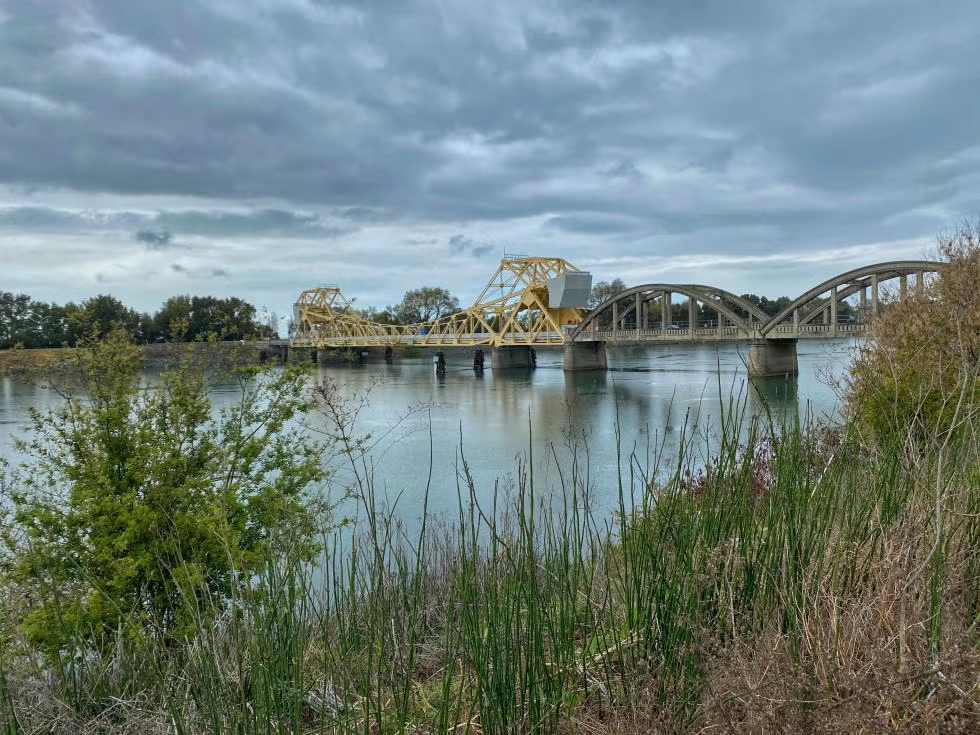
Sacramento’s Local Agency
Formation Commission took up a
proposal
on August 5 that will not make
headlines outside the Delta but will change how homes in Hood and
Franklin are bought and sold: annexing both unincorporated
communities into the Sacramento Area Sewer District. On paper, it
is an environmental review and a boundary change. For the
homeowners on those parcels, it is the paperwork catching up to
something that already happened in their front yards.
The conversion itself is
finished. SacSewer lists Hood and Franklin among its
completed
septic-to-sewer projects, built with state and federal grant
funding that covered residential connection costs in full. Owners
of commercial and mixed-use property in the same project areas
were responsible for part or all of their own connection. That
distinction is the first thing to establish about any parcel down
there, because it determines almost everything that follows at
resale.
Related: Can
a Luxury Hotel Turn Tiny Hood Into a Delta
Destination?
Most buyers, and some agents,
underestimate how much a septic system shapes a transaction. In a
septic sale, the system needs a pump-and-inspect before closing.
If it fails, that repair becomes a negotiating point, sometimes a
price cut running into five figures, sometimes a dead deal. On
public sewer, the contingency leaves escrow entirely. No pump
truck, no septic certification, no waiting on a percolation test
that was marginal the day the house was built. For a buyer’s
lender, it is simply a cleaner box to check.
What replaces it is a smaller
and permanent number. Once a property is connected, it carries a
monthly SacSewer service charge for collection and treatment
instead of septic maintenance. Buyers and their lenders treat
that line the way they treat HOA dues or a Mello-Roos assessment:
It goes into the affordability math whether or not the seller
raises it. Current figures are published on
SacSewer’s residential rate page, and that is the number to bring to a
listing conversation rather than a general estimate.
Related: Tribes
and Allies Form a Coalition Against the Delta Conveyance
Project
There is also a property-level
detail specific to Hood and Franklin that no seller should
discover mid-escrow. Those connections run on a grinder pump, and
SacSewer assigns maintenance of it to the property owner. It is
light upkeep if the owner’s manual is followed, but it is
mechanical equipment; it has a service life, and a buyer’s
inspector will ask about it. Treat it the way you would treat a
well pump: know its age, keep the manual, and disclose it in
writing.
The harder position belongs to
owners who sat out the grant-funded conversion. SacSewer
estimates that connecting later, without that funding, can cost
up to $12,000 or more, and notes that once a sewer main is in the
street, the county may stop issuing permits to repair or replace
an old septic system. A seller in that position may be holding a
system that cannot be legally repaired and a connection that is
now entirely out of pocket. That is a pricing conversation and a
disclosure conversation, and it needs to happen before the
listing goes live rather than after an inspection.
So the practical move in Hood
and Franklin is to establish which of three positions a parcel
occupies: converted under the grant, converted at the owner’s
expense or still on septic with the main already in the street.
In the deals we see across the Sacramento region, escrow rarely
breaks over the existence of a cost. It breaks over a cost nobody
flagged until the appraisal. Whatever the commission decides on
the boundary, that is the information that will price these homes
the next time they go on the market.
YK Kuliev is a licensed
California real estate agent (DRE #02006033) and the founder of
Fast Home Buyer California, which purchases, renovates, and
resells homes across the state. He has completed more than 100
California transactions since 2012. Reach him at (916) 235-3805
or yk@fasthomebuyercalifornia.com.
–
Never miss a story: Get Comstock’s weekly newsletter delivered to your
inbox.