
San Jose State researchers call for broader review of Moss Landing battery fire
Researchers from San Jose State are urging their findings on the Moss Landing battery fire to be considered alongside a separate study commissioned by Vistra, the facility’s owner, as Monterey County evaluates next steps.
 MOSS LANDING, Calif. —
San Jose State researchers are requesting their findings on the environmental impact of the Moss Landing battery fire be reviewed alongside a separate study commissioned by Vistra, the facility’s owner, as part of a broader evaluation.
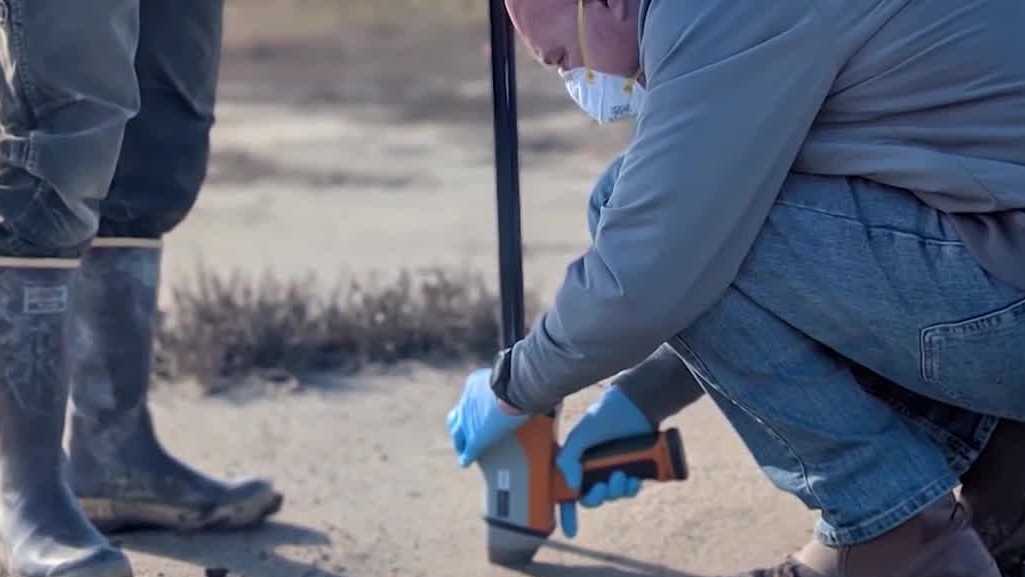
More than a year after the fire, researchers are still working to understand its aftermath. San Jose State researchers collected samples days after the fire and compared them to baseline data they had previously gathered from the area.
“We had baseline data. And right after the fire, we went back to our survey site a few days after, and we detected significantly higher levels of metals,” said Ivano Aiello, Chair of Moss Landing Marine Laboratories.
Their findings revealed approximately 55,000 pounds of copper, nickel, manganese, and cobalt embedded in the soil of Elkhorn Slough—metals commonly associated with lithium-ion batteries.
A separate study released last month by Terraphase, a third-party agency hired by Vistra, concluded that soil, air, and water samples taken months after the fire did not contain levels posing a risk to humans.
“The concentration of metals in soils dropped after a few weeks or months after the fire. But that didn’t just disappear,” Aiello said.
The discrepancy between the studies stems from the timing of the sampling. San Jose State researchers collected data shortly after the fire, while Terraphase examined conditions months later.
“What we are asking is to be very careful with statements that are definite, based on a very small number of samples, such as the sampling done months after the event occurred,” Aiello said. “So we are proposing to include all the literature available in the future publications and the scientific measurements that are going to be done by us and other people as well.”
San Jose State researchers are urging their findings to be considered as part of a broader evaluation of the fire’s impact, including how metals may accumulate over time.
“So let’s learn. You know, literally we can make them better, safer. And you know, and if in case something happens, we are better prepared,” Aiello said.
Monterey County has not yet formally responded to the researchers’ request. The county’s environmental health department has also not provided a comment.
The Central Coast Water Board plans to conduct its own groundwater testing, which was not accounted for in Terraphase’s review. Researchers hope their study will be reviewed alongside Terraphase’s findings as the county determines its next steps.