
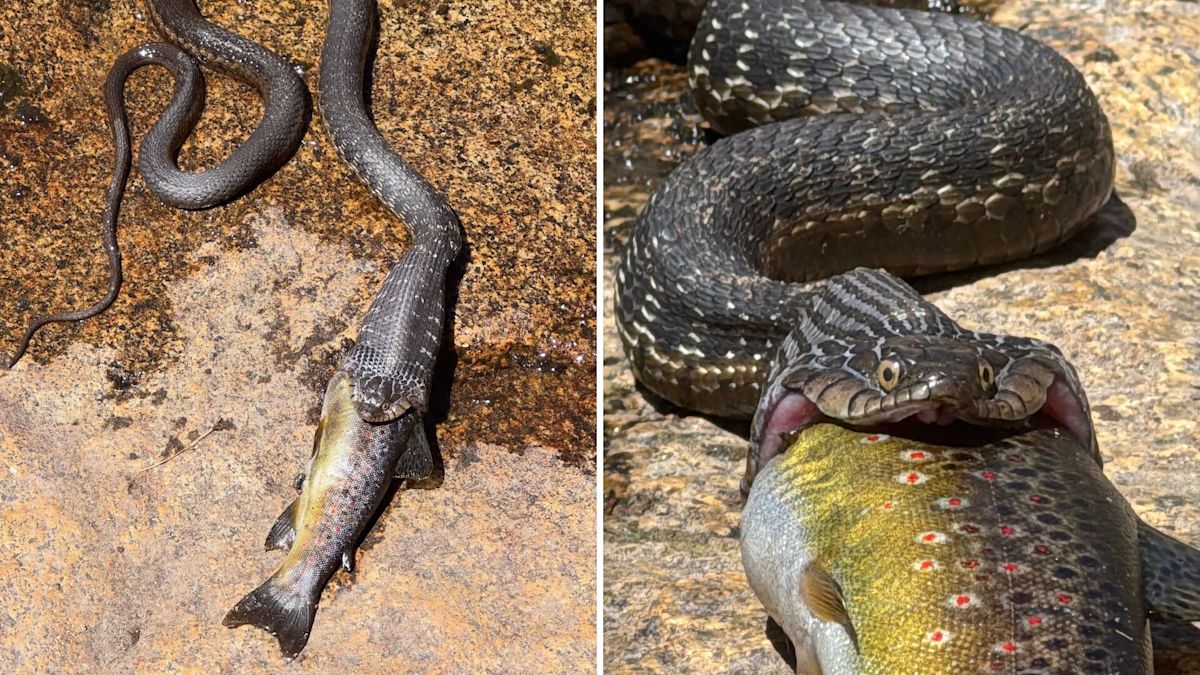
Photos and videos from California’s Sierra Nevada show a garter snake hauling a brown trout out of the water before swallowing the large fish whole.
It’s the kind of wildlife scene most people never witness.
Here’s what to know
Madelin Woods (@madelinw), an Instagram user who was there with other campers, said the group watched the aquatic snake yank a still-flopping trout onto the rocks, according to the New York Post.
In the images, the dark snake is at the water’s edge, its jaws stretched around a trout that is much bigger than the snake’s head.
“Over the course of an hour, we watched as he struggled with half the fish in his mouth, retreating and repositioning a couple times,” Woods wrote.
After stepping away, the campers returned to find that the effort was over. By then, Woods wrote, “He had the whole fish in his body and slithered away.”
As dramatic as the scene looked, garter snakes are well equipped for this kind of hunt. Citing the University of Nevada, Reno, the Post reported that they are strong swimmers, active hunters, and able to chase prey underwater. Their diets can also range from invertebrates and amphibians to birds, rodents, and fish.
More background
One reason the encounter stood out was the extreme size difference between the snake and the trout.
Snakes can consume prey much larger than their heads because their jaws are highly flexible.
Even the person running the campground was surprised. Woods said the woman told the campers “she had never seen anything like this, or even a fish this big in that area.”
Visiting campgrounds, fisheries, and recreation areas can all increase the odds that people witness intense wildlife interactions up close.
What can be done?
Crowding, touching, or trying to help can stress an animal and make such a situation dangerous for wildlife and people alike.
Campers and anglers can reduce unintended impacts by packing out trash, avoiding discarding bait and fish remains near shorelines, and following local rules on pets and wildlife.
On a higher level, land managers and wildlife agencies can help by monitoring fish populations, protecting habitats, and balancing recreation with ecosystem health.
Get TCD’s free newsletters for easy tips, smart advice, and a chance to earn $5,000 toward home upgrades. To see more stories like this one, change your Google preferences here.