

Francisco Vargas said he first came across fentanyl around six years ago, when the highly potent drug was at its height in San Francisco’s drug market.
“The streets were flooded with it,” he told The Examiner.
He sayd fentanyl quickly became his sole priority, and he upended his life in the pursuit of it. For the next few years, he would become distanced from his family, lose his housing and his job, and overdose multiple times.
“I was doing whatever I had to do to get money — stealing, begging, borrowing, whatever I could,” he said.
It wasn’t until about a year and a half ago — after a severe overdose at his grandmother’s house left him in the hospital for three days — that he found the motivation to make a change. He reached out to Douglas Liu, a navigator with Code Tenderloin’s street team, whom he’d connected with on the street before.
Vargas said Liu got him into the Medical Respite and Sobering Center at 1171 Mission St., where Vargas received his first shot of Brixadi, a long-lasting buprenorphine injectable.


Theopolis Tolliver, right, gets help finding shelter where he can treat his fentanyl-use disorder from Douglas Liu of the Code Tenderloin Night Navigation Team in July 2024.
Craig Lee/The Examiner
That was a “game changer,” Vargas said of the medication used to treat opioid addiction. He said he’d tried daily doses of the drug before, but being able to receive the injection made it easier to maintain his progress without daily reminders of where he was at.
“That was, psychologically, for me something that would bring me down,” Vargas said. “It still felt like a routine of an addict.”
Now, he’s at a point in his recovery where he’s weaned himself off the medication, started working as a safety ambassador for Heluna Health, a community-outreach organization, and last week secured his first apartment on his own.
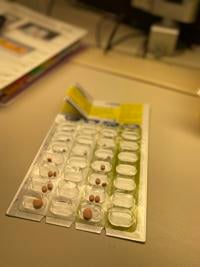
Increased access to buprenorphine and other medications used to treat opioid-use disorder have been credited with helping reduce The City’s overdose-death numbers.
Courtesy San Francisco Department of Public Health
Vargas is just one of thousands of San Francisco residents who have been affected by the opioid crisis in the past several years. While the crisis began more than 10 years ago, experts in The City point to the introduction of fentanyl as when the situation hit its peak, culminating in 2023.
That year, San Francisco recorded 810 overdose deaths — the largest number since the Office of the Chief Medical Examiner began issuing monthly reports in 2020.
But with the implementation of new programs and strategies addressing the crisis at different angles, the rate of overdose deaths has dropped significantly. Just last month, the number reached an all-time low at 34 — the lowest monthly tally on record — according to preliminary data.
As The City marks that milestone with National Fentanyl Prevention and Awareness Day approaching Friday, public-health officials, clinical providers and addiction-medicine experts have been examining what elements have led to the abatement of the crisis both locally and nationally, what strategies have been most effective in the past few years, and how — no matter what — the answers are more complex than what was initially thought.
“San Francisco is not an exception,” said Dr. Dan Ciccarone, a professor of addiction medicine at UCSF and the author of a recent paper in the International Journal of Drug Policy on the state of the opioid crisis in the United States.
Counties or municipalities seeing lower numbers of overdoses might want to take credit and cite whatever strategies they’ve employed, but the downturn is a reflection of what’s happening nationally, Ciccarone said.
There are many reasons why the crisis has been easing, Ciccarone said.
“Epidemics come to an end,” he said.
There are reasons on both the supply and demand side of the situation, he said — the supply of fentanyl has become less easy to access and its quality has diminished, while the demand for the drug has gone down because there are fewer new users.
“It’s burning itself out because the people who were so addicted to fentanyl that they couldn’t seek help, they’ve died off quicker than new people coming in thinking fentanyl is the new cool drug,” Ciccarone said.

The Minna Natoma Streetscape Project will bring 800 feet of new street art to The City, along with pedestrian and infrastructure upgrades

San Francisco Historium Spotlight will explore The City’s development with shows, cuisine, tours and more

Republican challenger says he thinks the incumbent has done a poor job of protecting public safety and has the wrong priorities
The drug itself is no longer in “fashion” and will likely stay unfashionable for a generation or two before it cycles back in again, he said. The use of other drugs — particularly stimulants such as methamphetamines — shows little sign of abating any time soon, he said.
That’s an area in which that the San Francisco Department of Public Health is looking for more solutions, according to Dr. Christy Soran, the deputy medical director of substance use services in behavioral health services at DPH.
“We struggle with a lot of people using stimulants who still are at risk of overdose — potentially because of unintentional exposure to fentanyl or other opioids, but also stimulant use itself,” she said. “They tend to be older, and they tend to also have other underlying chronic diseases like cardiovascular disease. And over time, that builds up, and people most commonly pass away from cardiovascular complications of chronic stimulant use.”
The main tool that public-health programs have right now to treat stimulant use is contingency management, a behavioral model that offers incentives for stopping drug use.
While there is some promise in research on the effectiveness of GLP-1 in curbing cravings, there’s not enough known about their use yet.
While the fentanyl crisis has eased since 2020, the department is still keeping a close eye on the drug market — other versions of opioids have been detected across the country, and at least one overdose death this year has been attributed to cychlorphine, a synthetic opioid.
“Fentanyl has taught us a lot about how quickly the drug supply can change, how just because it’s the same drug class, one opioid does not equal the other,” Soran said. “We need to make sure we understand how that impacts overdose risk, withdrawal states, and treatment settings.”
One main area of focus has been on expanding access to treatment options, such as investing in telehealth services used by the department’s street teams and including more drop-in services for medication-assisted treatment at DPH clinics, as well as at Zuckerberg San Francisco General Hospital.
Finding the right medication and the right treatment for individuals — and making sure they’re able to maintain their access — has been a huge priority.
“I think our biggest successes have been really adapting all forms of medication treatment, making it as accessible as possible,” she said. “We do better when we pair that with a safe space for people to be in, be that sobering centers, shelters, residential treatment.”
CEO Vitka Eisen of HealthRIGHT 360, a major provider of addiction treatment services in San Francisco, agreed that the increased emphasis on bringing treatment — medication-assisted treatment in particular — “to people where they are” has been one of the major factors that has contributed to the decline in overdose deaths.
“The city has increased its network, if you will, of places where people might touch care,” she said.
But at the same time, she said, she’s concerned that the current overdose numbers might not reflect the people who’ve been priced out of The City in recent years, who’ve left because of current homelessness policies, or who are currently incarcerated — especially because communities of color and those experiencing homelessness are disproportionately affected by overdoses.
A study published in April — which included Dr. Philip Coffin, the director of the Center for Substance Use Health in San Francisco, as one of the contributing authors — reported that nearly half of overdose deaths between 2021 and 2023 in San Francisco occurred in people who had been recently homeless.
Keeping these issues in mind, it would be too “easy” to say that the decline is just because The City’s current policies are working, Eisen said.
“I’m very cautious about that,” she said. “To make easy assumptions about it, I think is risky.”
Ciccarone said he has been concerned about The City’s progress as policies have shifted in the last year and a half away from harm reduction and towards abstinence and penalty-based tactics.
Under Mayor Daniel Lurie, The City has enacted restrictions on the distribution of safe drug-use paraphernalia such as foil and straws, launched an involuntary-hold sobering center in SoMa for people arrested for public intoxication, and passed legislation requiring all new affordable-housing projects to be sober only.
Favoring one strategy over another will create gaps in what individuals might need to engage with recovery, Ciccarone said, although he acknowledged that harm reduction wasn’t a one-size-fits-all solution either and merited some criticism.
“We put our heads together, and we say, ‘What works better in addressing substance use in San Francisco in a balanced approach?’” he said. “How do we approach both the arrest and supply side of the equation, but also promote treatment — what to do when treatment is not right for a given individual? How do we promote harm reduction? How does harm reduction link to treatment?”
Vargas said that now that he’s been in recovery for over a year, he’s known some of his former acquaintances and friends on the street who’ve tried to go down the same medication path he did. The injectable didn’t work for everyone. Some relapsed. But most, like himself, are doing well.
“It’s the best thing out there that I know of,” he said.