
LOS ANGELES — Looking at pictures of her younger self in Mexico, Katherine Melero knows they are so much more than happy memories. For her, the photographs are a reminder of what her mother gave up when she came to the U.S. from Mexico.
“This is my mom and me, and then all of our family over there,” Melero said.
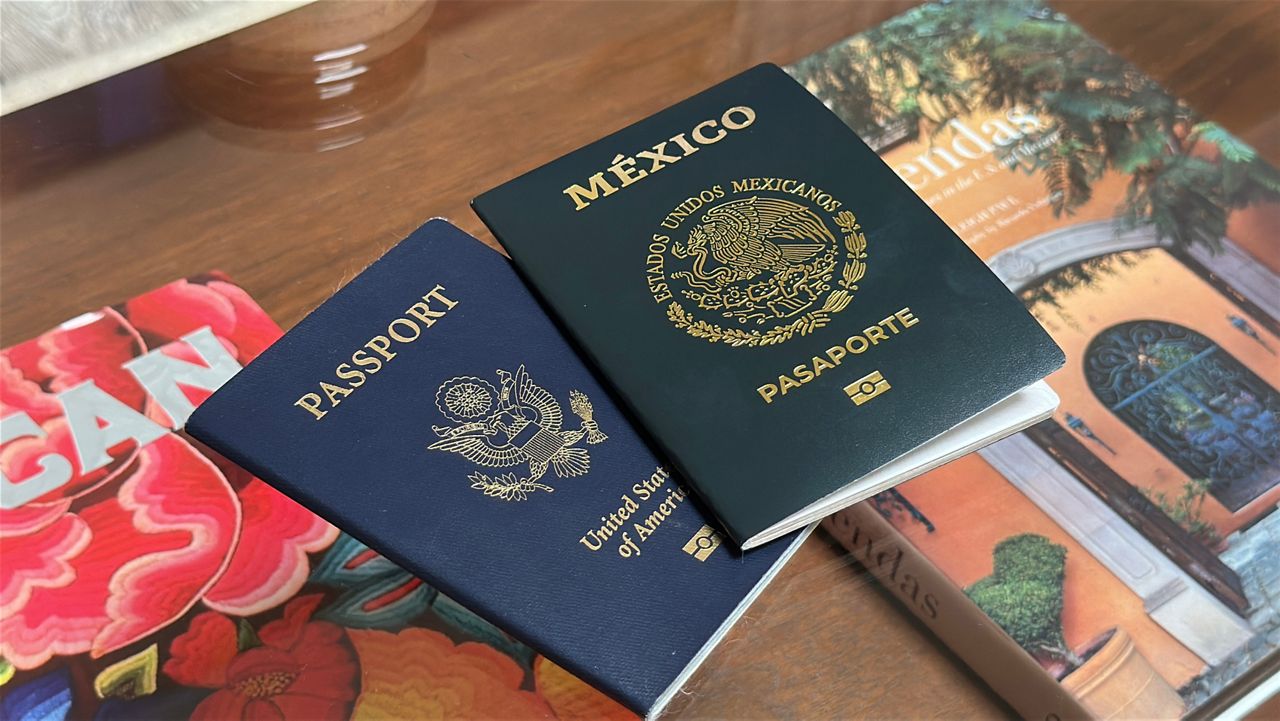
But now, she is not so sure the American dream that her mother pursued still exists, and it’s why she recently got her dual citizenship from Mexico.
“I think for us, we see it more as like long-term planning. So obviously, like, we have a life here. We have friends here. It’s not easy to just, like, pack up and move. But I think having it allows us to do things like start getting property in Mexico,” Melero said.
She’s not alone in reconsidering where she calls home. Last year, the Mexican consulate in Los Angeles saw a 160% increase in dual citizenship registrations.
The registries shot up to 6,338 in 2025 compared to 2,428 in 2024 and are on track to continue the upward trend this year, having already received 3,476 registries from January through June.
The Consul General of Mexico, Carlos González Gutiérrez, said although the data does not give a definitive reason for each applicant, they are tracking a few reasons for the jump.
“I think that if you ask why, there would be three main explanations. One is the uncertain times we are going through. For many immigrants, the possibility of returning to Mexico becomes more appealing,” González Gutiérrez said.
Besides politics, he says the baby boomer generation is now retiring and looking to Mexico to settle, and lastly, a new law that made it easier to become a dual citizen is also playing a big role.
“The government of President Claudia Sheinbaum, on a very deliberate way, they tried to, on the one hand, digitalize much of the procedure. And on the other hand, they eliminated requirements that perhaps were not needed in order to facilitate as much as possible the acquisition of the Mexican nationality,” González Gutiérrez said.
He adds that before they required witnesses and more paperwork.
“Today, someone who has to live their whole lives overseas can, if he or she is the daughter or son of a Mexican national, that person can get a Mexican passport,” González Gutiérrez said.
And while the numbers may not be so surprising in Los Angeles, which is home to the largest Mexican population outside of Mexico, he said the trend is seen across the 53 other consulates in the U.S.
He notes that globalization may also play a part in this trend.
“Now that there is so much remote work, they find that Mexico allows them to work over there and travel every weekend to the U.S. and perhaps is a place where their money is going to get them farther,” González Gutiérrez said.
For Melero, the process took about five weeks, and her reasons closely matched what González Gutiérrez has noticed.
“Politics are the main factor, if I’m being honest,” Melero said.
She says the current administration’s policies, specifically on immigration, have been her biggest push in this decision.
“I think there’s a lot of feeling of like, I now know what people think about people who look like me or people who come from my background or like that. People just don’t even care about it at all. And so I think that is a big reason why people are looking at other options,” Melero said.
Having graduated from college, now working in corporate American and becoming a homeowner felt like she was checking off all the boxes expected of her and while she said she is grateful for the opportunities she’s had, the work hasn’t led to the quality of life she wants.
“I’m now feeling like if I stay in the U.S., it’s literally to work all day every day to like barely make ends meet,” Melero said.
What she said about the diminishing quality of life is also taken into consideration as she plans to have kids in the future.
“I just feel like I want them to know that there’s more to life than just like working. And, you know, I think as a society, because of all the factors in the U.S., that’s just not something that is like a reality here,” Melero said.
Saying her dual citizenship is more than a second passport, it’s expanding her options beyond the U.S.