
It’s as inevitable as the tide.
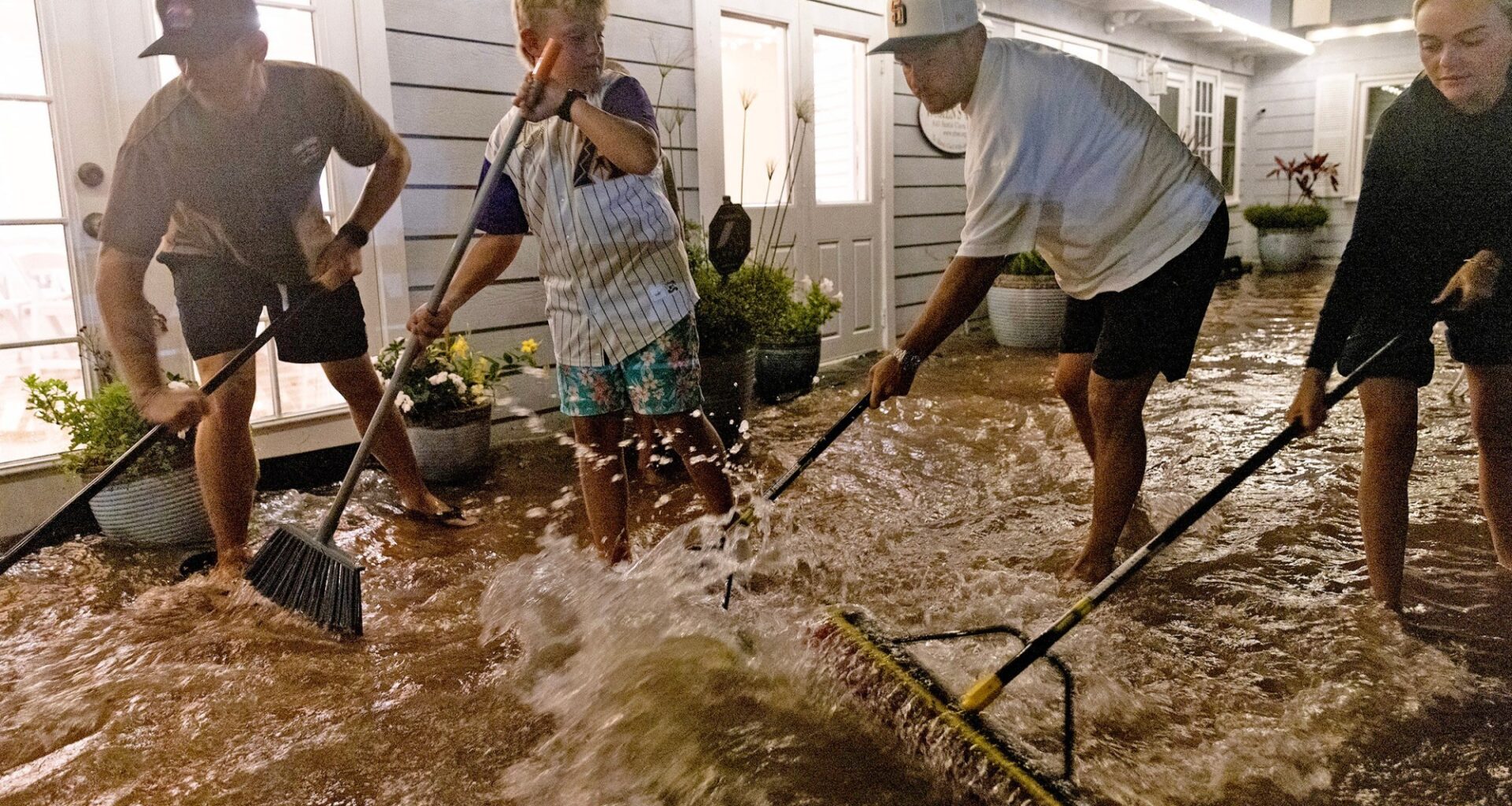
Possibly a king tide during a storm, with big waves and lots of rain.
We’ve long known the steady sea-level rise will continue to stress and change the coastline.
A recent study concluded that the ocean has already risen more rapidly than previously believed, and the stern warnings about a coming super El Niño season include the likelihood of record-high sea levels along the California coast.
The future is here now, however, though perhaps not to the intense degree it will be. High tides push up the water table and sometimes flood portions of Midway Drive, as documented by Lori Saldaña, former Assembly member and past chair of the local Sierra Club chapter.
The water table concern there and mitigation efforts as they pertain to the proposed Midway Rising redevelopment plan have largely been overlooked amid other disputes over the project.
“You can’t legislate sea level rise,” said Saldaña according to Fox News, referring to legislation in Sacramento that could ease environmental reviews for the development.
Other areas and existing structures are threatened by rising waters. The San Diego Convention Center, for example, couldn’t operate without pumps. Imperial Beach has become something of a canary in the coal mine for researchers studying the impact of sea-level rise on low-lying coastal communities.
Rosanna Xia, environmental reporter for the Los Angeles Times, who has written extensively about sea-level rise, has received widespread critical acclaim for her book “California Against the Sea.”
She told the Times that El Niños, winter storms and summer king tides like the recent one “provide a powerful glimpse into what the future could look like on a consistent basis, and what the new normal could look like if we don’t prepare communities for the reality of what’s to come.”
El Niño is a climate pattern in which trade winds weaken, allowing warm surface water in the Pacific Ocean to expand and shift eastward toward the Americas, according to the National Oceanographic and Atmospheric Administration.
Many coastal areas, including San Diego, are taking steps to prepare for that future, though they probably aren’t moving boldly enough. The San Diego Union-Tribune for years has documented laborious efforts along the coast to address sea-level rise.
Among recent updates:
Oceanside is still trying to push ahead with its beach sand-replenishment plan despite skepticism from neighboring cities. The proposal includes an artificial reef and building headlands designed to act as a buffer to the sea. In addition to everything else, beaches are key drivers of coastal economies, hence the support, and in some views, the necessity for constant efforts to try to preserve them.
A proposal to transform part of Mission Bay into climate-friendly marshland and new recreation space was approved by the California Coastal Commission. The marshland, in addition to sucking carbon out of the air, would act as a sponge to absorb incoming higher sea levels.
San Diego is moving ahead with projects in Ocean Beach and Sunset Cliffs as part of a larger coastal resilience plan. Among other things, the city will remove parking lots on the edge of the crumbling cliffs — a retreat that acknowledges the ocean is eating away at them.
These measures and others like them are significant, but they still may seem like trying to bail out a boat that is taking on water too fast.
A more sweeping, difficult and costly response is pulling structures, facilities and, if you will, society back from the coastline, a concept called “managed retreat.” Just look at what’s been going on for years to try to realign the railway line away from Del Mar’s eroding bluffs to see how challenging that can be.
That concept is hotly disputed, meeting resistance particularly from private property owners.
In the big picture, the coastal situation worldwide is worse than thought, according to a study released in the spring. The report published in Nature magazine by scientists at Wageningen University in the Netherlands concluded researchers have been underestimating sea levels for decades, putting millions more people at risk.
Sea levels in California could be 0.25 to 2 meters higher than previous calculations showed, according to the report. The study said most earlier research made the same mistakes, using models that assumed sea levels based on gravitational models rather than using the measured sea level.
Gravitational models only account for gravity and the Earth’s rotation and do not account for other factors that determine local sea levels, such as tides, currents and winds, according to ABC News. The researchers also reported they used more accurate coastal height baselines.
Meanwhile, the coming El Niño could bring the highest sea levels ever recorded to the California coast this year, raising the risk of widespread and damaging flooding, according to the Los Angeles Times.
Mark Merrifield, director of the UC San Diego Scripps Institution of Oceanography’s Center for Climate Change Impacts and Adaptation, noted in an online town hall meeting that coastal buffers already are diminished.
Large waves that come in “will have even greater impact on the shoreline, with more likelihood of flooding and undercutting of cliffs,” he said.
Scientists and government officials have been ramping up warnings for months, and, of course, not just for shoreline areas. This week, San Diego Mayor Todd Gloria and other officials discussed the need for preparations, adding that a program of clearing flood-control channels across the city is underway.
El Niño alters atmospheric conditions, raising global temperatures and causing heavy rainfall in some regions while triggering severe droughts in others. There’s always the chance this one won’t be as intense as expected, but nobody’s counting on that.
Meanwhile, there is one seemingly certain event during the midst of the El Niño season worth keeping an eye on. The next king tide in San Diego will occur Nov. 24-26.