
Published Aug. 22, 2026at6:00am
My first glimpse of the Sunset magazine campus in Menlo Park was late on a February afternoon in 2013. I had just flown in from gray-slush-covered New York City, and while I knew California from attending Cal and living in San Francisco for a decade, this was another world.
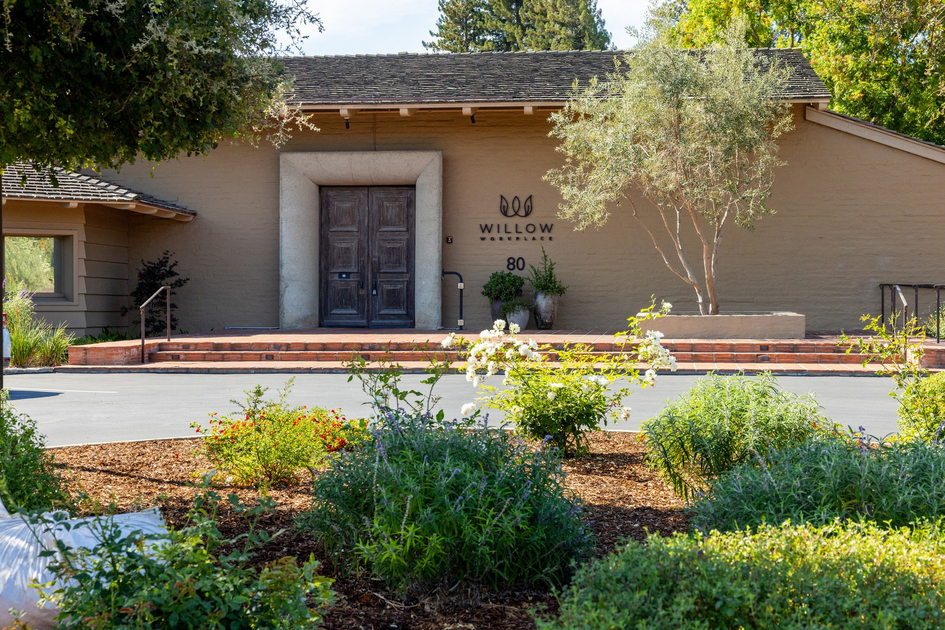
Huge wooden doors opened to red-tiled floors, beamed ceilings, Spanish colonial antiques, shaded terraces, and a close-cropped lawn centered on an ancient live oak. A garden ran along a creek north to south — a microcosm of the West Coast, from redwoods and azalea at one end to cacti and succulents at the other. “It’s as if Don Draper designed a mission,” my husband marveled. I was enchanted. Within a month, I was walking Sunset’s halls and garden paths daily as editor-in-chief, reveling in my luck.
Of course, you had to overlook the warning signs. The rats that had taken up residence in the walls. The frayed carpets. And the empty building across the street, with its dead fountain and chipped tiles, once home to the books and CD-ROM (remember those?) division of the company, disbanded after Time Inc. bought Sunset Publishing from the Lane family in 1990. The C-suite honchos had long ago shipped much of the wine in our cellar off to their offices in New York City. No money was going in; only out.
I’d been through enough corporate downsizings to know where things were headed. I still have a stack of PowerPoints with arguments for how to expand Sunset, including new uses for the depopulated campus (startup lab? community space? sell half for townhouses?). By the time the company announced that it was cashing in on the real estate (reported sale price: at least $77 million (opens in new tab)) and moving us to cheaper offices in Oakland, I knew my time was up too.
That was 11 years ago. The developer who now owns the property at 80 Willow Road is planning to build a massive skyscraper complex (opens in new tab): retail and office space, a school, a hotel, and 665 apartments, 100 of them affordable. The proposal goes a long way toward addressing the state-mandated housing allotment of nearly 3,000 units for Menlo Park by 2030, but it has been fought by locals at every turn over its environmental impact and scale — a fight likely to continue, despite Attorney General Rob Bonta’s recent slap at Menlo Park (opens in new tab) for its alleged attempts to stall the approval process.
It’s still possible that the city and the developer can negotiate a scaled-back project for the historic site, avoiding ruinous litigation on both sides. But the precise scale of the project matters less than the fact that something dramatically different — and bigger — should go there. The dream of idyllic suburban life that Sunset’s building represents is dead, dead, dead — unsustainable and unaffordable for all but the very few. Why hang on?
 California Attorney General Rob Bonta recently accused Menlo Park of improperly blocking the development in violation of state law. A rendering is pictured above. | Source: Courtesy N17
Think about the history of our region: When the Sunset campus was built, ranch houses were supplanting fruit orchards up and down the valley at a furious clip: More than 5,000 homes were built in Menlo Park alone between 1950 and 1960. These dwellings were simple, similar, cheap, and far from chic. Malvina Reynolds’ famous song called this suburban growth “little boxes on the hillside … all made out of ticky-tacky.” She thought the people who lived in them were ticky-tacky too.
But the burgeoning post-war middle class flocking to those houses was Sunset’s audience. Founded in 1898 by the Southern Pacific Railroad to inspire travelers and buyers for its land (you can still take a ride on the Sunset Limited line), Sunset under the Lane family became an essential guide to Western living for newcomers encountering their first artichoke. The Lanes followed their readers from San Francisco to Menlo Park in 1951, commissioning Clifford May, the “father of the ranch house,” to design its new headquarters as a working laboratory. Our test kitchen was a suburban-style kitchen, not something only a chef could use. Our test gardens yielded endless lessons in how to zhuzh up your backyard, how to grill tri-tip, how to build a redwood planter, where to go car camping, how to make tamale pie, how to put a deck around your hot tub — the magazine inspired people in suburban California and well beyond to embrace it all.
Forty years later, the assumptions underlying that lifestyle — cheap gas, plentiful housing — had gone up in carbon-emitting smoke. As new construction slowed to a trickle, and average home prices rocketed into the millions, Sunset employees could no longer be expected to live within 10 miles of the office. The guy who helped me open an account at the local Wells Fargo told us he lived 90 minutes away; his parents had lost their Menlo Park house in the 2008 crash, and for a time he lived in his car. My husband, desperate for diversion (and diversity) after a year of walking our elderly dog through the silent streets of Los Altos, finally convinced me to move north to San Francisco. In my last summer as editor, I rented a $900-per-month studio with a single bed in a converted garage near the office so I could avoid 101 traffic at least a couple of days a week.
Most of the Sunset staff were enduring commutes more soul-sucking than mine. Still, leaving that peaceful bubble of a building was painful. I talked up the move to our new office in Oakland as a natural evolution: Our job was to reflect our readers’ lives; now they were back in the cities. Our most popular garden stories were about planting vegetables in containers; readers wanted more stories on home decorating for small spaces. We had always attuned ourselves to how the West was changing and what we needed to do to adapt. Magazines aren’t museums.
 The magazine used its campus as a working laboratory for its service journalism: how to zhuzh up your backyard, how to grill tri-tip, how to build a redwood planter. | Source: Morgan Ellis/The Standard
 “It’s as if Don Draper designed a mission,” the author’s husband said of the campus. | Source: Morgan Ellis/The Standard
I share the nostalgia for that magical building, those enchanting gardens. But how can we afford to indulge in nostalgia when the housing crisis is so acute? The state estimates that we’ll need 2.5 million housing units by 2030, a million of them low-income. Why should Menlo Park get a pass? Big developments in California always seem to bring out the “But it will be like Manhattan!” argument. (I always think, well, at least Manhattan is fun.) Surely, in this land of innovation, we can come up with another example to guide us. I choose to live half my life in Paris — double the density of San Francisco but human-scale (opens in new tab) even so, designed for walking, dotted with parks and ever-more pedestrianized streets, neighborhoods served by a network of metro trains that come every two minutes. Closer to home, Pittsburgh and Chicago are dense yet eminently livable, with single-family houses interspersed with large apartment complexes and even skyscrapers.
Years of missed opportunities and narrow thinking have brought us here — to the land of low-slung suburban houses that only one-percenters can afford (and that are often torn down to make way for grander structures). There would be no reason to build 665 apartments in one shot if Menlo Park (and every California city) had embraced more sensible development over the last several decades — relaxing rules for parking, modernizing construction codes, speeding up approvals, encouraging building apartments over every storefront (yes, like Paris). The state’s 2022 housing law (opens in new tab) is designed to make it easier to incorporate housing into commercially zoned property like the 80 Willow site. We need that law. Because local control has failed us — keeping us focused on our own beautiful backyards while blind to the needs of others. Some of my ex-colleagues are praying that a sympathetic tech overlord will swoop in to buy out the developer and maintain the idyllic campus we once enjoyed. I can’t help but think of Marie Antoinette and her cute little sheep barn at Versailles.
Sunset, amid its travel itineraries, garden plans, and recipes, always also managed to pose big questions: How do we live well together on this trembling edge of the continent? How can we do so without disenfranchising our children and ruining the beauty we have inherited?
Maybe the best way to pay homage to Sunset’s history is to face reality: Tear down the building and start over.
Peggy Northrop was editor-in-chief of Sunset magazine from 2013 to 2015, when it won its first-ever National Magazine Award for general excellence.