
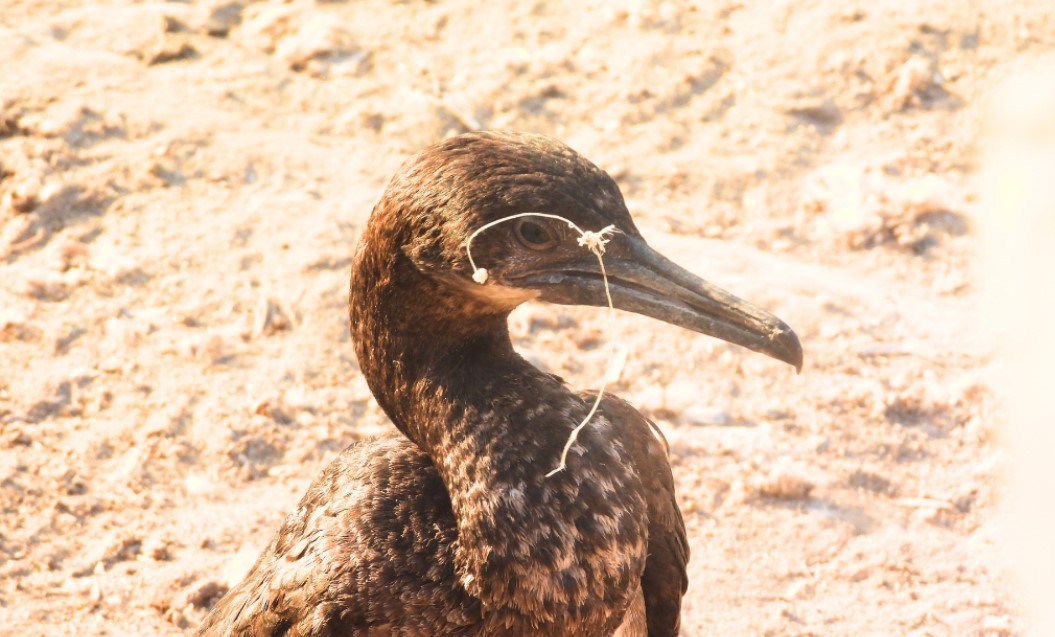
An “alarming” amount of seabird entanglements have been observed in recent months at Point La Jolla, according to the founder of Wildlife Jewels, a nonprofit organization dedicated to wildlife conservation.
Although its offices are based in Solana Beach and Corona Del Mar, Wildlife Jewels does extensive documentation of La Jolla’s coast through its Rescue Crew and Engage Your Eyes for Sea Life, or EYES, program.
The EYES program, which has a La Jolla chapter, equips community members and volunteers to observe wildlife and report their findings to applicable agencies such as licensed wildlife rehabilitators, lifeguards and animal services. The Rescue Crew builds off that work, ensuring the concerns are documented and routed to the right parties.
“We conduct field monitoring almost daily along the La Jolla coastline,” Wildlife Jewels founder Azi Sharif explained. “Our focus has been from just south of the Children’s Pool area … all the way up to The Cave Store. We document information (and) any kind of a threat to wildlife, with a focus on birds.”
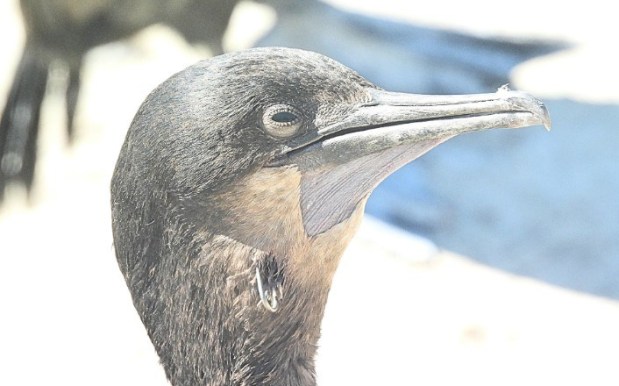 This Brandt’s Cormorant seen at Point La Jolla on June 20, was observed with a fishing hook embedded near the side of its head. (Wildlife Jewels / Azi Sharif)
Specifically, the team looks at bird entanglement, which is when a bird is visibly caught, wrapped, hooked, tethered or otherwise affected by fishing gear such as fishing line, hooks or lures. This can include line wrapped around a wing, leg, beak, or body; a hook lodged in the bird; or fishing gear restricting the bird’s movement, feeding, or ability to fly or swim normally.
Through its efforts, Sharif told the La Jolla Light that from April 1 to Aug. 19, Wildlife Jewels volunteers documented roughly 80 fishing gear-related seabird entanglements in La Jolla alone. Nearly 76% of those reports were specifically at Point La Jolla.
That number spiked over the summer.
Sharif says Wildlife Jewels teams documented six entanglements in April, 13 in May and 14 in June. But the number of entanglements jumped to 29 in July and 18 in August.
Some of the bird species Sharif and Wildlife Jewels crews observe are California brown pelicans, double-breasted cormorants and Brandt’s cormorants. One of their recent observations yielded 10 sightings of Brandt’s cormorants with entanglements.
“We’ve been seeing an alarming increase in seabird entanglements and fishing line hooks and lures,” Sharif said. “Particularly Brandt’s cormorants and pelicans around Point La Jolla area. For a majority of them, we can tell pretty closely that it is a different (individual) bird based on the location of the entanglements. They’re not all exactly located in the same place. Every single day, we go looking for these birds and we see more.”
And that might not be all.
“These numbers represent a minimum documented count,” Sharif said. “Our team did not survey every section of the coastline consistently or every day of the week, (because at) the tide-pool area, the cliffs north of La Jolla Cove, and shoreline areas below the cliffs … access is limited or not possible. As a result, additional entangled birds may have been present but not documented.”
She added, “One injured bird can look like an isolated incident. When we consistently monitor the same coastline and document these cases over time, we can begin to see patterns — what species and age groups are being affected, where entanglements are occurring, what types of fishing gear are involved, when we see increases in particular species, and whether the frequency or nature of these incidents is changing.
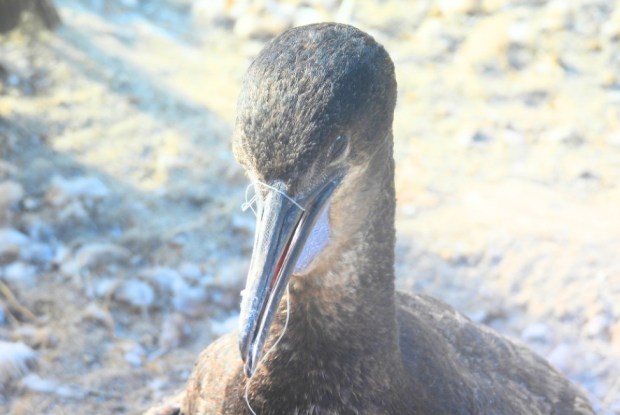 July was the busiest month for seabird entanglement observations by Wildlife Jewels volunteers. The group of birds included this Brandt’s Cormorant entangled in fishing line wrapped around its beak, preventing its beak from opening all the way. (Wildlife Jewels / Azi Sharif)
Thus, Sharif said recording this data that can also help identify emerging threats.
“When an individual bird becomes injured or entangled, our documentation can also become part of an active effort to help that animal,” she said. “If a bird is in a location where rescue is not safely possible — particularly around the cliffs and rocks at Point La Jolla — we continue looking for that individual in hopes of finding them in an accessible location where they can be rescued and receive care.”
Having a longer-term record, Sharif added, “allows us to look at timing and broader conditions, including breeding and fledging periods, seasonal changes in which seabird species are using the coastline, and periods when birds may also be experiencing environmental or nutritional pressures, such as warmer ocean conditions or reduced food availability.”
Sharif encourages La Jolla residents to keep an eye out for entangled birds and report injured or distressed wildlife at wildlifejewels.org/report-wildlife.
“A lot of times (when) these birds are entangled, unless you know what to look for, you can’t see,” Sharif said. “The fishing line is so thin and so narrow. The community can greatly help save lives by being aware of this, taking a look at some of these photographs and what to look for.”