
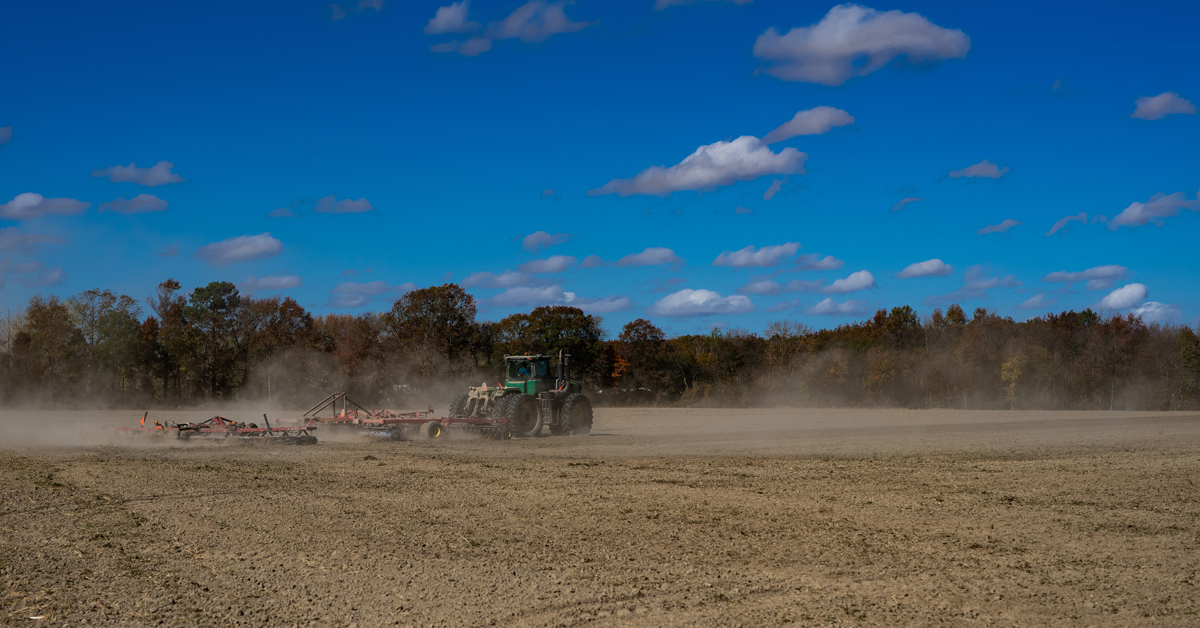
Several factors could help explain these differences. Dry, sparsely vegetated landscapes may provide environmental conditions favorable to Coccidioides and generate dust that can carry fungal spores into nearby communities. Agricultural activities such as tilling, plowing and harvesting can also disturb soil and produce dust. Seasonal patterns of cultivation may play a role, because some crops are harvested during the summer and fall, when infectious spores are thought to be most abundant in air and soil.
Fallowing also emerged as a potential concern. While the total amount of fallow land in an area was not significantly associated with Valley fever incidence, larger areas of newly fallowed land were associated with higher disease rates. However, the relationship varied according to the land’s previous cultivation history: newly fallowed land with a mixed history of crops was associated with higher incidence, while newly fallowed land previously used exclusively for some crops showed different associations.
These findings could have implications as California’s Sustainable Groundwater Management Act accelerates the fallowing of agricultural land in parts of the San Joaquin Valley. The study does not establish that particular land uses directly cause Valley fever, however. Instead, it identifies associations between land characteristics and disease incidence among people living in surrounding areas. Future research should directly sample soils and fields to determine where Coccidioides grows and how agricultural practices affect its presence and movement.
In the meantime, the findings support consideration of dust-control measures on fallowed and recently retired fields, as well as enhanced surveillance and protective measures for people who work outdoors during dusty periods. These could include respiratory protection such as N95 masks and air quality warnings during high-risk seasons.
“As California adapts to water scarcity and changes in agricultural production, we must weigh the public health consequences of those transitions alongside their environmental and economic impacts,” said Justin Remais, PhD, professor at the UC Berkeley School of Public Health and senior author of the study. “If we can determine how decisions like fallowing land may contribute to the release of Coccidioides spores, we can design strategies to inform and protect communities from exposure.”
Link to full study: “Impacts of land use and fallowing on coccidioidomycosis incidence in California: a population-based longitudinal study”
Additional co-authors on the study include: Isabel J. Jones in the U.S. Environmental Protection Agency; Simon K. Camponuri, Amanda K. Weaver, Philip A. Collender, John Balmes, Ellen A. Eisen and John Taylor at UC Berkeley; Jennifer R. Head at UC Berkeley and University of Michigan; Gail Sondermeyer Cooksey, Seema Jain and Duc Vugia at the California Department of Public Health; Adeyemi Adebiyi at UC Merced; and Abinash Bhattachan at Texas Tech University.
The study was funded by the National Institutes of Health (grant nos. R01AI148336 and R01AI176770, recipient Remais), and the University of California Multicampus Research Programs and Initiatives (award no. MRP-17-446315, recipient Remais). This work was also partly supported by the Epidemiology and Laboratory Capacity for Infectious Diseases Cooperative Agreement through the Centers for Disease Control and Prevention (5 NU50CK000539-05-00, recipient Jones).
All authors declare they have no competing interests.
Disclaimer: The findings and conclusions in this article are those of the author(s) and do not necessarily represent the views or opinion of the California Department of Public Health or the California Health and Human Services Agency.
Read more news about: The Herbert Wertheim School of Public Health and Human Longevity Science,