
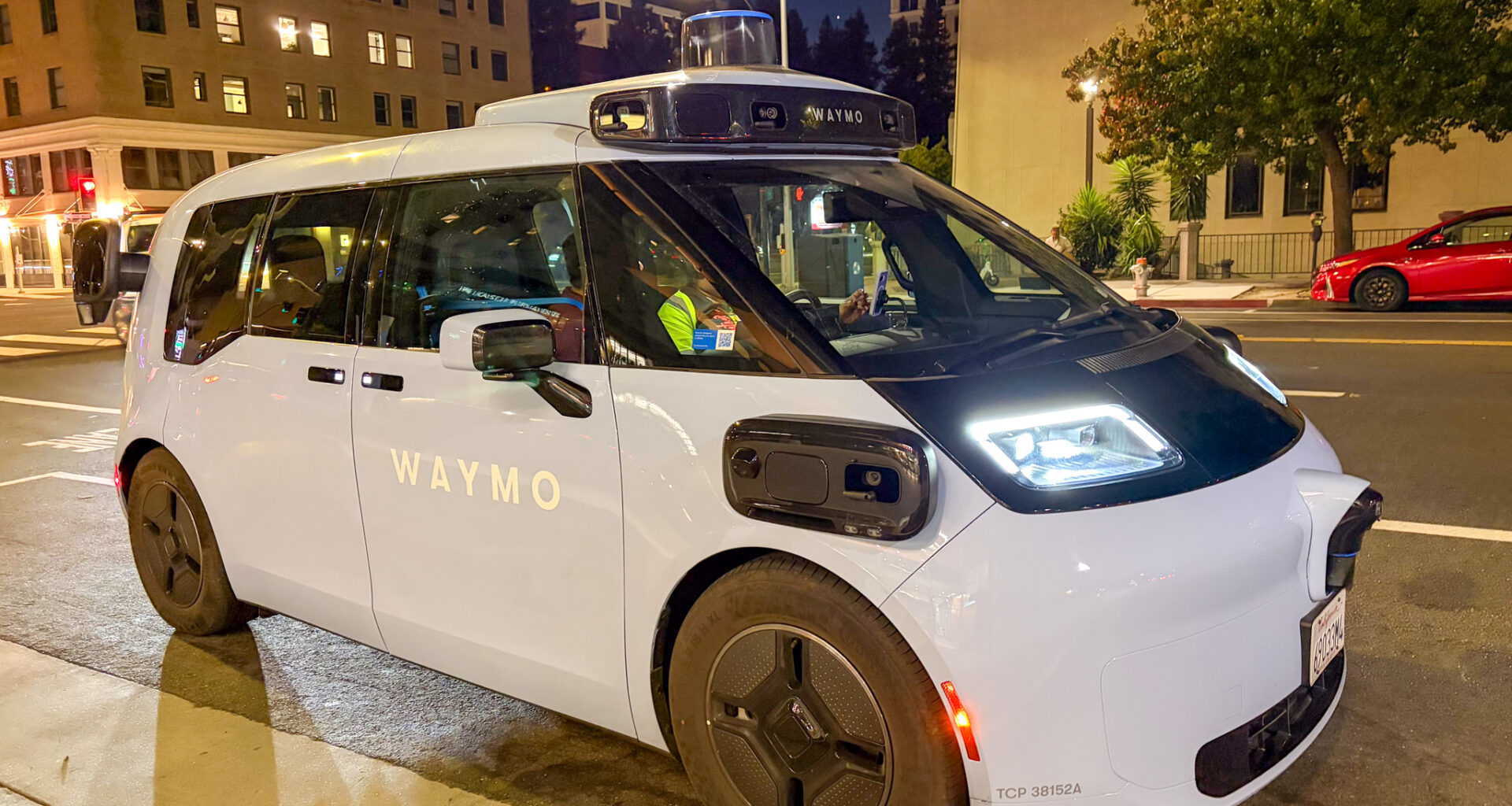
You may have seen a Waymo driving down Sacramento’s streets recently. The company has been testing its driverless taxis for months and recently won state approval to start picking up passengers. Public rides are expected to start soon, though there’s no launch date yet.
Waymo works a lot like Uber or Lyft, except there’s no driver. Riders use an app to request a car, get in when it arrives, and the vehicle’s computer handles the driving on its own. The service is already carrying passengers in places like San Francisco, Los Angeles and Phoenix.
The California Public Utilities Commission granted the approval last week, allowing Waymo to expand its ride-hailing fleet to Sacramento and San Diego. The state also gave the company the green light to expand service in LA and the Bay Area.
Even with the go-ahead, people will still have to wait until Waymo finishes testing. In a statement to CapRadio, Waymo said the service still doesn’t have an official launch date because it continues to test vehicles on the road. Currently, its vehicles are being tested in autonomous mode but are accompanied by a human until fully self-driving testing begins.
Seeing them on the road around Sacramento is making people consider how they could impact street safety and how comfortable people feel trusting a ride with no driver. Questions are also being raised about how the new service could affect people who make a living driving for Uber and Lyft.
Sacramento City Councilmember Phil Pluckebaum said local streets will be safer once Waymo starts picking up passengers.
“I think there’s so many Waymos in San Francisco you can’t speed,” Pluckebaum said. “And just the flow of traffic becomes the speed limit because the Waymos aren’t breaking the law. And they’ll operate very smoothly, very efficiently, but within the law.”
Pluckebaum said that can make a difference in Downtown where people drive faster than they should. He expects some drivers will get frustrated when they have to slow down behind an autonomous vehicle. But he predicted slower traffic could boost safety.
A recent study from the Insurance Institute for Highway Safety said Waymo’s driverless vehicles have had lower crash rates than human drivers. Researchers said they found Waymos are less likely to rear-end or be rear-ended by another vehicle. The study also notes that comparing the two data sets is complicated because crash reporting can change without a driver.
Isaac Gonzalez with Slow Down Sacramento, which advocates for safer streets, said autonomous vehicles offer an opportunity to reduce speeding and some crashes caused by human mistakes.
“There’s a big opportunity here to have cars on the road that are driving the speed limit. Maybe even on some of our one-lane roads, right, because everything behind it now has to go the speed limit,” Gonzalez said.
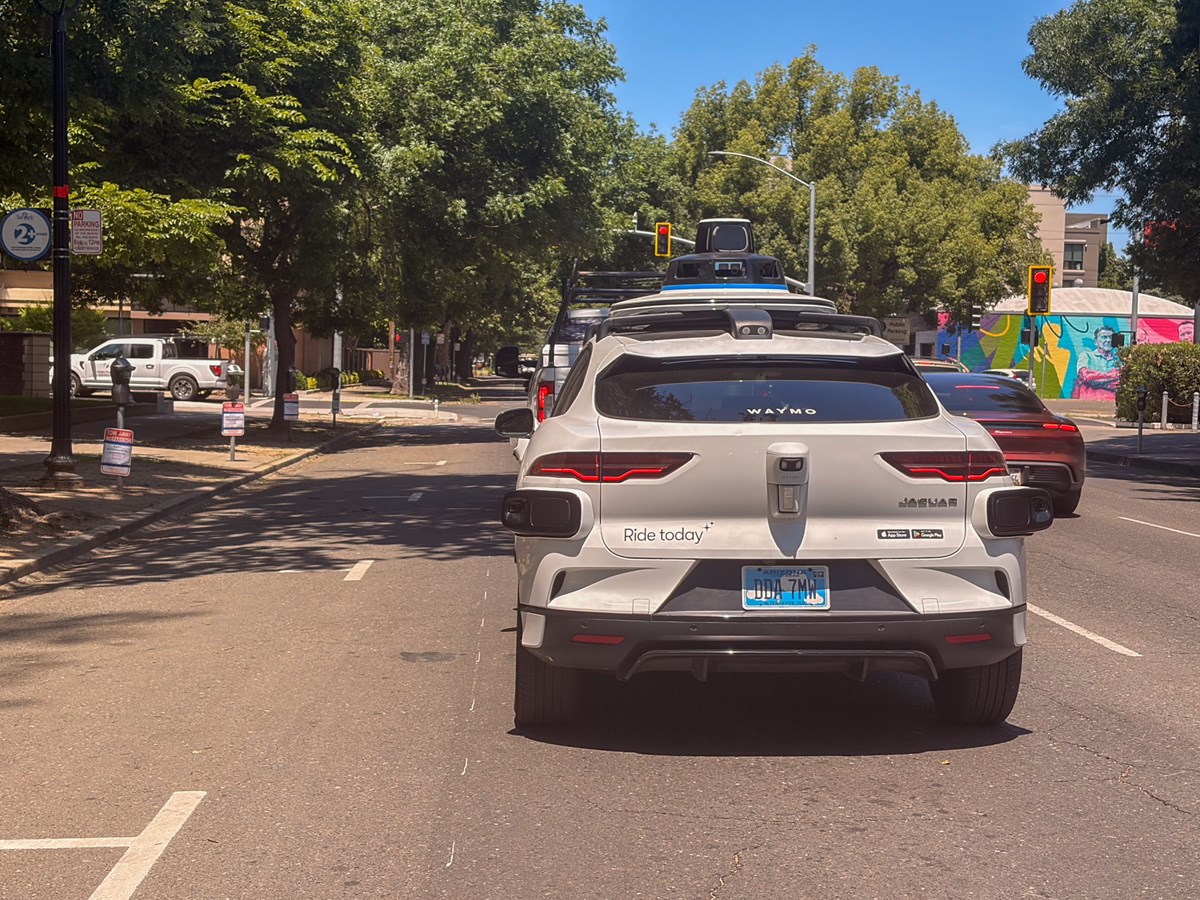 An all-electric Waymo drives down 16th Street in Downtown Sacramento on May 20, 2026. The company has been conducting vehicle testing in the city for several months.Tony Rodriguez/CapRadio
But Gonzalez cautioned that replacing a human-driven vehicle with an autonomous one does not address all of Sacramento’s transportation problems. More cars can still make streets uncomfortable for people walking or biking, he said, particularly in areas not designed to accommodate them.
“You’re still going to have people want to walk, people want to ride their bike,” Gonzalez said. “And the more and more cars on the road, even autonomous cars on the road, may not feel great walking or riding a bike on the road.”
For potential passengers, the more immediate question is whether they would trust a vehicle with nobody behind the wheel. Midtown resident Jose Morales said he is curious enough to try one.
“I think initially my first reaction is maybe it’s not positive because it’s a little bit different from what we’re used to,” Morales said. “We’re used to being in control of our own vehicles. From what I have heard and the little that I’ve delved into, I think it will be a net positive eventually because I think it’s going to take away, like, human error with driving.”
Morales said he could also see using the service much like Uber or Lyft, particularly after going out for dinner or drinks in Midtown.
Sacramento resident Lakisha Doyle is more skeptical. Doyle was born in San Francisco and has seen Waymos operating there, but said she would not feel comfortable riding in one herself.
“Other people might find that very convenient,” Doyle said. “I know even people who are kind of a little bit apprehensive about being around other people or being social might probably enjoy that. But I personally wouldn’t like it. I just couldn’t trust it. I’m just not that person.”
Doyle also said removing the driver eliminates the conversations that can happen during a traditional rideshare trip. She said the human interaction is important to her as she feels more people spend their days working remotely and have become more isolated from one another.
San Francisco resident J.J. Smith has already watched autonomous vehicles become a regular part of traffic. He said Waymo took off in San Francisco very quickly.
“When they came, they hit hard,” Smith said. “One day you see them out there testing them on the road, and the next thing you know, you see like thirty or forty of them flying up and down the street going by.”
Smith, who usually travels around San Francisco on an e-scooter, said he has seen Waymos stop for people running across the street and isn’t particularly worried about autonomous driving. But he acknowledged that seeing a car traveling without someone behind the wheel can take time to get used to.
“It could feel strange. I mean, anything new that changes a normal aspect of something we’re used to seeing feels strange,” Smith said. “Change isn’t comfortable.”
California rideshare drivers recently formed a statewide union, giving them a way to collectively advocate for better working conditions. Gurpreet Pannu, who drives for both Uber and Lyft, said the union is considering how Waymo could affect drivers in Sacramento.
“We’re not against the technology,” Pannu said. “We’ve got to evolve with it. The only thing is, you know, now that we have our union, we have a voice. So before they do anything, they need to put drivers in the room too and hear us.”
Pannu said some drivers worry autonomous services could eventually make it harder for them to find rides, though he acknowledged nobody yet knows what the effect will be in Sacramento.
Waymo declined CapRadio’s request for an interview, but a spokesperson said the company will have more to say once it gets closer to announcing a Sacramento launch date.
Follow us for more stories like this
CapRadio provides a trusted source of news because of you. As a nonprofit organization, donations from people like you sustain the journalism that allows us to discover stories that are important to our audience. If you believe in what we do and support our mission, please donate today.