
I was raised in Los Angeles, lived in the San Francisco Bay Area in my late teens and twenties — indeed, I’ve lived in California my entire life save for a few years of graduate school. So believe me when I say I know all the complaints against my home state.
It’s expensive (true). The traffic can be maddening (so true). Housing costs are outrageous (beyond true). There’s a lot of red tape for a lot of stuff (maddening sometimes). And if you mention California anywhere on the internet, someone will inevitably pop up to tell you that everyone is fleeing. And yet…
A fascinating new survey from Clever Real Estate asked 1,000 Americans where they most — and least — want to live in 2026, and California somehow managed to land near the very top of both lists.
California is the No. 2 most desirable state in America, behind only Florida. Nearly a quarter of respondents, 24 percent, named it among the best places to live.
California is also tied with New York as the No. 1 least desirable state in America, with 33 percent of respondents putting it among the places they don’t want to live.
As a lifelong Californian, I find this extremely funny… and extremely California. Because Americans may love to hate this state. But apparently, they still really want what we have.
California isn’t cheap. There’s a reason people pay to live here.
Let’s get the obvious objection out of the way: California is expensive.
Affordability mattered enormously to respondents in the Clever survey. Sixty-five percent said a low cost of living makes a place desirable, while 68 percent said a high cost of living makes one undesirable. Expensive housing and high taxes were major turnoffs, too.
Fair enough. I am certainly not going to make the argument that California is a bargain.
But there’s another way to read those findings: California ranks No. 2 in desirability despite its cost. People know it’s expensive. They know about the traffic. They’ve heard about the taxes. None of this information has been kept secret. And still, only Florida ranks higher as a place Americans want to live. I think that’s because California offers a combination of things that is very hard to replicate anywhere else.
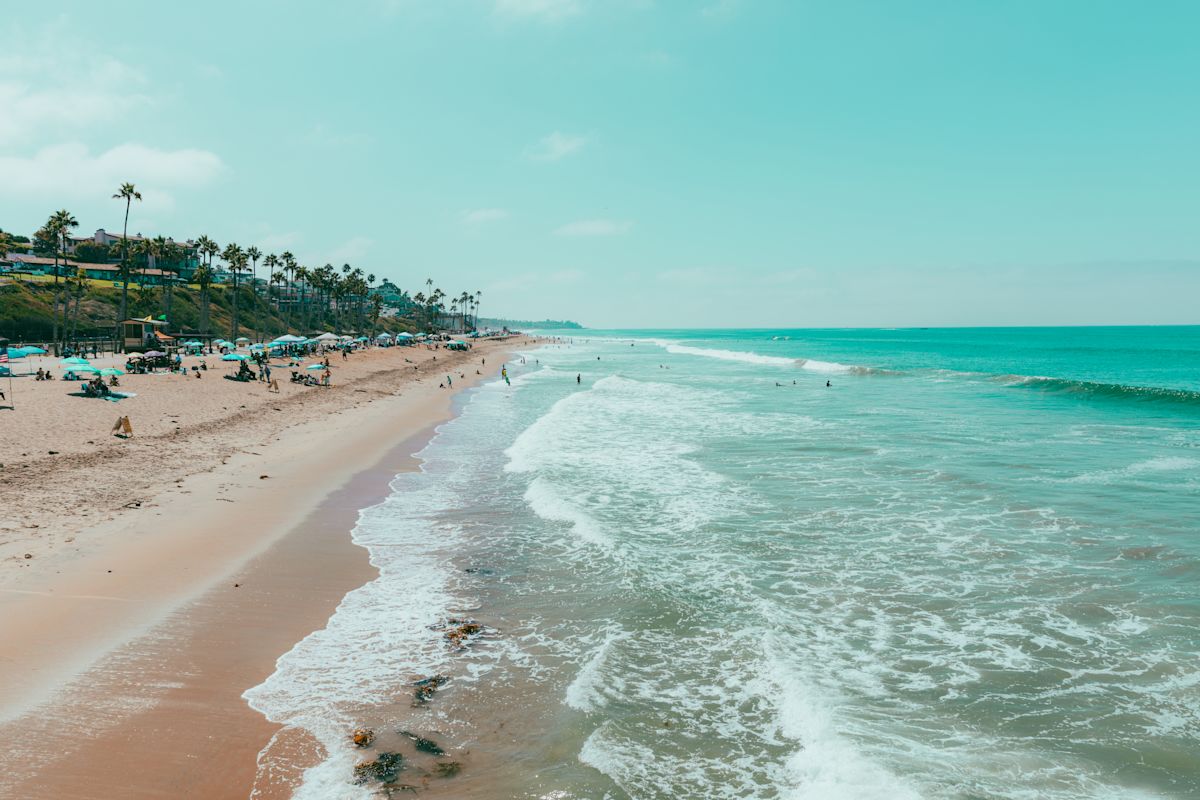
We have 840 miles of coastline. We have redwoods and deserts, mountains and vineyards, ski resorts and surf breaks. You can spend the morning hiking in the snow and be back near the beach by dinner. We have extraordinary produce, restaurants representing cultures from around the world, major universities, entertainment, technology, art, architecture and some of the best weather anywhere.
 Younger Americans really aren’t buying the anti-California narrative
The beauty rankings are particularly satisfying.
California came in at No. 4 among the states with the best scenery, behind Hawaii, Alaska and Colorado.
But among younger Americans, California won outright. A whopping 52 percent of Gen Z respondents and 36 percent of millennials ranked California among America’s five prettiest states, making it the No. 1 choice for both generations.
That’s not exactly the portrait of a state nobody wants anymore.
And the California love shows up at the city level, too.
San Diego is the third-most desirable city in America, behind Nashville and Denver. It also ranks No. 5 among the country’s prettiest cities, No. 8 for nicest residents and No. 9 among the most underrated.
And then there’s San Francisco
Perhaps no California city better illustrates the gap between national perception and lived reality than San Francisco.
It ranks fifth on the survey’s list of least desirable cities. It is also the No. 1 most misunderstood city in America.

Nearly 1 in 5 respondents said San Francisco is misunderstood, and that feeling was even stronger among younger people: 34 percent of Gen Z respondents and 23 percent of millennials said so. The city also ranks No. 4 among America’s prettiest cities and No. 3 for food.
The Clever report specifically notes the enormous amount of attention San Francisco has received for homelessness, drugs and crime, while pointing out that its problems don’t necessarily exceed those of other major American cities.
But I lived in San Francisco (as well as other major cities, Oakland and Berkeley, across the bay), and I say this with my whole chest: Anyone who has actually stood at Crissy Field looking toward the Golden Gate Bridge, walked through Pacific Heights past the Victorians or watched the fog pour over those hills knows that reducing San Francisco to its problems is almost comically incomplete.
Los Angeles gets no respect, either
Then we come to my hometown.
Los Angeles ranks No. 4 among America’s least desirable cities and No. 3 among the cities with the rudest residents.
To which, as an Angeleno, I would like to say: Rude. Also LOL. Jealous much?
I’ll concede that L.A. can be difficult. It is sprawling, traffic is real, and the city sometimes does not reveal itself easily to visitors.
But Los Angeles also sneaks onto the survey’s list of America’s 10 best food cities — and frankly, I think No. 10 is criminally low.
This is a city where you can eat spectacular Korean, Persian, Thai, Mexican, Japanese, Ethiopian, Armenian and Salvadoran food without leaving the metro area. It’s a place where mountains rise behind palm trees, where I can hike in the morning and watch the sun set over the Pacific that evening.
 California is hated because it’s misunderstood
Interestingly, California itself ranks No. 3 among America’s most misunderstood states.
California is a convenient symbol onto which people project all sorts of things: wealth, Hollywood, politics, homelessness, tech billionaires, earthquakes, wildfires, taxes, traffic, celebrities.
But California is also almost 40 million people spread across a vast and extraordinarily varied state. Los Angeles isn’t San Francisco. San Francisco isn’t San Diego. San Diego isn’t Sacramento. And none of those places tells you much about life in the Sierra Nevada, the Central Coast, the redwood forests of Northern California or the desert communities around Joshua Tree.
It’s complicated. It’s imperfect. It’s expensive.
And yes, people leave. Clever’s analysis of Census migration data found that 77,161 Californians moved to Texas in 2024, compared with 45,447 Texans who came the other way. But California also gained 28,958 Gen Z residents even as it lost 2,123 boomers.
So go ahead and complain about California. Californians certainly do. We’ll complain about the traffic on the drive to the beach. We’ll complain about housing prices from a sunny patio in February.
California doesn’t have to be America’s most universally beloved state. It has never been particularly interested in universal approval anyway. We do our own thing here.
But this survey captures the contradiction perfectly: Americans may love to hate California. They just can’t seem to stop wanting to be here.
Want more stories like this? Follow me for relatable takes on travel, lifestyle, and pop culture.